
NSW Premier Chris Minns has told the launch of the book co-authored by Rabbi Eli Schlanger that his murder in the Bondi Beach terror attack was “an unforgivable crime” but would not be allowed to define his life.
The book grew out of an unlikely meeting in hospital after Nikki Goldstein became gravely ill with an infection doctors feared could not be contained.
Rabbi Schlanger was called to her bedside when she was in a coma and believed to have little time left. He prayed for her and her family, blew the shofar, and, within 48 hours, Goldstein was conscious and breathing on her own.
Days later, after she had left intensive care, Rabbi Schlanger pulled up a chair beside her hospital bed and told her it had long been his dream to write a book. Goldstein said she first dismissed the idea, but Rabbi Schlanger’s persistence, faith and humanity gradually turned the encounter into a collaboration.
“Conversations with My Rabbi: Timeless teachings for a fractured world” co-authored by Schlanger and Goldstein, is the result of that collaboration.
Rabbi Schlanger was in the final stages of completing the book when he was killed on 14 December 2025 in the Bondi Beach terrorist attack, one of the deadliest mass-casualty shootings in Australian history.

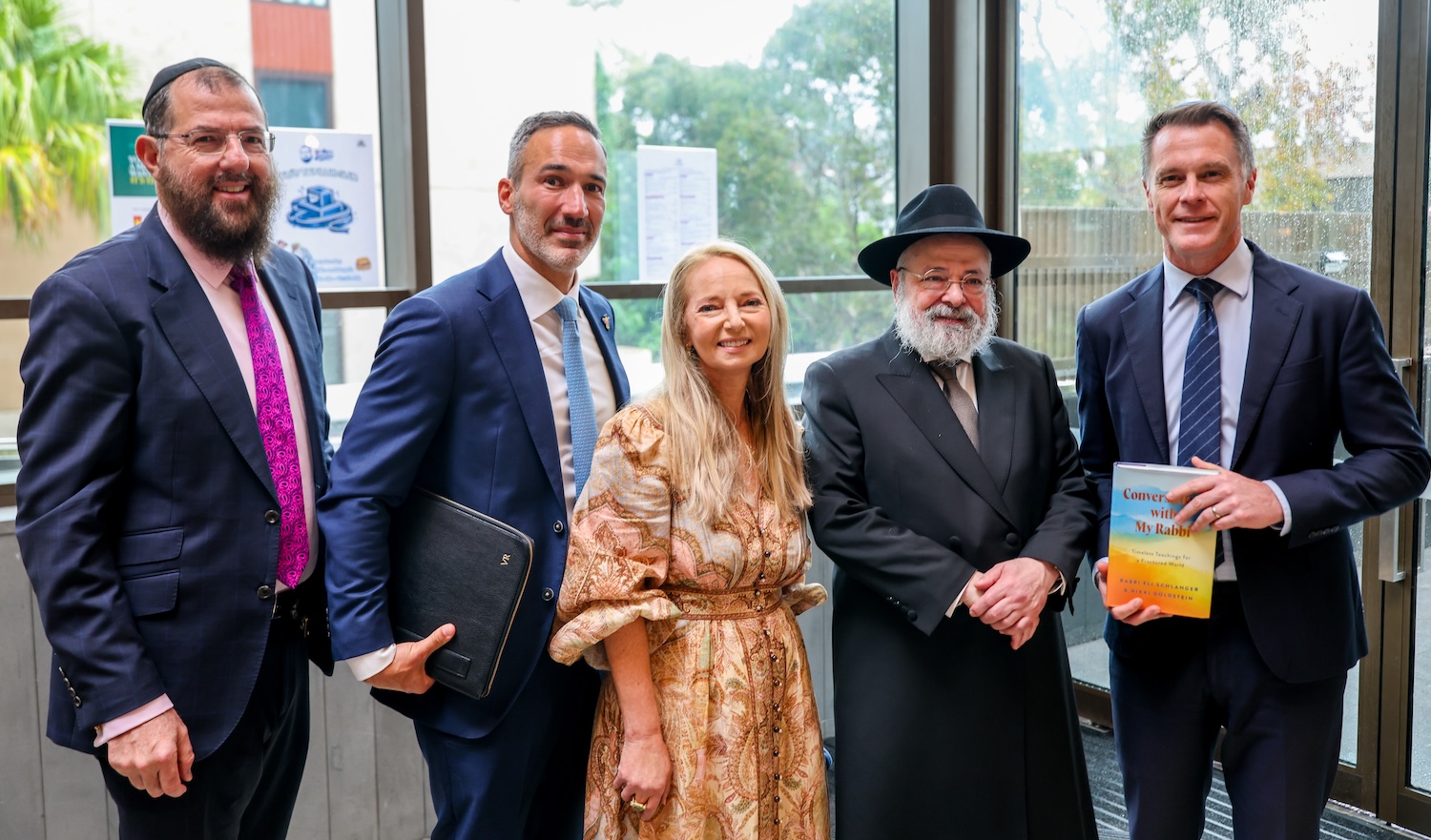
The launch was held at Chabad of Bondi, the community most affected by the shooting, before Rabbi Schlanger’s family, friends, rabbis, community leaders, Minns and NSW Opposition Leader Kellie Sloane.
Minns said he had never met Rabbi Schlanger but had come to understand him through the book and the memories of those who knew him.
“In the months before Rabbi Eli Schlanger was killed, he was in the process of launching Project Noah, a program to inspire young people by reminding them that every single one of us is a child of Noah, charged with building a better world,” Minns said.
“I never had a chance to meet Rabbi Eli, but from what I’ve learned about his life, he was the kind of man powered by optimism, with a good deed on the go and a project that he was working on.”
Minns said Rabbi Schlanger’s days often took him from prisons in country NSW, where he served as a chaplain, to St Vincent’s Hospital, where he comforted the sick and dying.
It was during one of those hospital visits that Rabbi Schlanger met Goldstein.
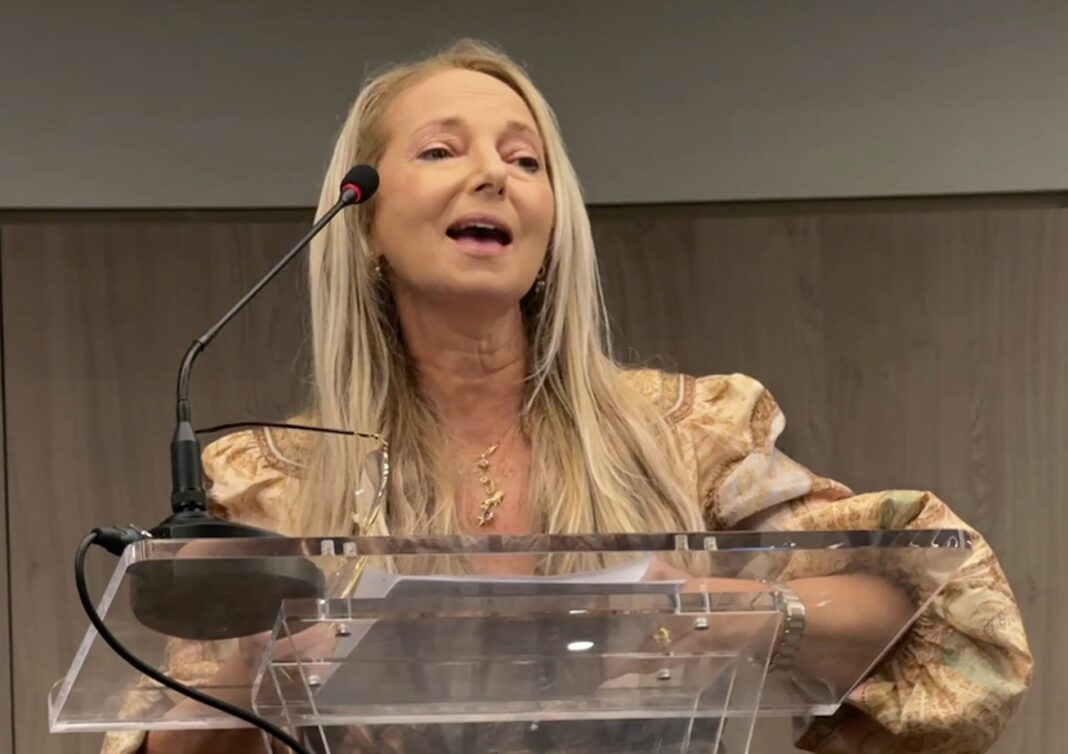
“It was wonderful to work with him,” Goldstein said at the launch. “To every conversation, he brought his irrepressible joy, his goodness, his utter commitment to his family, and his faith in God.”
Goldstein said the book reflected Rabbi Schlanger’s desire to do good beyond the Jewish community.
“He wanted to do good, not just for Jews but for the whole world. It turned out I wanted that too, and this book is a testament to our shared dream,” she said.
The book explores the Noahide laws, seven mitzvot, seven moral principles in Jewish tradition that apply to all humanity. Goldstein described it as a conversation between a secular Jewish woman and a rabbi about ancient teachings for building a just society.
“The irony of that subject choice, given the events that transpired, is simply beyond comprehension,” she said.
Minns said the book captured Rabbi Schlanger’s voice with unusual force.
“One of the really wonderful things about this book is how it manages to bring Eli’s voice back to life, and you get this palpable, unmistakable sense of the man by reading the conversations,” he said.
He said the book was full of Rabbi Schlanger’s practical advice to slow down, be deliberate, thank God for creation and learn from Shabbat.
“Who wouldn’t benefit from unplugging the phone, dialling down the busyness quotient, spending more time with friends, and spending more time with family,” Minns said.

The Premier said Rabbi Schlanger’s death would not be the story of his life.
“Eli’s death was an unforgivable crime, but I think it’s important for us to say this morning, it’s not the story of his life, nor will any criminal or any terrorist write the story of his life,” he said.
He said the book would one day allow Rabbi Schlanger’s children and future grandchildren to know him more deeply.
“Thanks to Nikki, they’ll glimpse his inner life; they’ll learn about his wisdom and his guidance; they’ll witness the joy and the light that he brought to the world,” Minns said.
ECAJ co-chief executive Alex Ryvchin, who chaired the launch, described the book as a dialogue between Goldstein, “the secular, worldly, culturally Jewish writer”, and Rabbi Schlanger, whose life was steeped in Jewish law and tradition.
He said the book explored God, meaning, justice and love while preserving Rabbi Schlanger’s humour, generosity and kindness.
Ryvchin said Rabbi Schlanger gave structure to his life not for status or wealth, but because structure gave clarity, clarity gave meaning and meaning gave freedom.
“He had more responsibilities than any person I knew, yet he walked with the levity and ease of a loafer,” Ryvchin said.
He said Rabbi Schlanger was often found helping people others might have overlooked, including prisoners, patients, abandoned elders and people near death.
“Every story seemed so improbable, but Eli didn’t believe in long shots or coincidences. He believed in miracles. He believed in God,” Ryvchin said.
Ryvchin said the book became painful as the reader knew the story was moving towards Rabbi Schlanger’s death. Its final chapter, on justice, was completed by Rabbi Yehoram Ulman, Rabbi Schlanger’s father-in-law.
“It is up to us, all of us, to complete the pursuit of justice, because Eli cannot seek justice for himself,” Ryvchin said.
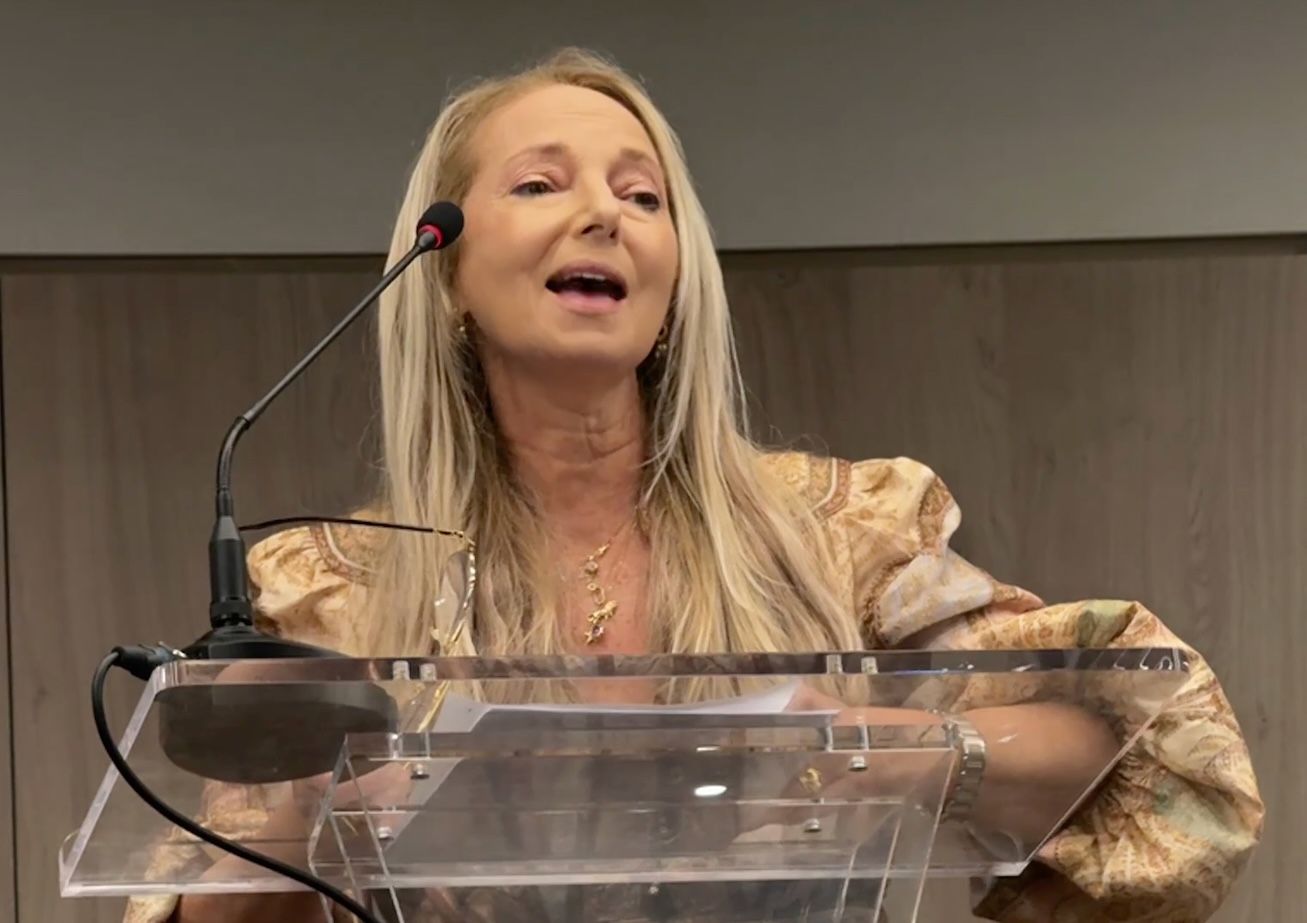
Goldstein paid tribute to Rabbi Schlanger’s widow, Chaya, and her family for trusting her with his words after his murder.
She said Rabbi Ulman stepped in just two weeks after Rabbi Schlanger’s death to complete the chapter she and Rabbi Schlanger had been about to write.
“Rabbi Ulman was clearly grieving, but he put aside his own feelings to finish what Eli started,” Goldstein said. “It was a gift of love and devotion to his beloved son-in-law.”
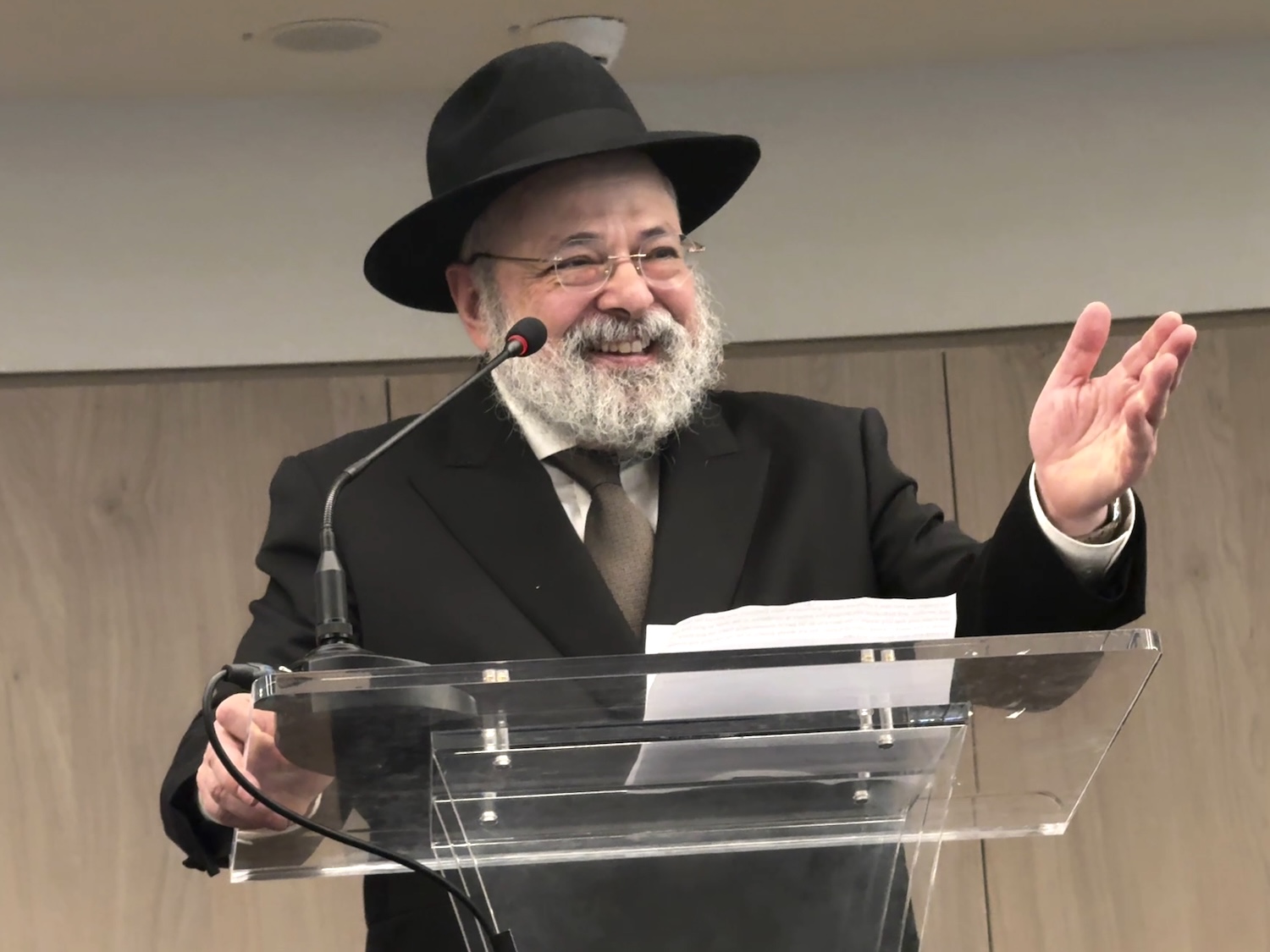
Rabbi Ulman told the launch the event was “not only a launch of a book; it is a continuation of a life, a mission, and a light”.
“Our beloved Eli was taken from us, together with 14 other precious souls, in a terrible massacre on 14 December,” he said.
“The pain of that loss is something our family carries every single day, and yet standing here today we also feel something else very deeply. Eli’s voice is still speaking.”
He gently rejected Goldstein’s statement that she wished her co-author could be present.
“I promise you that he is here today with us,” Rabbi Ulman said.
He said Rabbi Schlanger cared deeply about truth, goodness and bringing something positive into the world.
“Anyone who knew Eli knew his sincerity, his warmth, and the quiet passion he carried for meaningful things,” Rabbi Ulman said. “He was not interested in noise or slogans.”
Rabbi Ulman said the book was part of a larger vision for humanity.
“Eli didn’t merely begin writing a book together with Nikki Goldstein about the seven mitzvahs. He became part of something much, much larger, a vision for humanity,” he said.
He said the seven mitzvot had new relevance in a world where morality was often treated as subjective.
“The seven mitzvahs remind us that morality is not man-made. There are objective truths given by God Himself: human dignity, justice, respect for life, responsibility,” Rabbi Ulman said.
He said the belief that every human being is created by God and accountable to God was one of the strongest answers to hatred, violence and antisemitism.
“What makes this book unique is its living voice, its engaging style, its accessibility, and the way it expands these timeless laws into the realities and moral challenges of modern life,” Rabbi Ulman said.
“Eli wanted these ideas not only to be studied, but to be lived, discussed, and understood as deeply relevant to the world we are living in today.”
Rabbi Ulman said the book showed the Jewish refusal to remain trapped in victimhood.
“A victim asks, why did this happen to me? A survivor or a leader asks, what can now be done?” he said.
“The Jewish people throughout history have never allowed themselves to remain trapped in victimhood. We carry pain, but we transform pain into purpose and darkness into light, and that is exactly what this book represents.”
“Conversations with My Rabbi: Timeless teachings for a fractured world” is published by HarperCollins in hardback, eBook and audiobook formats. It has a recommended retail price of $39.99.