
Liberal MP Julian Leeser has told the Royal Commission into Antisemitism and Social Cohesion that Australia risks losing one of its defining qualities as a safe haven for Jewish families, describing how his young son now asks whether they will be safe every time they attend synagogue.
The Shadow Minister for Education gave evidence after the Commission heard from Jewish community leaders, security organisations and police about the growing cost and complexity of protecting schools, synagogues and communal events.
Leeser said Australia had long stood apart because Jewish people had been able to participate fully in national life without official discrimination.
“That’s the thing I’m most sad about in the last few years,” he said.
“I feel that the position of Jewish Australians has really declined, and I worry about the future of the Jewish community and my family in this country.”
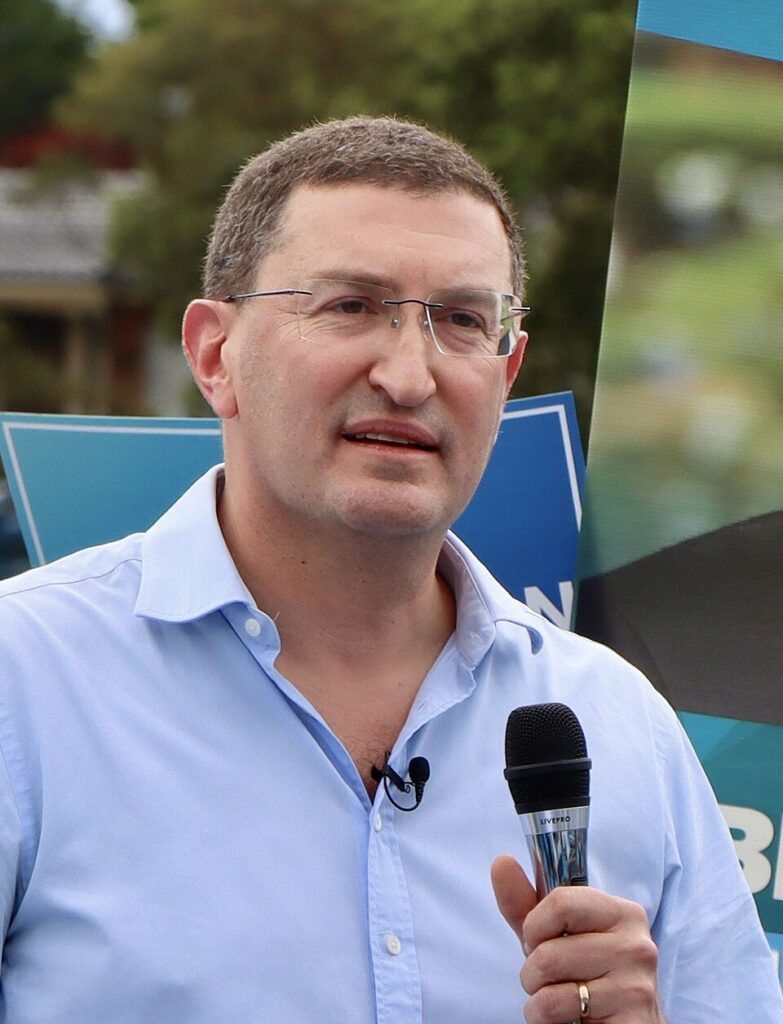
Leeser traced his family’s Australian history to 1849, when his ancestor Abraham Jacob Solomon became the first reader of the Adelaide Hebrew Congregation. He also spoke of relatives who served at Gallipoli and Beersheba, survived Changi and worked on the Burma Railway.
“We’ve always been proud Jews and made a contribution to this country and very proud Australians,” he said.
His most emotional evidence concerned the Bondi Beach massacre on 14 December 2025.
Leeser was attending a Chanukah celebration at St Ives with his wife and children when a rabbi told him shots had been fired at Bondi.
At that stage, those at the event did not know whether the attack was part of a wider threat. Leeser contacted a senior police officer and asked for officers to be sent to the celebration because families were gathered in what he described as an exposed, fenced-off area.
He said his son, then seven, overheard adults discussing the deaths.
“He cried inconsolably, the sort of cry that you see where a child is in deep pain,” Leeser said.
His son repeatedly asked, “Dad, are we going to be safe? Dad, why are they shooting at us? Dad, are you sure we’re going to be safe? How do you know they won’t come for us?”
Leeser said the fear had continued when the family attended synagogues and communal events. During a recent visit to a synagogue, his son held his hand tightly and again asked how he knew they would be safe.
“What sort of Australia are we setting up where an eight-year-old child doesn’t feel safe going to a place of worship?” Leeser said.
“It’s not the Australia I know and love, and it’s not the Australia I want for my children or anyone’s children.”
His testimony put a human face on evidence heard during the week about the security burden carried by Jewish families and organisations.
Executive Council of Australian Jewry co-CEO Peter Wertheim and other witnesses told the Commission that government support was substantial and appreciated, but security funding was continually overtaken by rising costs and needs.
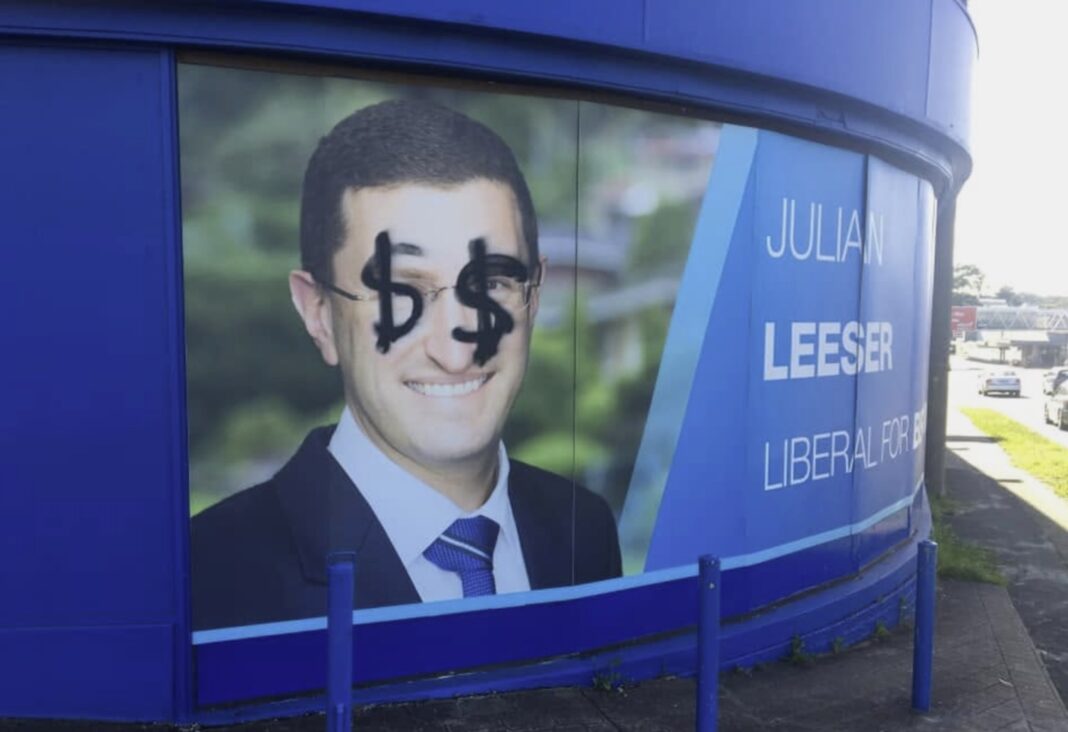
Leeser also detailed antisemitic abuse directed at him during the 2019 and 2025 federal election campaigns.
Campaign posters and banners were defaced with swastikas, Hitler moustaches, devil horns and dollar signs.
A large banner used during the 2025 campaign was seized by police as evidence. Leeser said it cost between $30,000 and $35,000 and was not replaced because he expected it would be targeted again.
He said the abuse affected his staff and volunteers, with some campaigners deciding to stop helping because they felt uncomfortable or unsafe.
“It was frightening,” he said.
“It’s confronting to see your own face graffitied in that manner.”
Leeser drew a distinction between political criticism and antisemitic abuse. He said parliamentarians should expect disagreement and criticism of their policies or performance, but attacks based on Jewish identity were different.
“But this antisemitism is not that,” he said.
Asked about the sources of modern antisemitism, Leeser identified the far right, radical Islamists and the academic and cultural left.
“In the Middle Ages, Jews were hated for their religion,” he said.
“In the 19th and 20th century, they were hated for their race. Today, they’re hated for their nation-state.”
He said Jewish Australians were increasingly being held responsible for the actions of the Israeli government.
Leeser also called for changes at universities following earlier evidence about antisemitism on campuses.
He urged the Commission to recommend that universities adopt the IHRA definition of antisemitism and audit teaching about Jews, Israel and the Israel-Palestinian conflict.
He said students should be presented with credible arguments from both sides, universities should examine whether foreign government funding was supporting antisemitic teaching or activity, and governing bodies should be responsible for keeping campuses free from antisemitism.
He also said Jewish student groups should not have to pay for security at religious events and invited Jewish speakers should not face threats or hostility.
Despite his concerns, Leeser said most Australians remained supportive of the Jewish community. He described strangers hugging him after the 7 October attacks, churches bringing flowers to his office and people from across the political divide expressing solidarity.
“They don’t like the antisemitism they’re seeing on our streets,” he said.
“This isn’t the Australia that they want for their kids either.”
Leeser said he wanted his children to inherit an Australia where people were free to practise their religion without fear.
“If you work hard and play by the rules, there’s a place for you here, and you can live and practise your religion freely and be proud of it.”