
Four research teams studying zebra finches, African striped mice, chimpanzees and bonobos have been shortlisted for a US$100,000 prize aimed at advancing two-way communication between humans and other species.
The Coller Dolittle Challenge for Two-Way Interspecies Communication, run by the Jeremy Coller Foundation and Tel Aviv University, recognises research using non-invasive methods to understand how animals communicate through their own natural signals. The 2025-26 winner will be announced at a virtual event on 25 June 2026.
The annual prize forms part of a broader scientific challenge that also offers a US$10 million grand prize, in the form of either equity investment or a US$500,000 cash prize, for researchers who can demonstrate independent two-way communication with a non-human organism. Inspired by the Turing test, the challenge requires evidence that the animal is communicating without recognising that it is communicating with humans.
The shortlisted projects come from the United States, France and Switzerland, and use artificial intelligence, audio analysis, behavioural experiments and field observation to study the structure and meaning of non-human communication.
The challenge was outlined in a “Current Biology” essay by Tel Aviv University researchers Professor Yossi Yovel and Professor Oded Rechavi, who argued that advances in AI have opened new possibilities for animal communication research. They also cautioned that AI alone is not enough. The authors said researchers must avoid over-interpreting animal-like sounds, test for false patterns in data, and show measurable animal responses across more than one context.
Julie E Elie, from the Theunissen Lab at the University of California, Berkeley, has been shortlisted for research on zebra finches. Her work found that zebra finches use a complex range of call types to communicate who they are and what they are doing. The findings suggest the birds can recognise individuals across different calls and that their calls carry meaning beyond their acoustic features.
Nicolas Mathevon, from the University of Saint-Etienne and the Ecole Pratique des Hautes Etudes, and his team have been shortlisted for research on African striped mice. They found that the mice use short-range ultrasonic vocalisations that encode group identity and vary by location, suggesting a broader communication system linked to social and territorial behaviour.
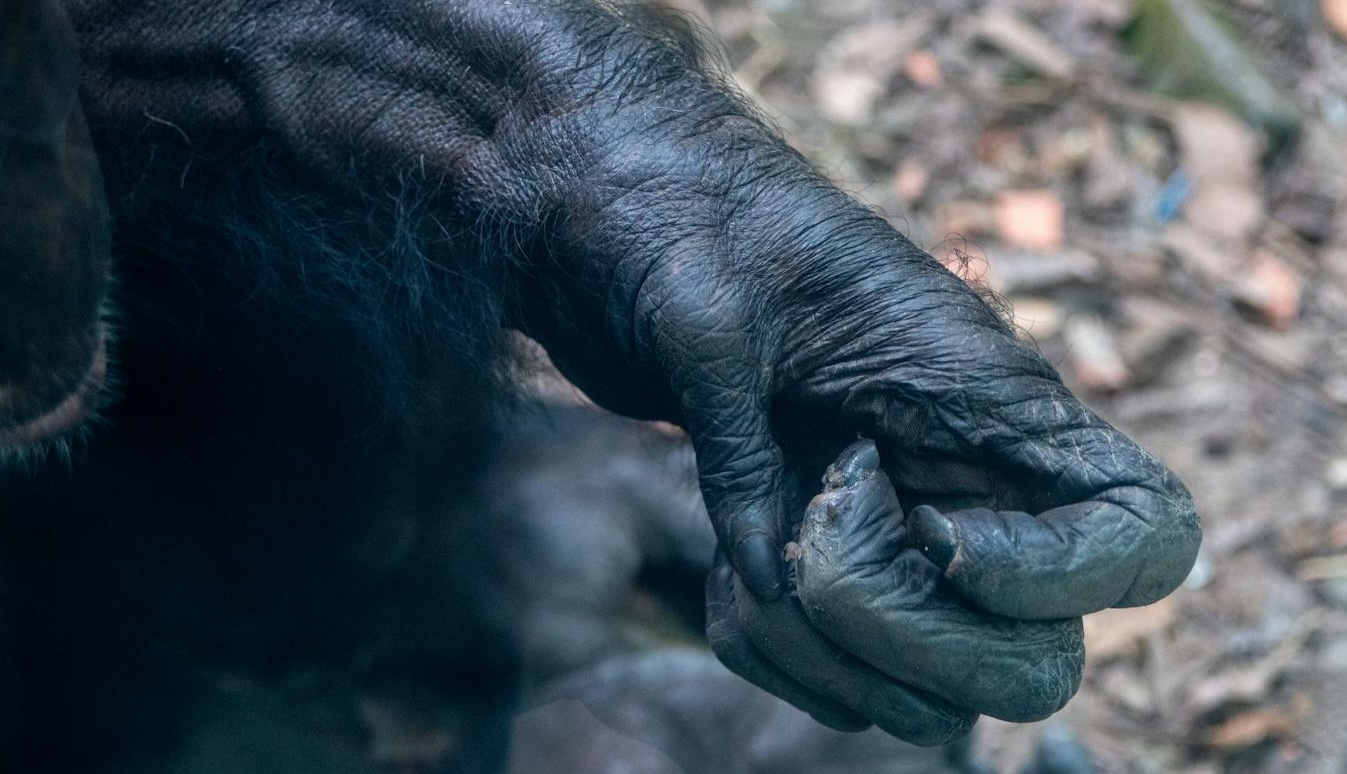
A team led by Catherine Crockford and Roman Wittig, with Cedric Girard-Buttoz and Antoine Valet from the CNRS Institute for Cognitive Sciences in Lyon and the Tai Chimpanzee Project in Ivory Coast, has been shortlisted for work on chimpanzee vocal communication. Combining field observation, behavioural experiments and AI-based audio-to-context mapping, the researchers found that chimpanzees use a flexible, rule-based vocal system in which combinations of calls can modify, add to or create meaning.
A fourth team, led by Mélissa Berthet from the University of Zurich, Martin Surbeck from Harvard University and Simon Townsend from the University of Zurich, has been shortlisted for research on bonobos (a great ape, similar to chimpanzees). Their work found that bonobos combine vocal calls into structured and meaningful sequences, suggesting deeper similarities with human language than previously understood.
Professor Yovel, who chairs the Coller Dolittle Challenge, said the judging panel had been impressed by the quality of this year’s submissions.
“The proliferation of AI is providing new tools to understand animal communication that we could only have dreamed of in the past,” he said.
“The finalists have used novel ways to decipher non-human communication and made pioneering strides towards helping us understand how other species speak to each other. Choosing our winner in June will not be an easy task.”
Jeremy Coller said the research represented progress towards a long-standing scientific goal.
“Humans unlocking the ability to speak to other animals would usher in a new era for the world, but for that to happen we must first understand how they communicate with each other,” he said.
The challenge awards US$100,000 annually for research seeking to develop an algorithm for communication with non-human organisms. Teams must use non-invasive approaches, demonstrate communication in more than one context using the animal’s own communication signals and show a measurable response from the animal.
This year’s virtual event will also feature a keynote address by Professor Ofer Tchernichovski of Hunter College, City University of New York, titled “Decoding Animal Talk: A virtual reality system reveals how songbirds engage with virtual partners”.
The Coller Dolittle Challenge is administered by Tel Aviv University and chaired by Professor Yovel. Its judging panel includes experts in computer science, biology, ecology, zoology, philosophy and the history of science. The challenge operates on an open-access basis, with data made available to the scientific community.
Last year’s winner was a team led by Laela Sayigh from the Woods Hole Oceanographic Institution. The team found evidence in dolphins of a possible language-like communication system, with shared, context-specific meanings.
To register your interest in attending the event, please follow this link: https://zoom.us/webinar/register/WN_V73Duex0TRmxGNPYK0HaOA