
Australian universities cannot stamp out antisemitism with definitions and disciplinary codes alone, a leading Jewish studies scholar has warned.
Professor David Slucki told the Royal Commission on Antisemitism and Social Cohesion that institutions must also tackle poor Holocaust literacy, deepening political polarisation and the divisive influence of social media.
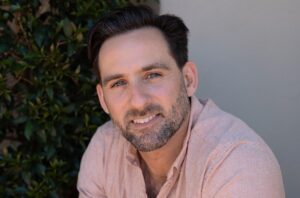
Slucki, director of Monash University’s Australian Centre for Jewish Civilisation, said many Australians lacked understanding of the diversity of Jewish identity and the enduring impact of the Holocaust. A significant proportion of Australian Jews are descended from Holocaust survivors, and that history continues to shape how families perceive safety, persecution and antisemitism.
“The impact of the Holocaust animates the way people think about what it means to be Jewish,” he said.
University leaders needed to grasp this history to properly recognise the fear and anxiety behind complaints from Jewish staff and students, Slucki said. However, he cautioned against treating Jewish Australians as a monolithic group or assuming uniformity in their religious beliefs, political views or relationship with Israel.
In 2024, Slucki established the Monash Initiative for Rapid Research into Antisemitism (MIRRA) to examine the nature and extent of antisemitism in Australia and develop practical responses. A training program developed by the initiative has reached more than 1,700 university executives and frontline staff across about 30 institutions and has also been delivered at Tulane University in New Orleans. The federal government has committed $1.5 million over two years to expand it.
While definitions and enforceable policies, including one Slucki helped draft for Universities Australia, remain important, they alone would not repair a deeply polarised campus culture, he warned.
Social media algorithms were feeding students a constant stream of content designed to stoke anger and hostility. Many arrived in class already agitated, viewing contentious political issues in absolute moral terms and regarding opponents not as wrong but as evil.
Universities must teach students to navigate difficult conversations without demonising one another, Slucki said. The Israel-Gaza war had made the challenge more urgent.
Jewish students and staff remained traumatised by the Hamas attacks of October 7, 2023, while Palestinian and Muslim members of university communities were distressed by the ongoing suffering in Gaza. Recognising the trauma of one group should not mean dismissing that of another, he said.
“We don’t think it should be an either-or proposition,” Slucki said. “If we’re only solving for antisemitism, we’re not solving antisemitism.”
He called for education on Islamophobia, anti-Palestinian racism and racism against First Nations people to complement antisemitism training.
Slucki’s evidence followed concessions from university leaders earlier in the week. Sydney University vice-chancellor Mark Scott apologised to Jewish students and staff over the handling of the 2024 protest encampment. Representatives from the Australian National University and the University of Melbourne also acknowledged shortcomings in their responses to protests.
The testimony highlighted universities’ struggles to enforce conduct rules, resolve complaints and protect Jewish students and staff while upholding freedom of speech and academic freedom.
Disagreements over Zionism and antizionism further complicated the issue, Slucki said. The terms carried complex, contested meanings, and Jewish Australians held a wide range of views on them. Teaching the Israeli-Palestinian conflict required presenting competing historical narratives and acknowledging the pain and fear experienced by both peoples.
Slucki said he believed most Jewish Australians supported a two-state solution, a view he planned to test in future research. Most people, he added, wanted security and peace rather than endless violence.
Tertiary Education Quality and Standards Agency chief executive Dr Mary Russell told the commission universities had often been reluctant to identify antisemitism due to an immature understanding of it. She noted that campus protests intensified and became more personalised when external activists became involved.
From 2027, new enforceable standards will require universities to adopt definitions of antisemitism, Islamophobia and racism against Aboriginal and Torres Strait Islander peoples, improve complaints procedures and provide clearer guidance on campus safety. The federal government plans to bolster TEQSA’s enforcement powers.
Slucki said these measures could provide an essential framework, but lasting change would depend on transforming campus culture through better historical education, recognition of diverse trauma experiences, and teaching students to disagree without enmity.