
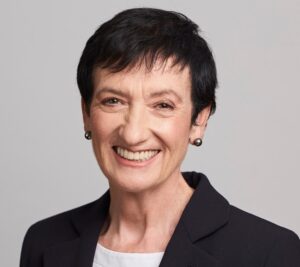
Western Sydney University Chancellor Jennifer Westacott has revealed that she grew up with an antisemitic father, drawing on a haunting childhood memory to warn that hatred spreads when good people stay silent.
In a personal written submission to the Royal Commission on Antisemitism and Social Cohesion, Westacott described an early life marked by disadvantage, family dysfunction and periods of severe violence.
“My father was an antisemite,” she wrote.
As a young child watching television, she saw an image of two people in striped prison clothing hanging by their necks in a street. Distressed, she drew a response from her father that has stayed with her for decades.
“Don’t worry, that only happens to the Jews,” he told her.
“I have never been able to shake off the image of their faces,” Westacott wrote. “Nor have I been able to shake the question of my own silence as a child and then as a young adult.”
Fear and a lack of understanding stopped her from challenging her father’s views. That personal experience now sits at the heart of her broader argument: that silence, avoidance and gradual acceptance allowed antisemitism to surge in Australia after the Hamas terrorist attacks of October 7, 2023.
“Silence, incremental acquiescence, and the comfort of inaction are how hatred gains ground,” she wrote.
Westacott said she gained a deeper understanding of antisemitism during her university years through Jewish friends and community connections, and later while leading a delegation to Israel. Visits to the Holocaust museum in Jerusalem and ongoing conversations helped her grasp the enduring sorrow carried by Jewish families.
“I have come to understand how this sorrow, this terrible sorrow, sits in the psyche and soul of Jewish people,” she wrote.
She noted that her father’s views were not uncommon in her childhood and persist in parts of Australian society today. Westacott made the submission in a personal capacity, informed by her roles as Chancellor of Western Sydney University, former chief executive of the Business Council of Australia, and Guardian of the Dor Foundation.
Westacott became Western Sydney University’s Chancellor on January 1, 2023. She first spoke publicly about campus antisemitism in May 2024 amid widespread pro-Palestinian protests and encampments, writing an opinion piece that universities must be places of enlightenment, not fear.
Hundreds of messages from frightened Jewish students, parents and community members followed, convincing her that many Australians were alarmed but felt they lacked permission to speak out.
“That silence, I believe, is part of what allowed antisemitism to take hold,” she wrote.
She also highlighted the online abuse directed at private individuals who shared personal experiences with the Royal Commission, calling it evidence of organised hatred.
Westacott argued that Australia experienced a broad failure of collective leadership after October 7. With notable exceptions, leaders across universities, governments and business failed to respond with sufficient urgency or unity.
“What we saw instead was a retreat into legal caution, a hiding behind the concept of free speech, and an incremental acquiescence that, whether through deliberate avoidance or simple indifference, legitimised actions and behaviours that were an affront to Australian values and to the safety of Jewish Australians,” she wrote.
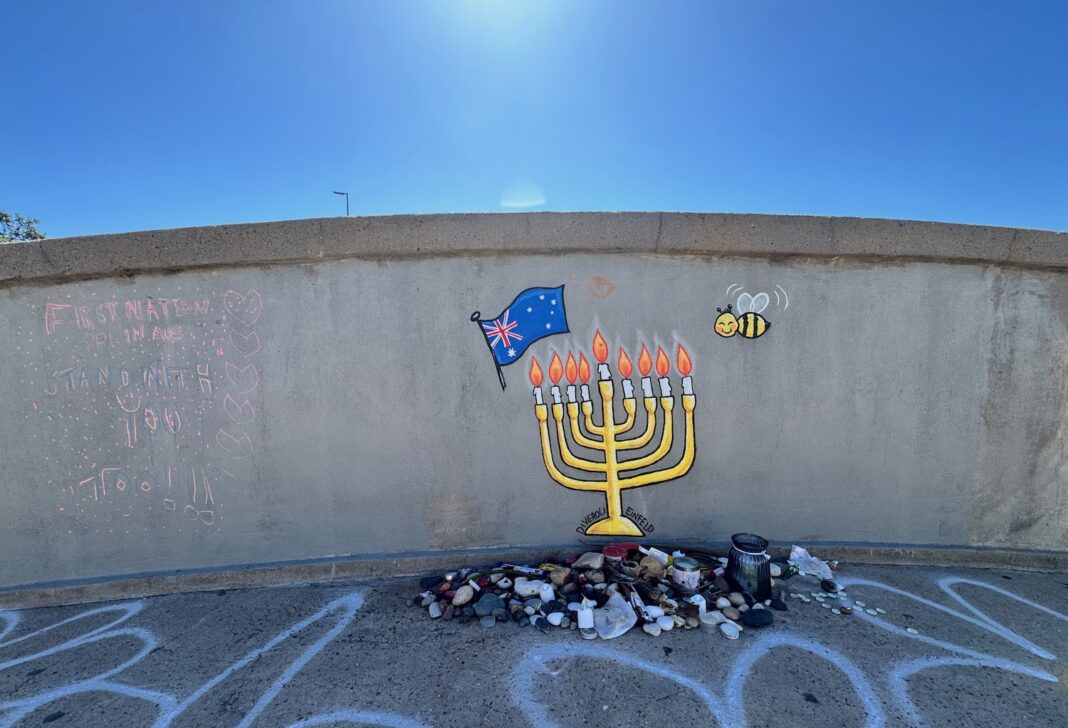
She linked this failure to the “antecedents” of the December 14, 2025, antisemitic terrorist attack at a Chanukah celebration on Bondi Beach, which killed 15 people.
Westacott stressed that antisemitism did not begin after October 7. She pointed to decades of slurs, exclusion and violence, including the 1982 car bombing outside the Hakoah Club at Bondi. Social media, she said, has allowed it to spread faster and further than ever before.
She firmly rejected holding Jewish Australians responsible for the actions of the Israeli government.
“Holding Jewish Australians responsible for the actions of Israel is not political commentary,” she wrote. “It is racism, and it is the oldest and most persistent form of it.”
Westacott urged the Commission to keep its focus on the safety and experiences of Australians rather than debating the Israel-Gaza conflict overseas.
She also criticised elements of the feminist and LGBTQI+ communities — movements she has supported — for selective outrage, particularly silence around the sexual violence of October 7 and subsequent antisemitism.
“You cannot be selectively outraged,” she wrote. “Either you believe in human rights, or you do not.”
On universities, Westacott acknowledged efforts by many institutions while arguing that too often free speech was used as cover for hate speech, intimidation and targeting of Jewish students and staff.
She contrasted this with Western Sydney University’s approach: permitting protests but prohibiting antisemitic chants and placards, alongside cultural awareness training and practical support for people fleeing conflict, including many Palestinian students.
Westacott also addressed the business community, which she led for 12 years, reminding leaders of their responsibility to protect Jewish staff and customers. Opposing antisemitism, she said, is not about taking sides in a foreign conflict, “it is standing up for Australia and for Australians.”
She called for enforceable national standards across universities, schools, workplaces and government agencies — including a common definition of antisemitism, transparent complaints processes, accountability and properly funded education programs. Action is also needed against digital platforms amplifying hate.
Westacott concluded by recalling a visit to Bondi Beach after the attack, a place of sorrow that also showed bravery. Jewish Australians, she said, have lived in fear and deserve better from their country.
“I have spoken out on antisemitism because I know what silence costs,” she wrote. “I knew it as a child, watching my father’s hatred go unchallenged, and I refused to carry that silence into my professional life.”
As a Guardian of the Dor Foundation, “dor” meaning “generation” in Hebrew, Westacott believes generational change is possible. Her message is clear: Australia’s leaders do not have the excuse of childhood fear or powerlessness.
Dor Foundation chief executive Tahli Blicblau said Professor Westacott’s submission embodied the quality she had called for: moral clarity.
“She has led with strength and consistency, naming antisemitism plainly and insisting this is a whole-of-nation responsibility. We thank Jennifer for her outstanding leadership, allyship and wisdom and are so fortunate to work with her as a Guardian of the Dor Foundation.”