
President Trump loses faith in negotiations with Iran and the war resumes, mostly restricted to areas around the Persian Gulf and the Strait of Hormuz.
Israel is watching. Iran, possibly not wanting to provoke an Israeli response, has so far avoided attacking Israel.

Axios reports that Trump continues to pressure Israel. Regarding Syria, for example, they reported that Trump allegedly told Prime Minister Netanyahu, “They don’t want you there. You should redeploy.” He was referring to areas in Syria that Israel seized after the collapse of the Assad regime in late 2024.
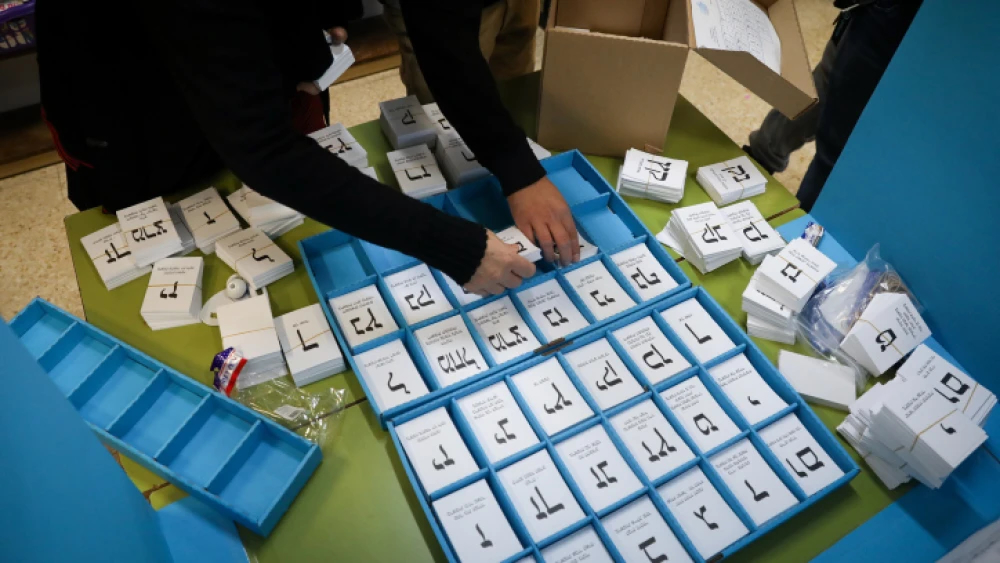
Several issues dominate in Israel as the election approaches.
On external existential threats, there is general agreement across the political spectrum. Israel is strong but must consider the wishes of its superpower friend while working with the Americans to help them better understand Israel’s red lines.
Securing the northern border with Lebanon is one such area. Israel is proceeding with negotiations with Lebanon on the basis that these supersede the now seemingly defunct memorandum of understanding.
On Iran and Lebanon, divisions within Israel are more tactical than strategic.
As Israel heads into the election period, a real point of difference increasingly revolves around support for or opposition to one person, Prime Minister Netanyahu, as we have discussed previously.
An astute leader and superb political survivor, Netanyahu is now rushing multiple pieces of controversial legislation through the Knesset. For the cynically inclined, this is intended to shore up future coalition partners.
As Herb Keinon notes in The Jerusalem Post:
“Netanyahu wants the Haredi parties entering post-election coalition negotiations convinced that he kept faith with them. If he succeeds in broadening his coalition afterward, he wants to do so from a position in which his traditional partners remain firmly at his side, not nursing grievances over promises they believe he broke. The broad coalition Netanyahu is now talking about, in other words, is not one built instead of the Haredim. It is one built on top of them.”
This brings us to two important internal issues that will play a role in the election campaign and in the formation of new parties but, ironically, may or may not be reflected in the actual vote: the balance between Israel being a Jewish and democratic state, and the issue of national service.
Approximately 40 per cent of the electorate do not consider themselves, or are not considered by others, to be both Jewish and Zionist.
In general terms, about 20 per cent of Israel’s citizens are Arabs, 15 per cent are Haredi and 5 per cent are classified as “others”, a group that is growing rapidly.
In addition, only approximately 50 per cent of Israelis serve in the IDF.
Aside from the clear need for more soldiers, service in the IDF has also brought together people with different views and from different socio-economic backgrounds. Such exposure has at least offered the possibility of greater social awareness and cohesion.
The question of the Jewish state versus democracy can be viewed through the debate about the balance between the Knesset and the courts. This debate is ongoing, with multiple flashpoints. Each new piece of legislation creates the potential for court challenges.
Traditional Zionist ideologies, except at the left and right extremes, are no longer at the forefront of debates about how Israel should look or behave. Understandably, security needs have taken priority.
Depending on how long this period lasts, many ideological matters may be settled as a byproduct. Security and its consequences may, willingly or unwillingly, replace traditional ideologies.
And the Diaspora? In Herzl’s view, there was not supposed to be a Diaspora, except for some pockets of Haredim. Yet there is.
While aliyah remains the highest expression of Zionism, the question of where Jews outside Israel stand is in flux and highly polarised.
Rahm Emanuel, a potential Democratic presidential contender, former Obama chief of staff and former Chicago mayor, was in Israel to give a speech at Tel Aviv University. As expected, he was highly critical of the Israeli government, but he reflects an alarmingly widespread trend not only within America, but also within large sections of American Jewry.
While he wants to end aid to Israel and place far greater pressure on the Israeli government, he understands antisemitic slogans for exactly what they are.
Addressing Mamdani, he said:
“Let me be clear to you: when I hear you chant ‘river to the sea’, I hear you calling not just for the destruction of Israel, but the destruction of the Jewish people.”
Whether or not the Associated Press-NORC Center for Public Affairs Research survey is entirely accurate, it points to a trend. That it could conclude that significantly more American Jews view New York Mayor Mamdani favourably than they view Prime Minister Netanyahu is almost beyond comprehension.
The coming election will play a major role in Israel’s relationship with the world, whoever wins. This is not necessarily because of any major policy changes, but because of a growing understanding that much of the antisemitism in the world, masked as antizionism, is not about critics taking issue with Israeli policy. It is about Israel’s existence.
By falsely attempting to portray Israel’s behaviour as immoral, they also seek to portray Israel’s re-establishment as immoral and, by extension, Jews generally.
Governments change, but the partnership between Israel and the Diaspora has repeatedly outlasted political cycles. Israel’s story is written not only in the Knesset, but also in Jewish communities around the globe.
If this election campaign encourages a broader conversation about the values and aspirations of the Jewish world, that will be an achievement in itself.
It is also our task to educate the people around us so that we emerge stronger, more connected and better prepared for whatever comes next.
Am Yisrael Chai,
Dr Ron Weiser AM
Ron Weiser is former president of the Zionist Federation of Australia and honorary life president of the Zionist Council of NSW.