
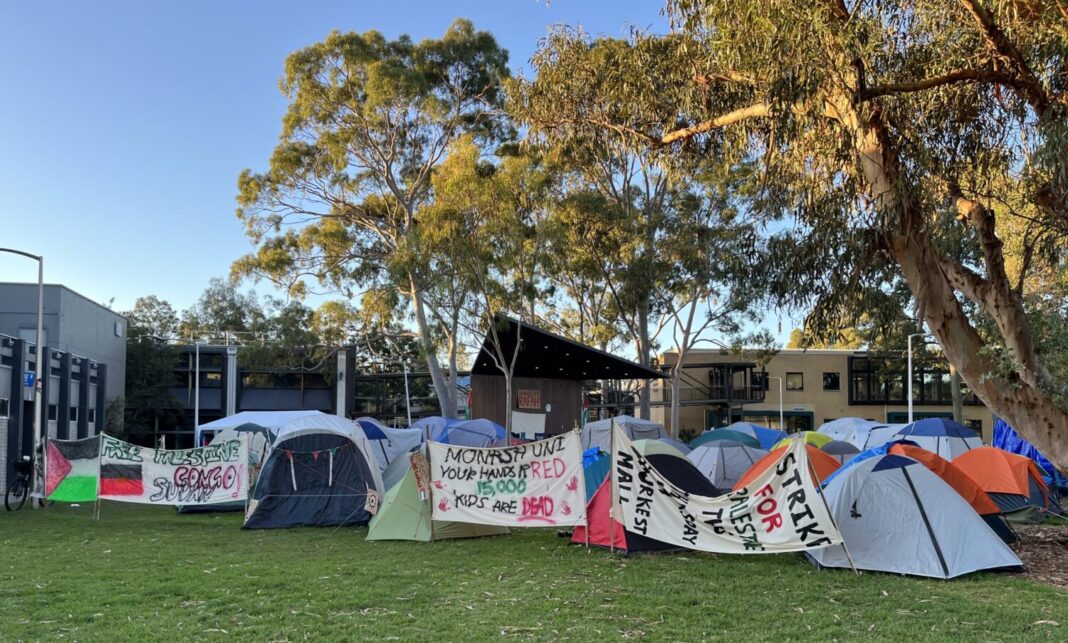
Monash University vice-chancellor Professor Sharon Pickering told the Royal Commission that the aftermath of October 7 exposed how quickly antisemitism could surface.
She said Jewish students were left fearful and isolated and, during the campus encampment, felt unwelcome at their own university.
Pickering said Jewish students and staff had reported serious incidents alongside casual remarks, assumptions and comments that caused cumulative harm.

“I don’t think I had sufficiently appreciated before how thinly buried antisemitism was in our society and how quickly it was unleashed,” she said.
Jewish students also felt they were being held personally responsible for the actions of the State of Israel.
Pickering said it was difficult to overstate the fear, isolation and alienation described by Jewish members of the Monash community. Their experiences extended beyond the campus to social media and the wider community.
At Monash, university leaders began preparing support for students as reports of the Hamas attacks emerged on October 7, 2023.
The president of the Monash Jewish Students Society, known as MonJSS, raised concerns about safety, culturally appropriate counselling and students travelling to the Clayton campus by public transport.
Pickering said the university was able to meet the requests through existing support arrangements. Assistance was also made available to Palestinian students and others affected by the conflict.
Tensions peaked after a “Gaza solidarity” encampment was established on the Lemon Scented Lawns at the Clayton campus on May 1, 2024.
Pickering said she cut short an overseas trip after being told the encampment was about to begin. While waiting at New York’s JFK Airport, she watched police enter Columbia University’s campus during protests there.
“I needed to get home,” she told the inquiry.
The Monash encampment grew to about 40 tents and included people who were not students or staff.
The university checked the identification of people at the site and served seven exclusion notices. Two involved people whom Victoria Police had identified as individuals of concern.
Pickering said those directed to leave appeared to have done so peacefully, without police having to remove them physically.
Monash did not negotiate directly with encampment organisers.
Pickering said protesters were told to raise their demands through the democratically elected Monash Student Association. The association did not take those demands to university leaders.
A turning point came when encampment organisers published an Instagram post declaring that “Zionists are not welcome on campus”.
Pickering said the university decided the statement had crossed the line from offence to harm because Jewish students and staff could reasonably feel vilified, harassed or excluded.
Monash asked Meta to remove the post, and it was taken down within a few days.
Pickering later told the university community it would not tolerate “thinly disguised antisemitism”. She confirmed that the warning referred to the Instagram post.
Gabi Crafti, representing mainstream Jewish communal organisations, told Pickering that most Australian Jews felt a connection to Israel, and many described that connection as Zionism.
Crafti said telling Zionists they were not welcome meant most Jewish students and staff were being told they were not welcome on campus.
“That’s right,” Pickering replied.
Monash also warned encampment organisers that reported use of chants including “from the river to the sea” and references to “intifada” would be investigated. They could be referred to student misconduct proceedings if found to amount to vilifying hate speech.
Pickering said the atmosphere on campus had become increasingly hostile.
Jewish students and staff reported being abused as they passed the encampment and feeling targeted and vilified. Some changed the parts of campus they used or stopped coming to campus.
Pickering accepted that the encampment had affected their safety.
She described it as a watershed moment in Monash’s history that had damaged campus cohesion and unsettled a place where Jewish students and staff had previously felt safe and welcome.
Pickering said Muslim and Palestinian students were also carrying fear, trauma and concerns about reprisals. Pro-Israel counter-protesters, including people from outside the university, had also allegedly intimidated people at the encampment.
She said formal complaints and disciplinary systems remained necessary but could not, on their own, bring about the cultural change needed on campuses.
Monash has since introduced antisemitism and Islamophobia education, reviewed its complaints systems and expanded its Brave Conversations program, led by Jewish and Muslim colleagues.
The program is intended to help academics conduct difficult classroom discussions without students feeling excluded, vilified or frightened.
Pickering said almost 1,000 academics had undertaken the program, with more than 2,000 expected to participate by the end of the year.
She also said she would recommend that Monash adopt the Universities Australia definition of antisemitism.
Pickering said the definition had been written specifically for universities and addressed both conduct and education.
She was one of three university leaders to appear before the Royal Commission on Antisemitism and Social Cohesion in Melbourne on Thursday.
In earlier evidence, Australian National University acting vice-chancellor Rebekah Brown acknowledged her institution had been too slow to respond to the psychosocial harm experienced by Jewish students and staff during heightened campus tensions.
ANU acting provost Joan Leach was questioned about the university’s lengthy pro-Palestinian encampment, which an internal workplace review assessed as posing high psychosocial risks.
Leach rejected a suggestion that ANU had lost control of its campus but accepted there had been concerns about risks to students and other members of the university community.
The Royal Commission will continue hearing evidence from university leaders, students and community representatives in upcoming sessions.