
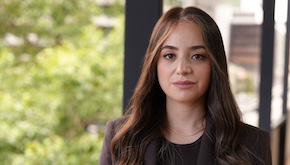
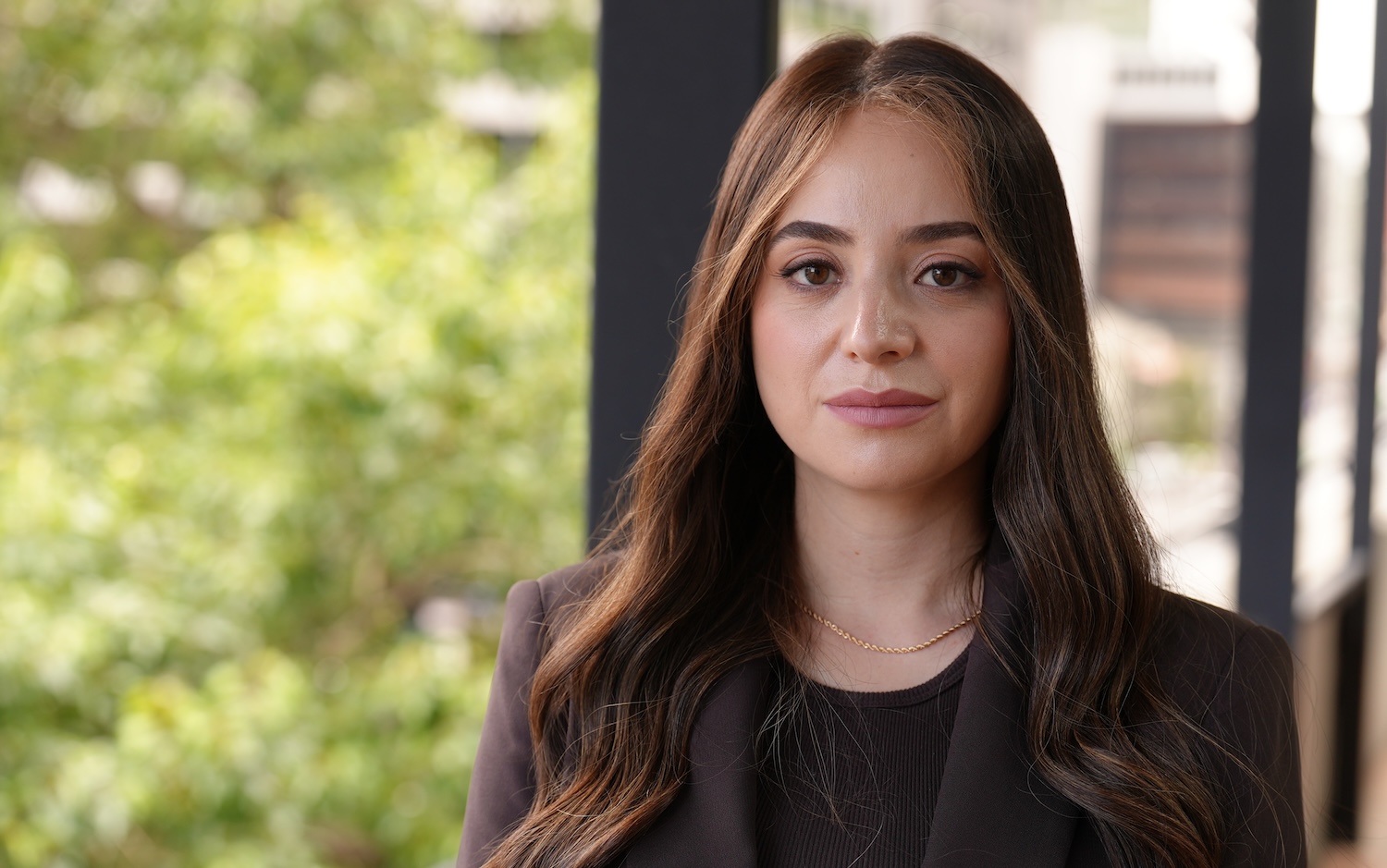
Sheina Gutnick says Australia’s response to antisemitism must move from national hearings and public statements into local communities, where hatred is often first seen and where practical action can be taken.
Her father, Reuven Morrison, was killed in the Bondi Beach Chanukah massacre while trying to stop the terrorists.
Now, recently appointed as Combat Antisemitism Movement’s (CAM) Australian Public Affairs Advocate, Gutnick told JWire that CAM’s immediate focus is its Local Government Summit on Social Cohesion and Antisemitism, to be held at Bondi Beach on November 26 and 27.
CAM is an international organisation that works with governments, councils, community groups and civil society partners to track, expose and counter antisemitism.
The summit, co-hosted with Waverley Council, is being planned ahead of the release of the final report of the Royal Commission on Antisemitism and Social Cohesion. The report is due on December 14, the first anniversary of the Bondi attack. She says it will bring together mayors, councillors, senior council officers, interfaith leaders, community figures and government representatives from across Australia.
Gutnick said the aim was to ensure local leaders understood the scale of antisemitism before the commission’s recommendations were handed down.
“Right now [CAM is] focusing on the summit,” Gutnick told JWire. “The intention [is] that beforehand, you’ll be able to speak to all members of parliament or council members or the mayor. When the recommendations come out, they’ll already have a much bigger understanding of the importance of it.”
The Royal Commission’s interim report was tabled in Parliament on April 30. It examined the circumstances of the Bondi terrorist attack and made 14 recommendations, including measures relating to security for high-risk Jewish festivals and events, counter-terrorism coordination and firearms controls.
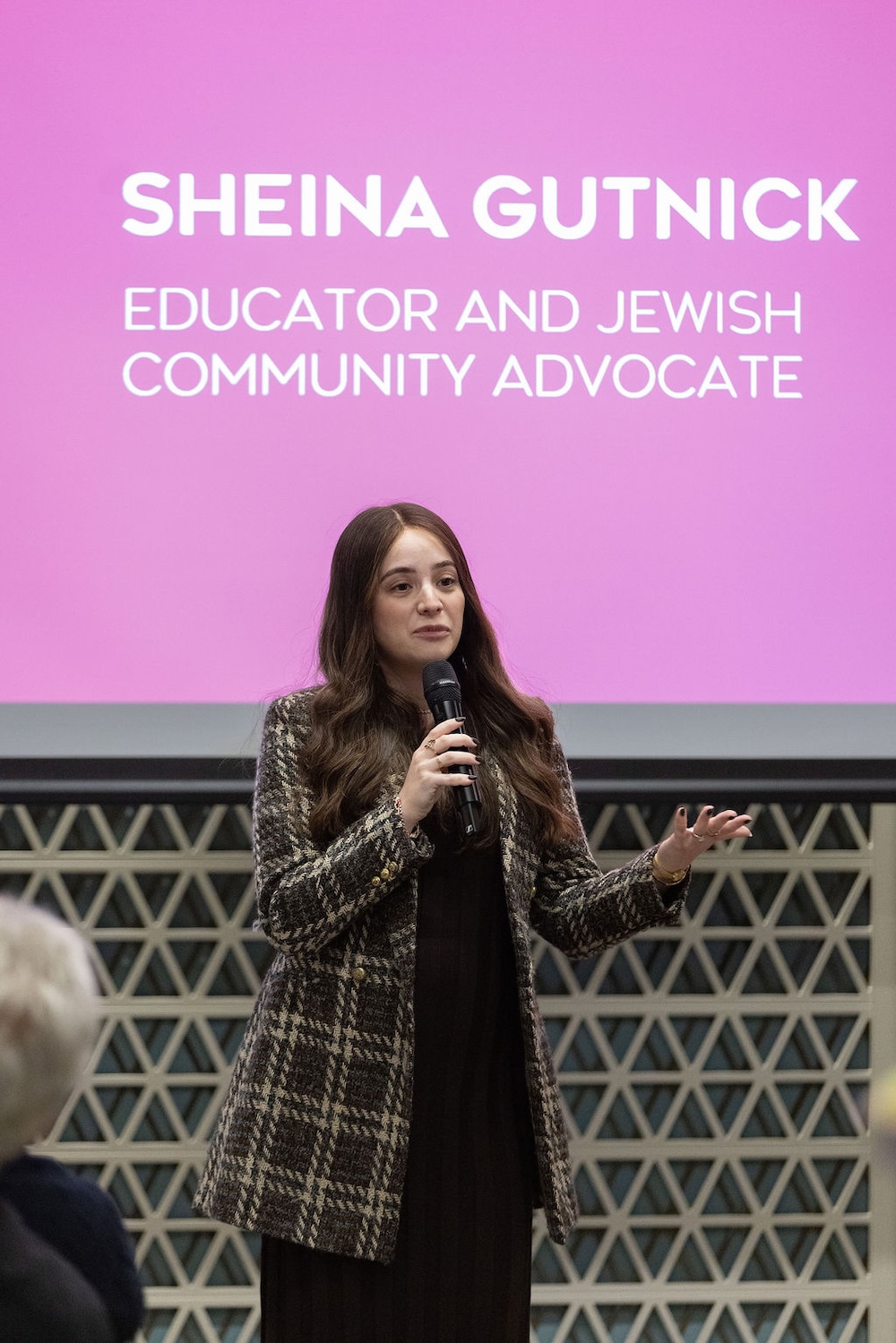
Gutnick said the attack had exposed serious concerns about coordination between government agencies and firearms controls.
“It’s been shocking … the lack of information between state [and] federal,” she said. She also said it was “incredible” that a person could hold a legal gun licence while on a watch list.
For Gutnick, the council focus is not symbolic. She said antisemitism is experienced in streets, schools, universities, community centres and public places, not only in national politics.
She said her recent visit to Darwin showed why local engagement matters. During the trip, she spoke to members of the Jewish community and others about resilience and faith, took part in group sessions with psychologists, met politicians and council members, and worked to build support for the Bondi summit.
Gutnick said CAM sees antisemitism within the wider issue of social cohesion and wants councils to understand what is happening in their own communities.
“When you have the understanding on a grassroots level, you’re able to really make changes on the ground rather than the high-up politicians that don’t really understand day-to-day happenings in certain catchments of areas that differ from one another,” she said.
She said the Darwin reception was strongly supportive.
“Fantastic, it was absolutely fantastic,” she told JWire. “In person, I have never had a single negative encounter. There’s a lot of online rhetoric, but in person, there’s nothing.”
Gutnick said CAM’s Australian work is also informed by its international network, which monitors antisemitic trends and legislative responses in other countries.
“The international team … [is] continuously in touch with all the work that different members are doing within different countries,” she said. Gutnick said it was important to track global developments and the “legislation implementation” that could make “positive changes”.
The Bondi summit will build on CAM’s 2025 Australian Mayors Summit Against Antisemitism, held on the Gold Coast, which drew more than 250 local government leaders from urban, regional and remote Australia. The Bondi meeting will focus on council-level action, including deradicalisation and early intervention programs, interfaith partnerships, community safety and practical frameworks councils can adopt.
Gutnick said there was stronger interest this year because of the Royal Commission and the Bondi attack.
“There’s a lot more interest this year due to the Royal Commission, due to Bondi,” she said. “It’s gaining a lot more traction, so we want to make it as big and [effective] as we can.”
She said the summit would also look beyond Jewish voices to speakers who could explain why antisemitism is spreading and what broader social forces are allowing it to grow.
Gutnick pointed to the rise of both the extreme right and extreme left, saying the “horseshoe theory” showed how the two extremes could meet.
Gutnick’s advocacy is deeply personal. Her father, Reuven Morrison, was killed after confronting the attackers at Bondi. CAM has said he threw bricks at the gunmen during the attack.
After giving evidence to the Royal Commission, Gutnick said she had spoken “not only as Reuven Morrison’s daughter but on behalf of every Australian Jewish family that was told for too long to keep our heads down and hope it passes”.
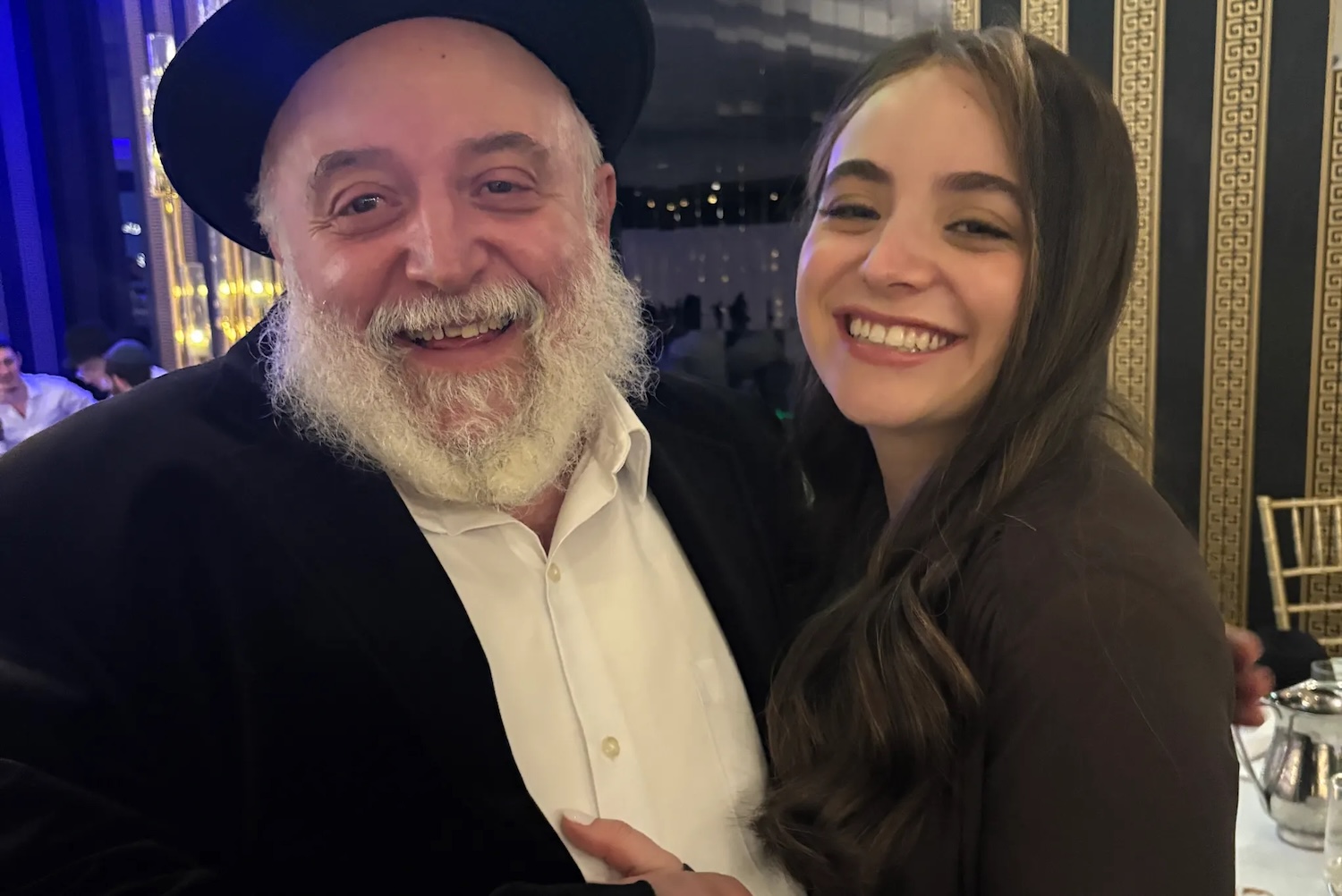
“It did not pass. It came to Bondi,” she said. “The Royal Commission is Australia’s chance to make sure no other family has to endure what mine has.”
“What sold me on CAM was the fact that they saw me as not just someone that had the ability to talk to media and strategise … but also had the passion, a personal story, to be able to view pride, resilience and Jewish identity within the Jewish community while we’re going through such a dark, horrific period,” she said.
She said she was also able to speak to the experience of the religious Jewish community, whose members’ visibility can make them more exposed to antisemitism.
“The Jewish community has never been so represented, but they never had someone sort of representing the scope of what they go through, that media is interested and able to talk to them,” she said.
Before joining CAM, Gutnick worked as a behavioural therapist and later headed a learning department at a Jewish school. She has also worked in women’s health, reproductive health and genetic health issues within the religious community.
CAM CEO Sacha Roytman said Gutnick’s testimony at the Royal Commission was “a moral wake-up call for every Australian leader”, adding that the Bondi massacre “did not happen in a vacuum” and followed “years of escalating hate that institutions chose to manage rather than confront”.
Gutnick told JWire that after the summit she planned to continue travelling across Australia, speaking to Jewish communities and educating schools and universities where many students may never have met a Jewish person.
She said the aim was to help young Australians understand Jewish identity before they were exposed to antisemitic rhetoric online.
“After the summit, [it is] back to travelling across Australia, speaking to Jewish communities, also educating universities and schools that might have never met a Jewish person beforehand to help them understand what being Jewish means,” she said.
She also said Jewish organisations needed to work together more closely, rather than duplicating each other’s work.
“I think it’s so important to build connections with organisations that are already doing work, so you can do work more effectively,” she said. “When you combine resources and data … we could have such an impact.”
CAM Senior Advisor for Australia Alex Polson said the Bondi summit would turn council-level activity into a national framework.
“Since the Gold Coast summit last September, councils from every state and territory have stepped up, adopting strategies, passing resolutions and building partnerships with their local communities,” Polson said. “The Bondi summit turns that grassroots momentum into a coordinated national framework and, for the first time, brings every tier of government into the room with the councils doing the hard work on the ground.
“Waverley has written the playbook. Bondi is where we hand it to the rest of the country.”
Waverley Council was the first council in Australia to adopt a Strategy to Combat Antisemitism in March 2025 and later released a model strategy for other councils.
Bondi is also tied to Gutnick’s family history. She told JWire her father and his partners helped build the Chabad Bondi shul after years of opposition.
“My dad fought Waverley Council for 12 years to get that project underway,” she said. “My dad didn’t take no for an answer.”
For Gutnick, holding the summit in Bondi sends a clear message.
“This is the community that bore the cost of antisemitism in its most brutal form,” she stated, “and this is where the national response has to deepen.”