
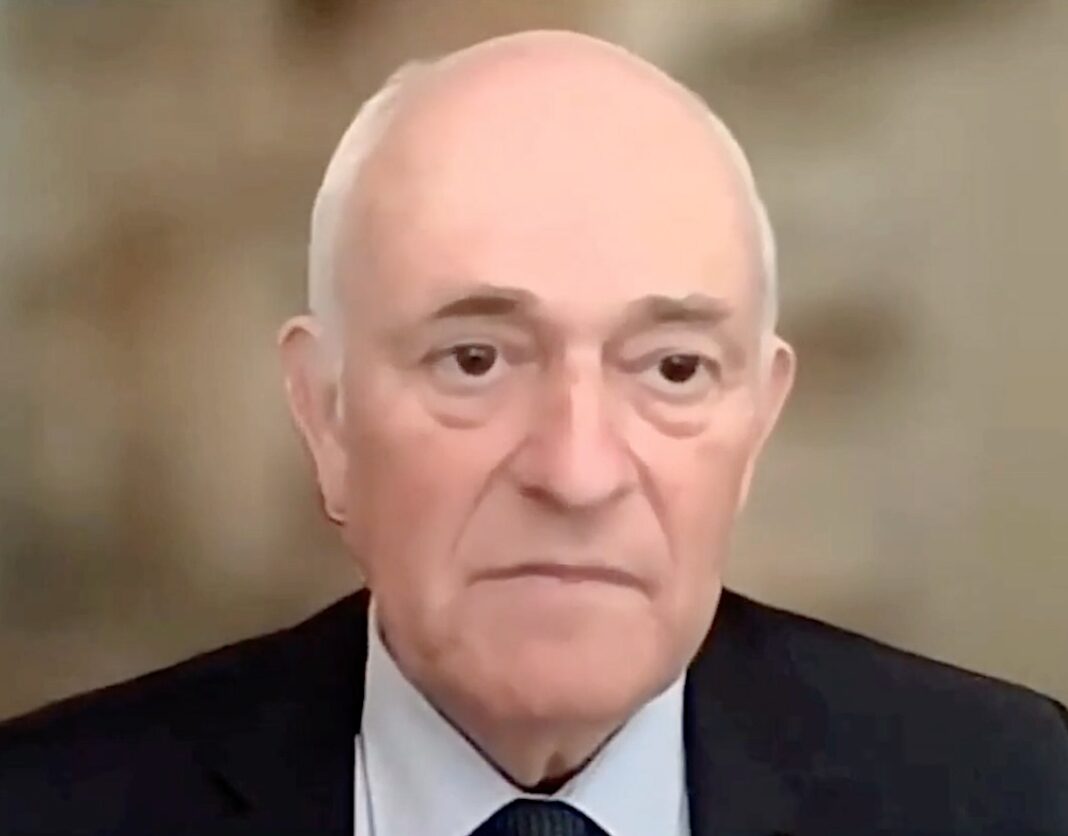
Executive Council of Australian Jewry co-CEO Peter Wertheim has told the Royal Commission into Antisemitism and Social Cohesion that government support for Jewish community security is substantial and appreciated.
However, he said rising antisemitism continues to drive security costs beyond available funding.
Giving evidence during the Royal Commission hearings on Thursday, Wertheim said the Jewish community remained “always playing catch-up” because funding estimates were based on past costs while security needs continued to grow.
“The amounts that we’ve requested are always estimates based on what has occurred up to the point where we provide that estimate,” he said.
“So in a sense, we’re always playing catch-up because the costs keep increasing and the level of need for security measures keeps increasing.”
While acknowledging the scale of Commonwealth support, Wertheim said it had never fully matched the demand created by the changing threat environment.
“Although the amounts are significant and generous and very much appreciated, they’re always less than what it turns out is required,” he said.
His evidence came during the fourth day of Hearing Block 5, which is examining security arrangements for Jewish organisations and governments’ responses to rising antisemitism.
Rather than focusing on funding alone, Wertheim argued that the need for increasingly sophisticated security reflected a broader deterioration in the environment facing Jewish Australians.
He said the community would much rather live in a society where schools, synagogues, aged care facilities and community events no longer required guards, barriers and other protective measures.
“The overwhelming sentiment” within the Jewish community, he said, was that people would prefer not to need the money at all.
Wertheim also rejected claims that Commonwealth security funding could be diverted by the ECAJ for political advocacy or overseas purposes.
“The suggestion that we can allocate these funds as we see fit is just an outrageous falsehood,” he said.
He said the funding was tightly governed and could only be used for approved security purposes.
Wertheim said misinformation about the funding had consequences beyond public debate.
“It’s worse than that because it gives rise to the kind of hostile sentiment in the wider community that produces antisemitism and produces the need for security funding that we’d much rather do without if we could have a safe community,” he said.
As an example of the environment facing Jewish Australians, Wertheim referred to an incident the previous day at Archer Park in Bondi. He said two ECAJ colleagues accompanied Sydney Swans players and club representatives, who had come to learn about the December 2025 terrorist attack from an ECAJ colleague who survived it. One of his colleagues was verbally abused by a woman despite police and media being present.
“It’s the kind of social environment we are living in at the moment,” he said.
“We would prefer not to live in that sort of environment and to do without the money.”
Earlier in his evidence, Wertheim outlined the growth in Commonwealth funding for Jewish community security following the October 7, 2023 Hamas attacks and the firebombing of Melbourne’s Addas Israel Synagogue. He said the additional funding recognised the heightened threat but had not kept pace with rising security costs.
The commission heard the latest funding round attracted 192 applications from Jewish organisations seeking security assistance.
Wertheim’s evidence reinforced a broader theme emerging from the commission’s security hearings: government funding has expanded significantly, but the threat driving the need for that funding has not diminished.
His message was that security funding is a necessary response to today’s threat environment, not a solution to it.
Until antisemitism declines, he told the commission, the demand for security around Jewish institutions will continue to grow, leaving governments and the community in a continual cycle of increasing protective measures.