
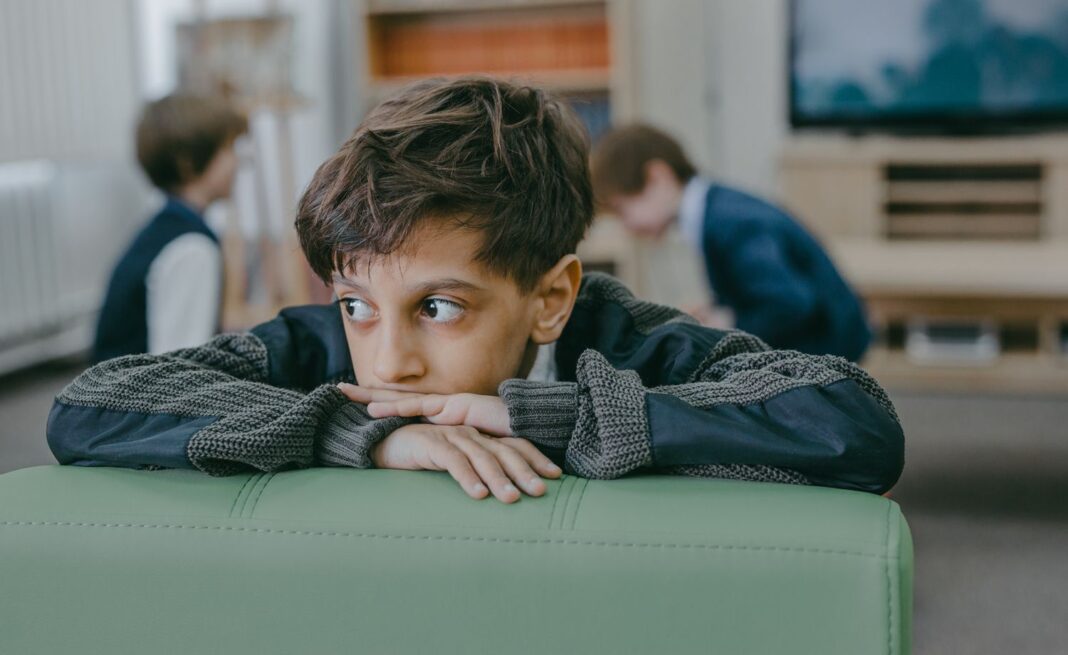
Children as young as 10 are being excluded from birthday parties and online group chats because they are Jewish, an inquiry probing antisemitism has been told.
The Royal Commission into Antisemitism and Social Cohesion has been told that Jewish children are increasingly being left out of social activities, excluded from online groups, and labelled with terms they are too young to fully understand.
Senior Rabbi Allison Conyer from the Union for Progressive Judaism told the inquiry that many Jewish Australians are experiencing growing feelings of isolation. Some are choosing not to openly express their identity, while others are stepping back from community involvement due to safety concerns.
Reports presented to the commission included accounts of children as young as 10 being excluded from birthday parties and group chats because of their Jewish identity, while older students have faced harassment and bullying at school.
“Even my congregants who knew nothing about Israel, who didn’t consider themselves Zionists … were cancelled by their friends just because they were Jewish,” Rabbi Conyer said.
She explained that the impact is not limited to school environments. Some individuals travelling to Israel now avoid discussing their plans with others, and many feel hesitant to share aspects of Jewish culture during school multicultural events.
“They can’t express that (pride) to other people without being shut down or condemned,” Rabbi Conyer said.
According to Rabbi Conyer, negative attitudes toward Jewish Australians have become more commonplace in everyday interactions. She described an incident involving a Jewish pharmacist who was verbally abused and had medication thrown at him by a customer.
“Nobody stood up. Nobody said anything. Nobody defended him,” she said.
She also spoke about children being called offensive names, members of her congregation losing friendships following the events of October 7, and her own son experiencing verbal abuse while wearing a kippah.
She noted that nearly all of Australia’s 19 Progressive Jewish synagogues have received bomb threats or abusive communications, contributing to heightened anxiety within the community.
“When we’re walking in our neighbourhood and people are saying ‘hunt the Jews’, they don’t feel safe,” Rabbi Conyer said.
She further described an incident where a congregant was approached by individuals in a car asking for information about where Jewish people lived, claiming they were searching for them.
“Some people are getting used to it. Others are staying away because of that, so we’re losing people.”
The inquiry was also told that enrolments at non-denominational preschools run by Progressive synagogues have dropped by roughly a quarter since the Hamas attack on Israel on October 7, 2023, putting at least one centre at risk of shutting down.
Rabbi Conyer called on authorities to support initiatives that promote interfaith and intercultural understanding, noting that opportunities for engagement between communities have significantly declined since October 7.
“We used to have so many schools come to our synagogue. After October 7, schools didn’t want to come,” Rabbi Conyer said.
“Because of all the security, people think we have secret Jewish business. We don’t. We would love our doors to be open.
“By not having more interfaith and intercultural dialogue, we remove the opportunity to humanise the other.”
While giving evidence on Tisha B’Av, Rabbi Conyer said many Jewish Australians are now grappling with fears that echo historical persecution, including concerns about who might protect them in times of danger.
Former president of the NSW Jewish Board of Deputies, Leslie Berger, also shared how antisemitism has affected his family.
He explained that his children began to feel unsafe after a swastika was painted on their back fence in December 2024.
Their anxiety worsened following a terror attack during Chanukah at Bondi Beach the following year. Mr Berger said his two younger children were alone at home during the incident and became extremely frightened.
His teenage son contacted a non-Jewish friend, expressing fear that their home might be targeted again.
“He told his friend he didn’t feel safe, and his mother got in the car and came and picked up my son and daughter and took them back to her home because they didn’t feel they were safe,” Mr Berger said.
“I felt that I had failed as a parent.” he said tearfully.
Mr Berger said that openly identifying as Jewish in Australia has become far more challenging compared to just a few years ago.
Hearings taking place in Melbourne this week are focusing on security measures for Jewish communities and how law enforcement agencies collaborate with Jewish security groups.
By: Eleanor Wilson/AAP