Secret emails between the Biennale of Sydney and Creative Australia reveal how one of Australia’s leading publicly funded arts events tried to manage repeated controversies over antisemitism and antizionist conduct.
This included maintaining “strict discipline” on its public explanation for ending a controversial artist’s contract.
Documents released under freedom of information laws and obtained by The Australian show artist Bhenji Ra was paid out the remaining balance of her ArtSeen ambassador contract despite internal correspondence stating she had not completed the program’s stipulated events.
The emails also show the Biennale prepared talking points for government ministers and stakeholders, rejected any suggestion of government pressure, and drafted public statements after an opening night performance in which American artist DJ Haram attacked Israel and Zionism.
The fallout went beyond reputational damage. The NSW Jewish Board of Deputies referred DJ Haram’s performance to NSW Police, PricewaterhouseCoopers withdrew support as a major corporate sponsor, and MinterEllison asked for its logo to be removed from the Biennale website.
The controversy has renewed scrutiny of the Biennale’s public funding. The Guardian reported that more than half its funding came from Commonwealth, NSW and City of Sydney grants and that it received $3.197 million in government funding in 2024. ACNC records list $3.44 million in revenue from government, including grants.
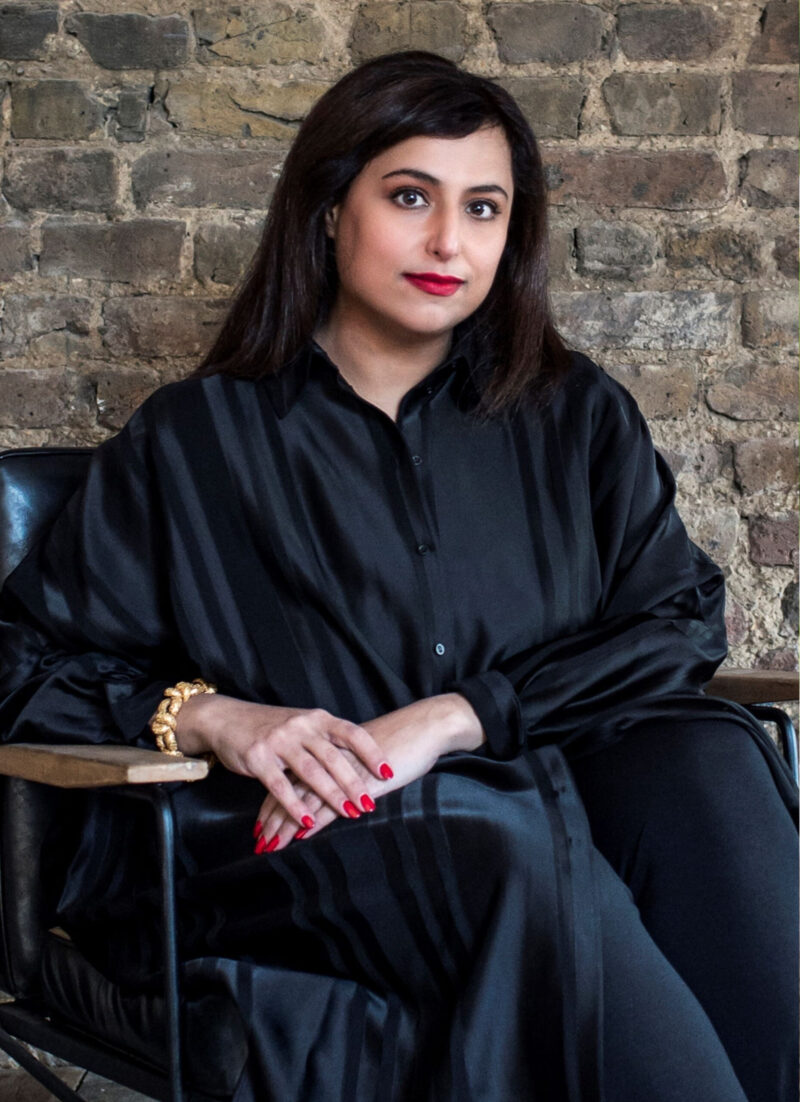
The 25th Biennale of Sydney was curated by Hoor Al Qasimi, a member of the ruling family of Sharjah in the UAE, and ran from March 14 until June 14.
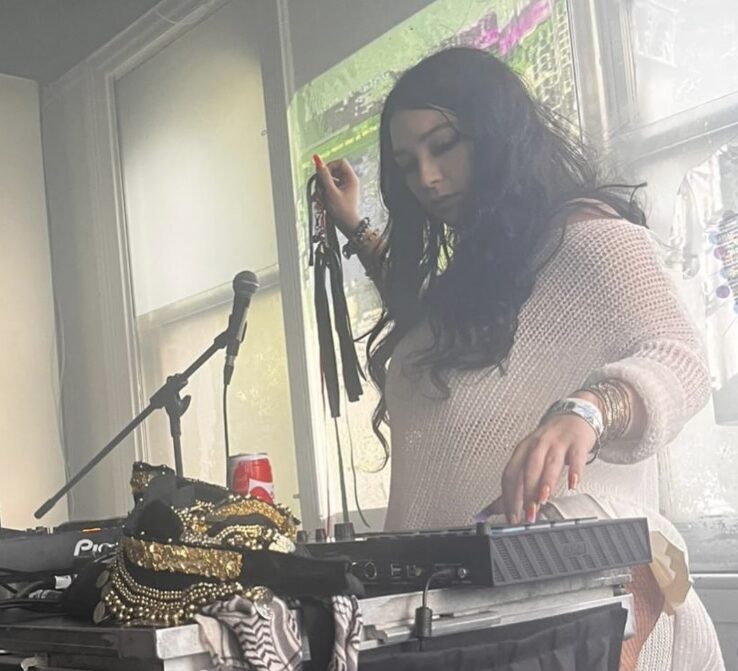
Zubeyda Muzeyyen, who performs as DJ Haram, can be heard in video from the event urging the crowd to “oppose the Zio-Australian-Epstein empire” before leading chants including “long live the resistance” and “glory to all of our martyrs”.
NSW Police investigated whether the remarks breached racial hate laws but later said there was insufficient evidence to begin proceedings.
The Biennale said the performance had not been approved, had departed from the agreed brief and was contrary to the artist agreement. A draft statement prepared after the event said the performance had failed to provide a “trauma-informed” and “psychosocially safe” environment for audiences, according to The Australian. That wording did not appear in the final public statement.
The final statement said the Biennale had “a zero-tolerance approach to racism, antisemitism, Islamophobia, hate speech and any form of incitement” and said the performance had deviated significantly from the agreed brief.
NSW Premier Chris Minns condemned DJ Haram’s comments as “horrid rhetoric” and “distressing”, while NSW Arts Minister John Graham said the remarks were “inflammatory and wrong” and that the Biennale needed to explain how Jewish audiences would feel welcome.
The released documents also show how the Biennale handled the contract of Ra, who had been appointed in January 2025 as the inaugural ambassador for ArtSeen, a philanthropic program for younger arts supporters.
Ra had been criticised over social media activity, including a repost showing a rabbi wrapped in bloodstained Israeli and American flags, holding a rifle, with his foot on the neck of a baby doll. Former Biennale chair and publisher Morry Schwartz complained to then-Biennale chair Kate Mills, and Ra was reportedly cautioned.
Schwartz complained again after Ra posted images from a Gaza rally, including signs reading “Never to disarmament, never to humiliation”. In his letter to Mills, he wrote: “A public Hamas supporter as the ambassador for The Biennale of Sydney. Really!”
In January, Ra faced further criticism over posts she had made or liked, including an image of a poster reading “DEATH TO THE I.D.F” and another suggesting the Bondi attacks were not antisemitic.
According to the released correspondence, Ra’s ArtSeen contract had been due to run until June 30, 2026, with events to be curated and delivered between January 1 and December 31, 2025. But an email sent by the Biennale to Creative Australia executive director of arts Alice Nash on January 13 said the stipulated events program had not been completed.
“The events program stipulated in the contract were not completed during that period,” the email said, according to The Australian.
The correspondence said Ra had conducted one event. The Biennale and Ra had discussed extending the timeline to allow a second and final event to be held in February, but the organisation said it no longer had capacity. Ra’s contract was brought to a close and she was paid in full for the remaining balance.
The Biennale publicly attributed the end of the contract to “operational constraints”. But an internal briefing anticipated media scrutiny and warned journalists would likely connect the decision to criticism of Ra.
“Bhenji Ra may also use the decision to claim her contract was cancelled due to the media controversies,” the briefing said. “Mitigation: this decision is firmly rooted in organisational capacity and program strategy. The Biennale correspondence with Bhenji Ra explicitly cites the operational reasons. The Biennale will maintain strict discipline on this narrative.”
The emails also show the Biennale sought to distance itself from Ra, stating she had been involved in a single ArtSeen event, was not an employee and had no involvement in the 25th Biennale.
Ra has since claimed she was “collateral damage between the Biennale and the far-right Zionist media machine determined to pull the show apart”. The Biennale thanked Ra for her contribution to the launch of ArtSeen and said she had helped establish the program.
The FOI documents also show the Biennale prepared suggested responses for ministers and stakeholders, including lines rejecting any suggestion that government pressure had led to Ra’s contract ending.
The controversy extended to Palestinian-Australian artist Feras Shaheen, whose work with Jonny Scholes was included in the 2026 Biennale program at Campbelltown Arts Centre.
Schwartz had complained to Mills about a September 2025 social media post by Shaheen, alleging it compared him and philanthropist John Gandel to Nazis. He also questioned whether the Biennale’s response to racism and antisemitism had been adequate.
According to The Australian, internal correspondence shows the Biennale did not directly address the substance of the complaint. Instead, it said concerns about social media content or discrimination should be referred to authorities such as NSW Police or the eSafety Commissioner.
Mills stepped down in late June after 12 years on the Biennale board, including 11 years as chair. Arts administrator and festival producer Adelle Robinson, a board director since 2021, was appointed as her replacement.
The FOI documents have placed fresh pressure on the Biennale over how it responded to complaints about antisemitism and antizionist rhetoric at a publicly funded arts institution.
26 years ago [The Age 22nd Jan.] Darren Gray, The Executive Council of Jewry investigate church agencies contracts…..
Whereby some agencies demanded their employees have Christian values causing Justice Howard Nathan to way into the situation…
It’s a never ending story and always shall be.