
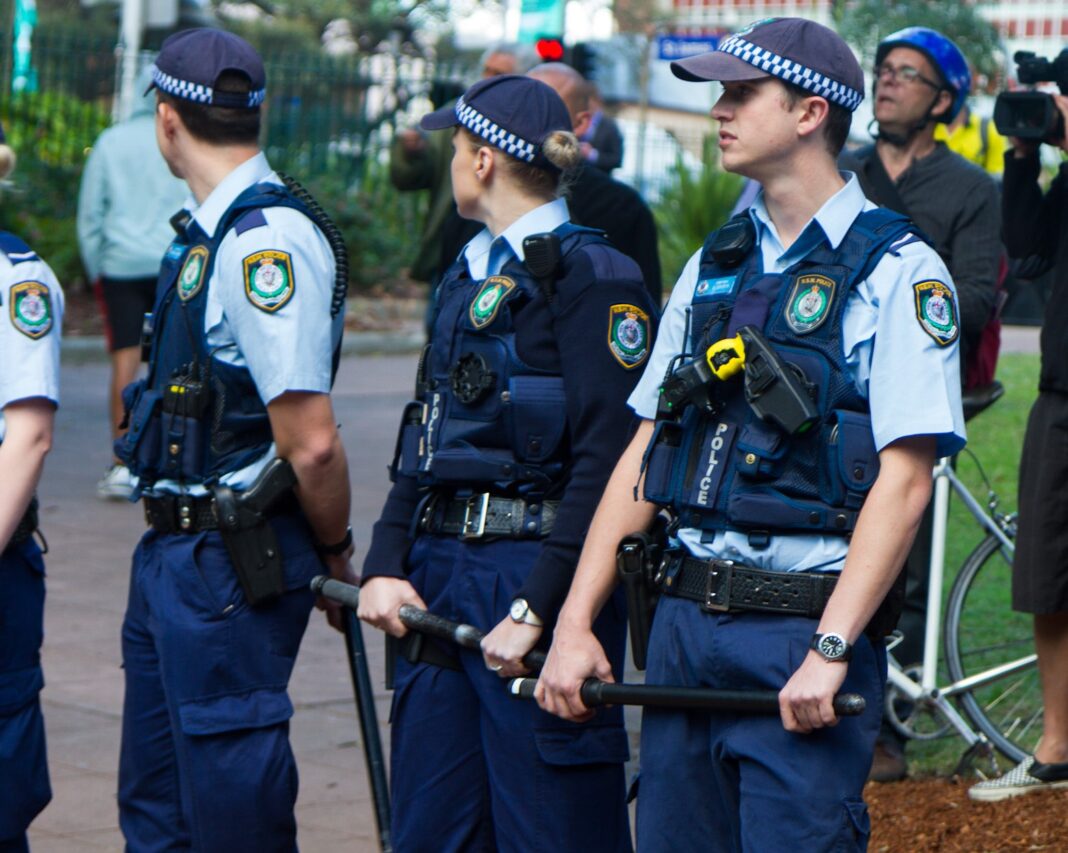
NSW Police has rejected calls for armed private security officers at Jewish community events, insisting firearms should remain under police control despite evidence that specialist officers are not always close enough to respond quickly to a terrorist attack.
The dispute emerged before the Royal Commission into Antisemitism and Social Cohesion as security experts and police examined protection for major Jewish gatherings following the Bondi Chanukah by the Sea attack.
Risk consultant Gavriel Schneider told the commission that Australia’s crowded-place strategy relied too heavily on people escaping, calling triple zero and waiting for emergency services.
“The more time an attacker has, the more freedom of movement they have, the more casualties,” Schneider said.
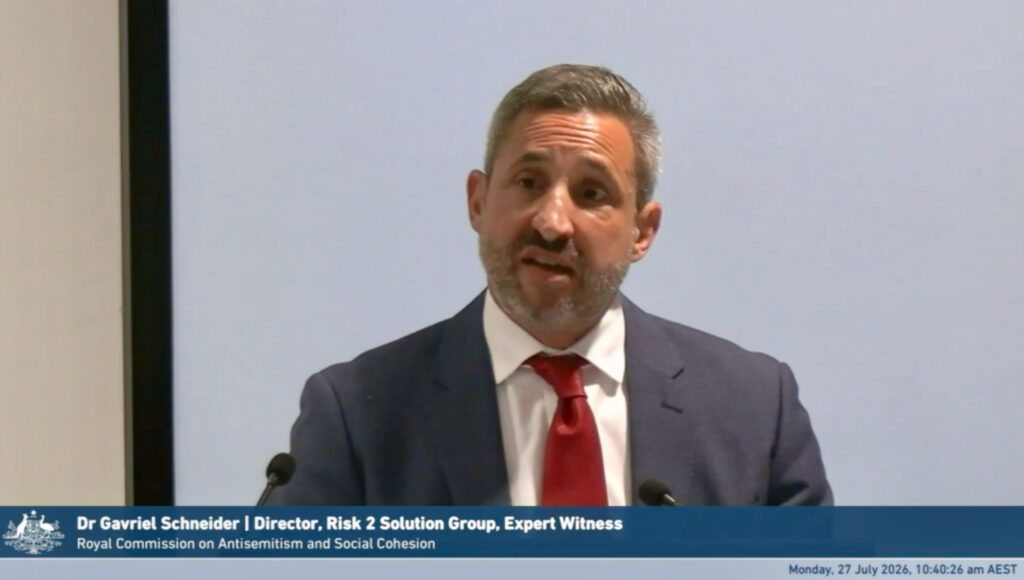
He said security planning needed to address the period between an attack beginning and an effective police response arriving.
“What are we doing about that window?” he asked.
Schneider said private security officers were already stationed at many venues and events but remained largely absent from government planning for terrorist attacks.
“We are missing the ability to leverage our private security industry,” he said. “It’s almost been ignored out of this equation.”
He argued that trained and licensed private officers should help delay or disrupt an attacker before specialist police arrived, including through armed protection at high-risk outdoor gatherings such as Chanukah by the Sea.
“If we are able currently to deploy armed security in a controlled manner with the required standards, I would say there is the ability to safely deploy,” Schneider said.
He said any expanded role would require strict training, licensing, oversight and coordination with police. Private security would support police rather than replace them.
Commissioner Virginia Bell questioned whether Australians would accept more visibly armed personnel at community events.
“The notion that one makes a community safer by arming more people might not be one that enjoys broad support in the Australian context,” she said.
Schneider acknowledged the concern but said authorities still needed an answer for the first minutes of an attack, when security officers at the scene might be the only trained personnel able to intervene.
He also criticised what he described as a compliance-based approach to event security, where organisers installed bollards and cameras, hired guards and notified police without properly testing how their plans would operate during an attack.
He said high-risk events needed rehearsed procedures to delay attackers, protect people unable to escape and reduce casualties before emergency services arrived.
NSW Police Deputy Commissioner David Hudson opposed expanding firearms powers for Jewish community security organisations.
“Protection of all members of the community is the responsibility of the police,” Hudson said.
He said organisers needing additional armed protection should use user-pays police officers rather than private guards.
Hudson said user-pays officers operated under police training, command and oversight, although he accepted the system imposed a heavy financial burden on community organisations.
He warned that allowing particular communities separate rights to carry firearms or routinely wear body armour risked worsening tensions.
“It’s our opinion that allowing certain areas of society, no matter what those areas are, to have special privileges in relation to their security, would further fracture fairly tenuous situations and relationships between different groups,” he said.
Hudson said such arrangements would be viewed by some as police or governments showing favouritism.
“If our risk assessment or threat assessment indicates that we require an armed response, we will have an armed response,” he said.
Hudson’s position comes as the NSW Government continues to consider the issue. Premier Chris Minns said after the Bondi attack that the government was actively examining wider firearms access for CSG.
Hudson pointed to the new NSW Police Armed Response Command, which is expected to deploy 225 armed officers across metropolitan Sydney and take over much of the standing protection of Jewish sites.
Former senior UK counter-terrorism officer Scott Wilson also favoured a police-led response but agreed that specialist armed capability needed to be close enough to intervene within minutes.
Wilson praised the courage and speed of the general duties officers who responded at Bondi but said they lacked the specialist training and equipment needed to confront attackers armed with rifles.
“I felt that the primary limitation was there weren’t the right officers to be there,” Wilson said.
“Response time was great and the officers were very brave at what they did.”
He said general duties firearms training was sufficient for incidents involving a handgun or knife but not a coordinated terrorist attack involving long-range weapons.
Wilson expressed a preference for user-pays police at major events because they operated under the same training, command and accountability arrangements as on-duty officers.
Licensed CSG security officers can already carry weapons while protecting some schools and synagogues, but personnel at Chanukah by the Sea were unarmed.
The evidence revealed broad agreement that the first minutes of a terrorist attack are decisive, but a clear split over who should provide the armed response.
Schneider supported a regulated role for trained private officers already stationed at an event. Hudson insisted armed protection should remain with police, while Wilson backed specialist police teams but questioned whether enough would be close enough when an attack occurred.