
Memoir of grief and hope Book review by Anne Sarzin
Unless fate cruelly reverses the natural order of the generations, most children will mourn 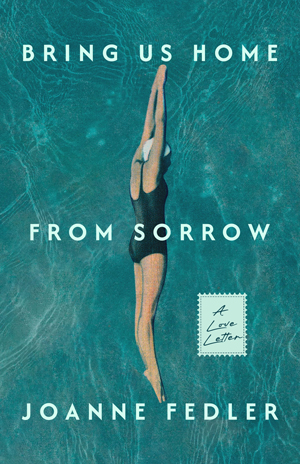 the death of their parents, when the emotional umbilical cord connecting us to our mothers is truly severed, or when we recalibrate our lives in multiple ways after the loss of a father. So what can one say about bereavement that hasn’t been said before? Well, quite a lot actually, if you read Joanne Fedler’s Bring Us Home From Sorrow: A love letter, a beautifully crafted, profoundly moving elegy and personal eulogy on the death of her mother.
Fedler explores the arc of bereavement from several perspectives. Importantly, for those who have left parents in their home country and migrated elsewhere, she evaluates the trauma exacerbated by distance for several reasons. In her specific case, it was the tyranny of the pandemic restrictions and rulings, the cancellation of direct long-distance flights from Australia to her homeland South Africa, the financial burden of excessive airline expenses at that time, and the daunting prospect of quarantining for a fortnight in a hotel room on her return to Sydney; all of which added complexity to her decision to share the final months of her beloved mother’s life.
Additionally, Fedler examines with clarity the challenges of returning to siblings—sisters Laura and Carolyn, a medical doctor—whom she loves but who have led separate lives independent of hers for the past 20 years, referring to herself as, ‘an alien species landed on Planet Family, trying to remember how to speak their language’. She probes analytically her interactions with her sisters and the ebb and flow of their conflicting emotions, ideas and their competing loyalties within the confines of a parental home, where all are drawn into claustrophobic intimacy around their dying mother, and an elderly father already grieving in anticipation of his wife’s death and thrown into what Fedler describes as ‘an existential spin’. Paradoxically, that very intimacy of all gathering together in one place also revives and nurtures anew their connections, resulting in a strengthening of sisterly bonds.
Central to Fedler’s sorrowful immersion in this highly charged setting is her courageous probing of the mother-daughter relationship, in which her own past pain and torturous sense of childhood injury and abandonment re-surface. At the same time, she notes what she terms, ‘the fissures of her [mother’s] vulnerability’. With intellectual honesty, however, she arrives slowly at an understanding of her mother’s pragmatic choices and rational mindset, attempting to reconcile these with her own yearnings for maternal reassurance in those distant years and with her present almost mystical longing to bring some spiritual comfort to her mother, who steadfastly rejects the solace religious concepts and practices might give in times of trial. Once these realisations crystallise, Fedler throws herself into the everyday tasks that can offer a measure of reprieve and relief to others in the household, immersing herself in food preparation, shopping and maniacally re-landscaping the garden with succulents that, mistakenly, displace a cherished patch of flowers her mother planted and loved.
Amid all this emotional tumult, there is the centrality of her mother’s deteriorating health and the medical management of her terminal condition. Fedler portrays quite brutally the impact of chemotherapy on her mother’s diminishing quality of life, while at the same time awaiting laboratory test results that will determine whether hope soars or plummets. At what stage should the daughters share with their mother the depressing reality of test results, those incriminating cancer markers that will erase any hopes of a sustained recovery and more time with those she loves. These stresses add immeasurably to the underlying strains that shatter their days and nights.
An aspect of their lives in Johannesburg that comes under scrutiny is the family’s reliance on their caring African staff, Nomusa and Bridget, who share this journey with them. Their interaction with the family is characterised by mutual respect and affection, providing a tender support system that sustains all of them. This comes into sharp focus with the constant flurry of activity in the kitchen, the emphasis on cooking and the preparation of appetising meals, all of which reflects their mother’s lifelong culinary passion, her insistence on quality products and her cherished recipes. Her appreciation of flavours, colours, spices and the best ingredients informs their choice of the meals they share around the dining table. As Fedler notes, however, ‘There is nothing fun or enjoyable about a meal on death row’.
Fedler charts the progression of her own pain, her dedication to caring for her mother, pleasing and pampering her. Then, with bitter insight she acknowledges and describes her longing to run away, which she does briefly, absconding to Holland to find repose, rest and reassurance with an old friend, before returning once again to Johannesburg. One wonders what impact her departure at this time had on the fragile psyches of those she left behind, who might have viewed her absence as a betrayal of that united family front so vital in coping with their mother’s death.
There is an inevitability about the narrative arc of this book. A terminally sick mother in her eighties bravely battling ovarian cancer in order to live another day, surrounded by her loved ones trying their utmost to add smiles, sparkle and sunshine to these fleeting hours. Initially, I wondered whether this prolonged immersion in the dying process was somewhat self-indulgent, However, Fedler writes with a fluency and facility that won me over. She has the ability to concentrate a thought in a poetic phrase and to penetrate to the crux and core of a matter with intelligence and accuracy. This is a moving study of the disruptive blow death deals to us at any age. There is also a depth of understanding about the mourning process and the slow and, at times, painful evolution of acceptance, which could prove helpful to those struggling with their own losses and the painful absence of loved ones. For those who need support in coming to terms with situations that death has destabilised, Fedler’s compassionate portrait of a family coping and not coping, and the mourners’ long road to regaining equilibrium and a foothold in life might serve as a viable source of consolation and enlightenment.
Through it all, the author looks into the mirror, seeing her own strengths and flaws, as well as peering into the hearts of those around her. It is this unflinching honesty that gives the book its propulsive character. Fedler is a swimmer who finds the ocean restorative and therapeutic and it plays a big part in her story. While we have all swum in the amniotic fluid of our mother’s womb, not all of us reside conveniently close to the ocean. While we might not have recourse to sacred waters that promise peace and an ultimate oneness with the cycle of life, Fedler demonstrates a passion and investment of time and energy in her particular pathway to peace, which is surely something we can all hope to emulate. She’s not a psychologist or a psychiatrist, but she maps the country of the human heart and, in so doing, she invites us into a landscape of understanding, acceptance, renewal, and peace.
Bring us home from sorrow: A love letter
Joanne Fedler
Ginninderra Press, Bentleigh, Melbourne
2026