
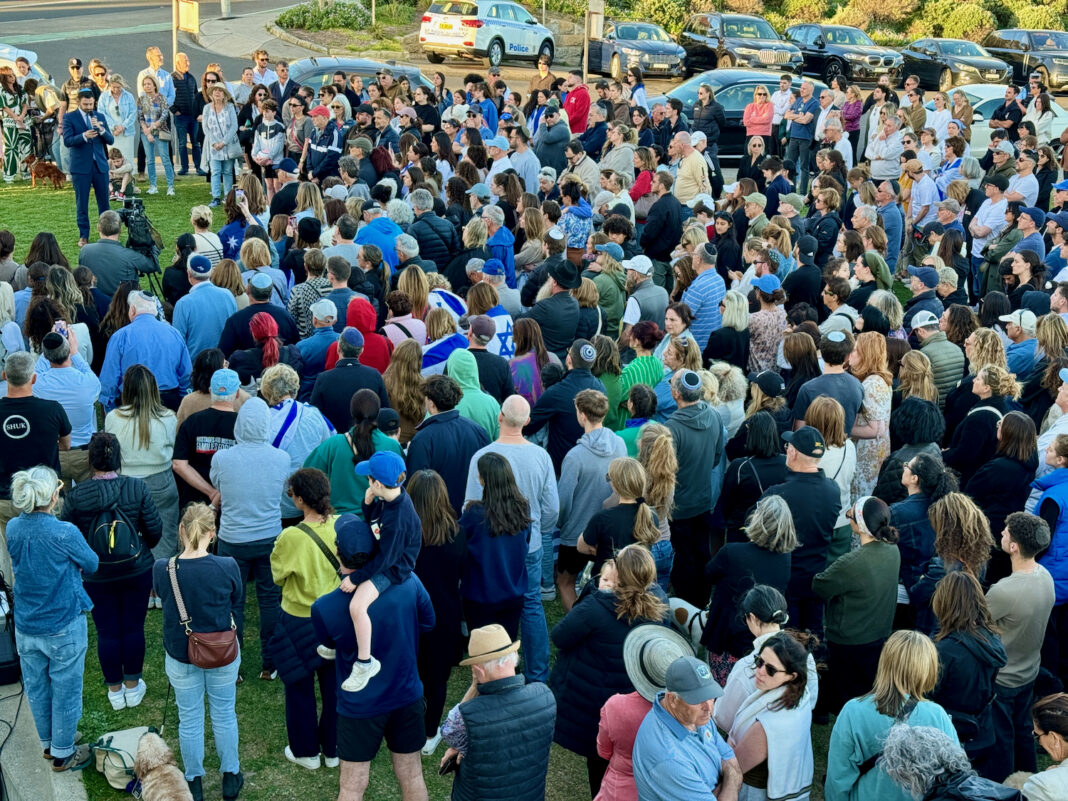
The Royal Commission has heard that the key question for Jewish community security is not whether police should respond to threats, but whether the right specialist capability can be available quickly enough when a major attack occurs.
A former UK counter-terrorism officer told the commission that NSW Police officers responded with courage during the Bondi Chanukah by the Sea attack, but warned that specialist armed teams needed to be positioned close enough to respond rapidly to terrorist incidents.
Scott Wilson, a former senior Metropolitan Police counter-terrorism officer with more than 30 years’ experience, said the issue was not the commitment of frontline police but whether the officers immediately available had the specialist equipment and training needed for the attack they faced.
“The response and the speed of the response by the New South Wales Police officers was tremendous,” Wilson told the commission.
“I felt that the primary limitation was there weren’t the right officers to be there.”
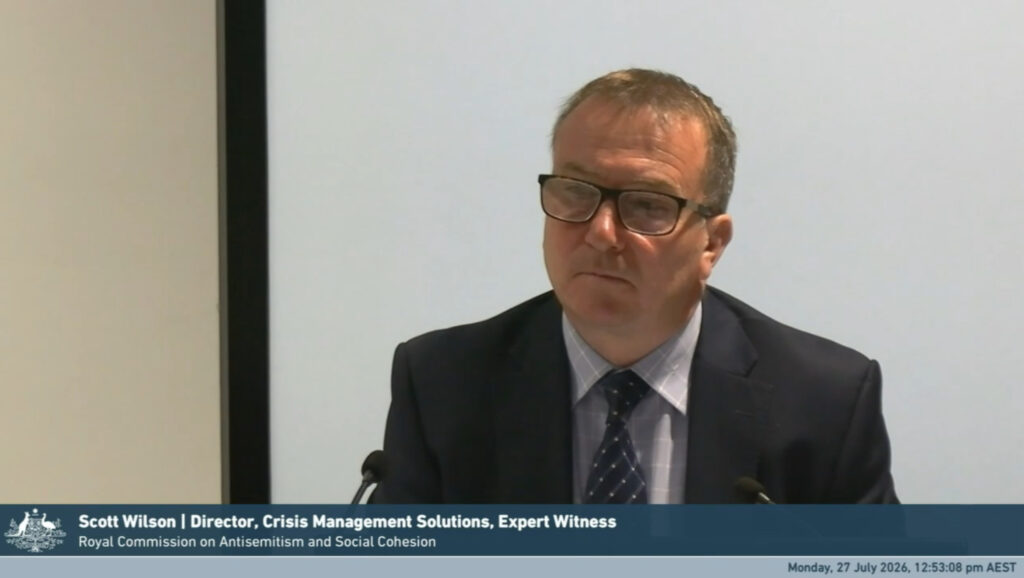
Wilson was giving evidence as the commission examined Jewish community security arrangements following the December 2025 Bondi attack, including the protection of major events and the relationship between police, government and community security organisations.
He said attacks involving rifles and other long-range weapons presented a different challenge from incidents involving handguns.
“It’s a gunfight, isn’t it? That’s what it is,” Wilson said.
Wilson said the ability to respond quickly was critical in preventing further loss of life.
“It’s all about proximity,” he said, explaining that specialist firearms officers needed to be close enough to reach a terrorist incident within minutes.
He pointed to the United Kingdom’s model of maintaining specialist armed response vehicles in major cities as an example of how police forces had adapted to changing terrorism threats.
Wilson said attacks including Mumbai in 2008 and later Islamic State-inspired terrorism had changed expectations about how police should respond.
“If we look at the threat level after Mumbai and then the huge increase in the threat level with ISIS and ISIL, then without a doubt you need highly trained specialist firearms officers in your main cities,” he said.
Wilson supported the establishment of the NSW Police Armed Response Command, saying dedicated specialist capability was now an important part of responding to terrorism threats.
He also praised NSW Police officers involved in the Bondi response.
“They should be commended to the highest level within New South Wales Police and Australia. Very brave of them,” he said.
Deputy Commissioner David Hudson, NSW Police’s counter-terrorism lead, told the commission that police remained responsible for protecting the community.
“Protection of all members of the community is the responsibility of the police,” Hudson said.
Hudson rejected calls for Jewish organisations or other community groups to have separate armed security powers.
“It’s our opinion that allowing certain areas of society, no matter what those areas are, to have special privileges in relation to their security, would further fracture fairly tenuous situations and relationships between different groups,” he said.
He said security decisions were based on intelligence and threat assessments, with police responding when those assessments indicated a need.
“If our risk assessment or threat assessment indicates that we require an armed response, we will have an armed response,” Hudson said.
Hudson said police also considered the importance of reassuring communities facing heightened threats.
“It has always been a priority to reassure the public,” he said.
The evidence highlighted the practical challenge facing Jewish organisations: how to ensure schools, synagogues and public events remain safe in an environment where security concerns have increased significantly since October 2023.
Wilson said police remained his preferred option for armed protection at major events because officers operated within established training, command and accountability structures.
“We have a fairly strong preference for user pay police in those type of circumstances because they are trained in the same methodology as the on-duty police that are present,” he said.
The hearing also examined the United Kingdom’s Martyn’s Law, introduced after the Manchester Arena bombing, which requires certain venues and event organisers to prepare for terrorist threats through security planning and emergency procedures.
Wilson said a major public Jewish event such as Chanukah by the Sea would likely require formal security planning under that model.
The commission continues to examine whether Australia’s existing approach provides sufficient protection for Jewish communities and how responsibility should be shared between police, governments, event organisers and community organisations.