
Like stagnant, unrefrigerated salami inauspiciously ingested during a heatwave, Ambassador Tom Rose is a gift that keeps on giving.
The U.S. ambassador to Poland has made it his mission to absolve non-Jewish Poles in Nazi-occupied Poland during World War II of any complicity in the annihilation of their Jewish neighbours. In so doing, he distorts Holocaust history by adopting a false narrative promoted by far-right nationalist elements in that country.
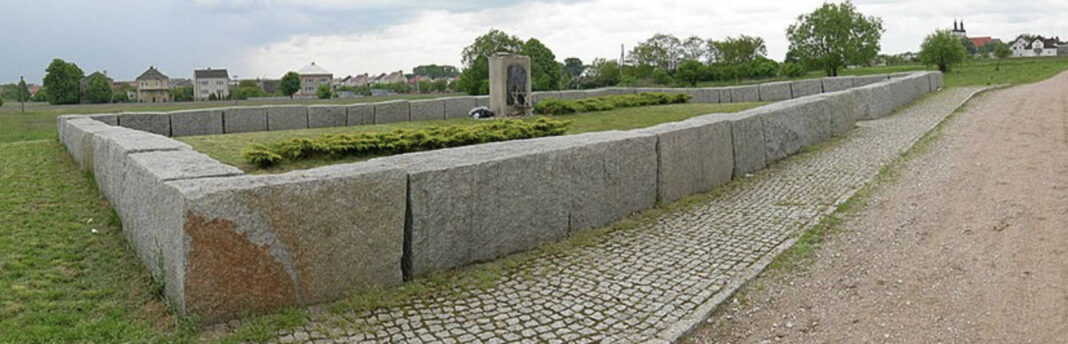
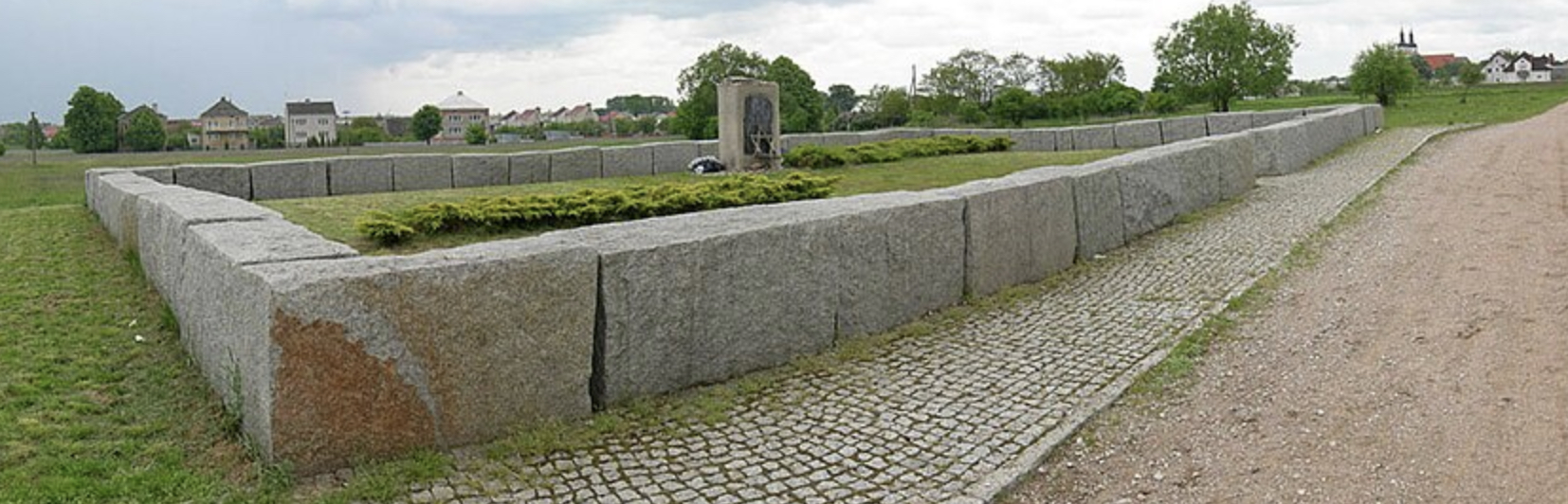
His most recent endeavour in this regard is a video he released to mark the 85th anniversary of a notorious pogrom in the eastern Polish town of Jedwabne. To his credit, Rose starts out by acknowledging “the hundreds of Polish Jews that were murdered by their fellow Poles under the supervision of their Nazi occupiers.”
So far, so good. But then, Rose goes off the rails by arguing that “to understand Jedwabne, I think we need to understand a little more about the demonic world the Nazis created in occupied Poland” in which “helping a Jew was a capital crime. Anybody who offered shelter, food, or any other help, and often that helper’s whole family, faced summary execution. Any Pole who failed to report someone else helping a Jew faced the same fate.”
True enough in the abstract, but utterly irrelevant with respect to Jedwabne because the Poles who slaughtered Jews there on July 10, 1941, were not in the same category, did not exist in the same moral universe, as those righteous Poles who helped or tried to help Jews, or those who “failed to report” Poles who helped Jews, or even those Poles who, legitimately afraid for their and their families’ lives, stood by and did nothing.
Simply put, the Jedwabne killers chose to participate in the perpetration of the Holocaust. There is no evidence that the Germans forced them to do so, and every indication that they were motivated by virulent, deep-rooted antisemitism.
According to Rose, “The Nazis tried to make the entire Polish nation complicit in the murder of the Jews by making betrayal the safest path to survival.” Except, of course, that what happened in Jedwabne was neither a “betrayal” nor any type of “path to survival,” safe or otherwise, on the part of the killers who could have “safely” stayed home. The Poles who killed Jews at Jedwabne did so because they wanted to do so and because they could.
But wait, there’s more. Rose claims that “despite those overwhelming incentives just to stay alive, very few Poles betrayed their Jewish neighbors.”
This is simply false. Some months ago, in response to an earlier attempt by Rose to absolve Poles of even complicity in the perpetration of the Holocaust, I pointed out that there were thousands of Poles who voluntarily and often quite viciously assisted the Germans in carrying out the annihilation of Polish Jewry by enthusiastically denouncing hidden Jews or handing them over to the Gestapo. Others blackmailed such hidden Jews, thereby making a horrific situation exponentially worse. Others still profiteered callously from the removal of Jews to ghettos and their deportation to death and concentration camps. And there were in fact Poles who killed tens of thousands of Jews, perhaps as many as hundreds of thousands, during the years of the Holocaust.
I wrote on that occasion that according to historians Barbara Engelking and Jan Grabowski in their ground-breaking work, “Night without End: The Fate of Jews in German-Occupied Poland,” two-thirds of the Jews who hid in the nine regions in Poland covered by this particular study did not survive World War II, either because they were killed by Poles, or because Poles handed them over to the Germans who proceeded to kill them.
In addition, there were thousands of members of the Polish police, known as the “Blue Police,” who assisted the Germans in rounding up Jews and thousands more extortionists and blackmailers, known as szmalcowniks, who preyed on Jews hiding outside ghetto walls.
I am not suggesting that any of these willing, enthusiastic collaborators in the annihilation of Polish Jewry were representative or typical of the Polish nation as a whole. Far from it. But they were neither non-existent nor insignificant, as Rose implies.
Of course, I recognise and honour the thousands of Poles who risked and often gave their lives to help and save Jews. How could I not? But they, too, were an anomaly. They constituted a small minority of the overall Polish population, probably around a quarter of one per cent. And, as the late historian Yehuda Bauer once asked, even if “the real figure” of righteous Poles had been four times larger – that is, one per cent, or 200,000 out of 21 million Poles – “what about the other 99%?”
Rose argues that “Jedwabne was the exception, not the rule in occupied Poland.” It is true that Jedwabne was an outlier in its savagery, but it was not an aberration either.
In June of 1941, according to Barbara Engelking in another of her meticulously researched works, Such a Beautiful Sunny Day: Jews Seeking Refuge in the Polish Countryside, 1942-1945, a group of Poles attacked eight members of Jankel Kopiec’s family who had found refuge with a peasant in southwestern Poland. “They robbed them of everything,” Kopiec recalled, “even took off the little child’s shoes, and led them out into the forest.” He subsequently learned that his entire family “had been shot to death in the Jewish cemetery.”
As in Jedwabne, the killers were not Germans but Poles, and there is no reason to believe that they were acting under any kind of duress whatsoever.
It would be unrealistic to think that Rose might read Engelking’s books or any of the other historical accounts that lay out the facts which are far greyer than he wants us to believe. But, at the risk of being repetitive, we must call him out whenever he engages in blatant Holocaust distortion. We owe at least that much to history and to the dead.
Menachem Z. Rosensaft is adjunct professor of law at Cornell Law School and lecturer-in-law at Columbia Law School. He is the author of the forthcoming Burning Psalms: Confronting Adonai after Auschwitz (Ben Yehuda Press, 2025).