
Samuel Alexander OM FBA – Australian-born British Philosopher
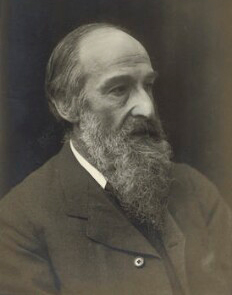
Samuel was born on 6 January 1859 at 436 George Street, Sydney. He was the third son of Samuel, a prosperous saddler, and Eliza. His father arrived in Australia from London in 1854, while his mother was from Cape Town. His father, unfortunately, passed away before his birth, and his mother moved to St Kilda, Melbourne.
He attended a private primary school and completed his secondary schooling at Wesley College. He studied two years of an Arts degree at the University of Melbourne, and was placed in the first class in both his first and second years, and was awarded the classical and mathematical prizes in his first year. In his second year, he won the prize in Greek, Latin, English, mathematics, natural philosophy, and natural science.
In May 1877, Alexander left for England, hoping to win a scholarship from one of the leading universities. He was undecided on whether to go to Oxford or Cambridge, but chose Oxford. He won a scholarship to attend Balliol College, part of Oxford University, where people of exceptional potential study with academics who are experts in their field. He was, in fact, the first Jewish fellow of an Oxbridge college. At Oxford, he obtained a first class in classical and mathematical moderations, a rare achievement, and a first class in Greats, his final examination for the degree of B.A., in 1881. Following his degree, he was made a Fellow of Lincoln College, where he remained as philosophy tutor from 1882 to 1893. It was during this period that he developed his interest in psychology, then a neglected subject. In 1887, he won the Green Moral Philosophy Prize with an essay, “In what direction does Moral Philosophy seem to you to admit or require advance?” This was the basis of his volume ‘Moral Order and Progress’, which was published in 1889 and went into its third edition in 1899.
By 1912, Samuel’s views had altered, and he considered that the book had served its purpose, had become dated, and should be allowed to die. During his fellowship at Lincoln, he had also contributed articles on philosophical subjects to ‘Mind’, the Proceedings of the Aristotelian Society, and the International Journal of Ethics. He spent some time travelling in Europe and, in the winter of 1890, he worked in Germany at the Psychological Laboratory at Freiburg, with Professor Hugo Münsterberg, a German-American psychologist and a pioneer in applied psychology.
For some time, Samuel had wanted to obtain a professorship and made three unsuccessful attempts before he was appointed to the University of Manchester in 1893, remaining there for the rest of his working life. There, he quickly became a leading figure in the university. Unconventional in his attire and his manner of conducting his classes, there was something in him that drew students and colleagues to him. He wrote little, and his growing deafness made it difficult for him to get much out of philosophical discussions, though he could manage conversation.
An important change in his home life occurred in 1902, when his whole family – his mother, an aunt, two elder brothers, and his sister-moved from Australia to live with him. This, in some families, would have been a dangerous experiment, but it worked well in Samuel’s case. His sister became a most efficient hostess, entertaining regularly on Wednesday evenings, fellow members of the staff, former pupils, and advanced students would drop by and spend a memorable evening.
Samuel was awarded the Hon. LL.D. of St Andrews in 1905, and in later years he received Hon. Litt. D. degrees from Durham, Liverpool, Oxford and Cambridge Universities. In 1908, he published ‘Locke’, a short but excellent study, which was included in the Philosophies Ancient and Modern Series. He was president of the Aristotelian Society from 1908 to 1911 and from 1936 to 1937. In 1913, he was made a fellow of the British Academy, followed in 1915 with the appointment of Gifford Lecturer at Edinburgh University where he delivered his lectures in the winters of 1917 and 1918, as well as developing his great work ‘Space, Time, and Deity’, published in two volumes in 1920, which his biographer called the “boldest adventure in detailed speculative metaphysics attempted in so grand a manner by any English writer between 1655 and 1920.” That its conclusions should be universally accepted was scarcely to be expected, but widely and well-reviewed, and made a great impression on philosophic thinkers at the time and for many years after. He delivered the Arthur Davis Memorial Lecture, sponsored by the Jewish Historical Society of England and dedicated to fostering Hebraic thought and learning. The lecture ‘Spinoza and Time’ was published in 1921. In 1924, Samuel retired from his chair.
Before he retired, Samuel had longed for some leisure. It was impossible for men of his temperament to be idle and, therefore, continued to do some lecturing, giving short courses and single lectures, graded examinations for higher degrees, and did some reviewing. His short orations when presenting were models of grace and skill. He remained on many committees, always ready to offer them his help and wisdom. He kept up his interest in the British Academy and the British Institute of Philosophy, as well as in Jewish communities in England and Palestine.
In 1919, he was honoured by a building named for him at the University of Manchester to accommodate the Faculty of Arts and in 1925, he was presented with his bust designed and crafted by Sir Jacob Epstein. The bust was placed in the centre of the main hall and became a university landmark. In 1930, amid congratulations from all over the country, the Order of Merit was conferred on him, the first on
an Australian-born. He had also been awarded a Fellowship of the British Academy.
He was greatly troubled by the sufferings of the Jews in Europe and gave much of his time and money to help alleviate them. He supported the creation of the Jewish homeland in Israel, and among his correspondents was Chaim Weizmann.
Early in 1938, he realised that his end was approaching, and he died on 13 September 1938. He was unmarried, and his ashes lie in the British Jewish Reform Section of Manchester Southern Cemetery
When lecturing, Samuel could be quite informal, at times dropping into a kind of conversation with his class, and not disdaining a side track if it looked promising. He did not always give the impression that he was that interested in teaching, yet he was a great teacher whose influence was widespread. He was one of the greatest speculative thinkers of his time. A theatre at Monash University, Melbourne, is named for him, and a cast of his bust by Sir Jacob Epstein stands in its foyer.
The AJHS acknowledges the following references in the preparation of this story:
Australian Dictionary of Biography, Wikipedia; The Gifford Lectures, University of Melbourne, Stanford Encyclopedia of Philosophy
From Australia’s Jewish past is edited by Ruth Lilian

The Australian Jewish Historical Society is the keeper of archives from the arrival of the First Fleet in 1788 to the present day. Whether you are searching for an academic resource, an event, a picture or an article, AJHS can help you find that piece of historical material. The AJHS welcomes your contributions to the archives. If you are a descendant of someone of interest with a story to share, or you have memorabilia that may be of significance to our archives, please contact us via www.ajhs.com.au or [email protected].