
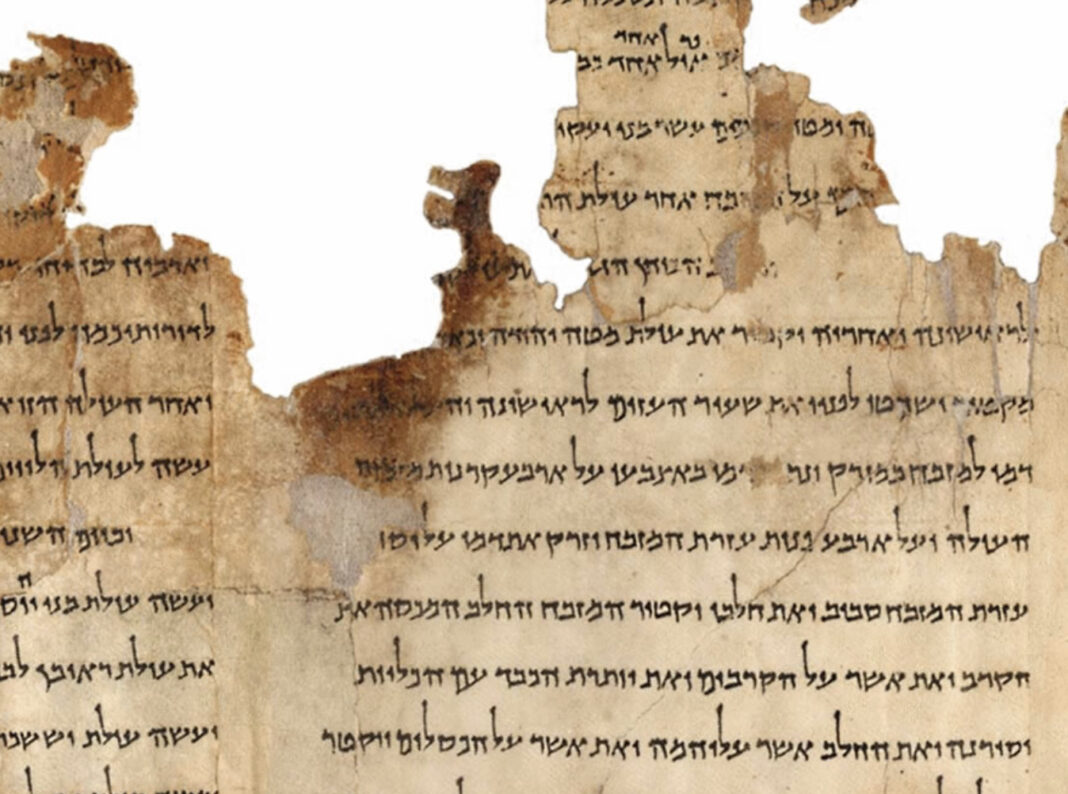
The Israel Antiquities Authority announced on Monday that it is joining an international, European Union-funded research project that will use artificial intelligence, chemical analysis and other advanced technologies to investigate one of the biggest mysteries surrounding the Dead Sea Scrolls: where they were produced and copied.
The five-year project, titled “Tracing Scribes and Scrolls,” has received a €2.5 million ($2.9 million) Advanced Grant from the European Research Council (ERC). It is led by Professor Mladen Popović of the University of Groningen in the Netherlands, in partnership with the IAA and research institutions across Europe.
The project seeks to determine where the scrolls originated and what their production can reveal about centres of learning, scribal culture and the transmission of knowledge in ancient Judea.
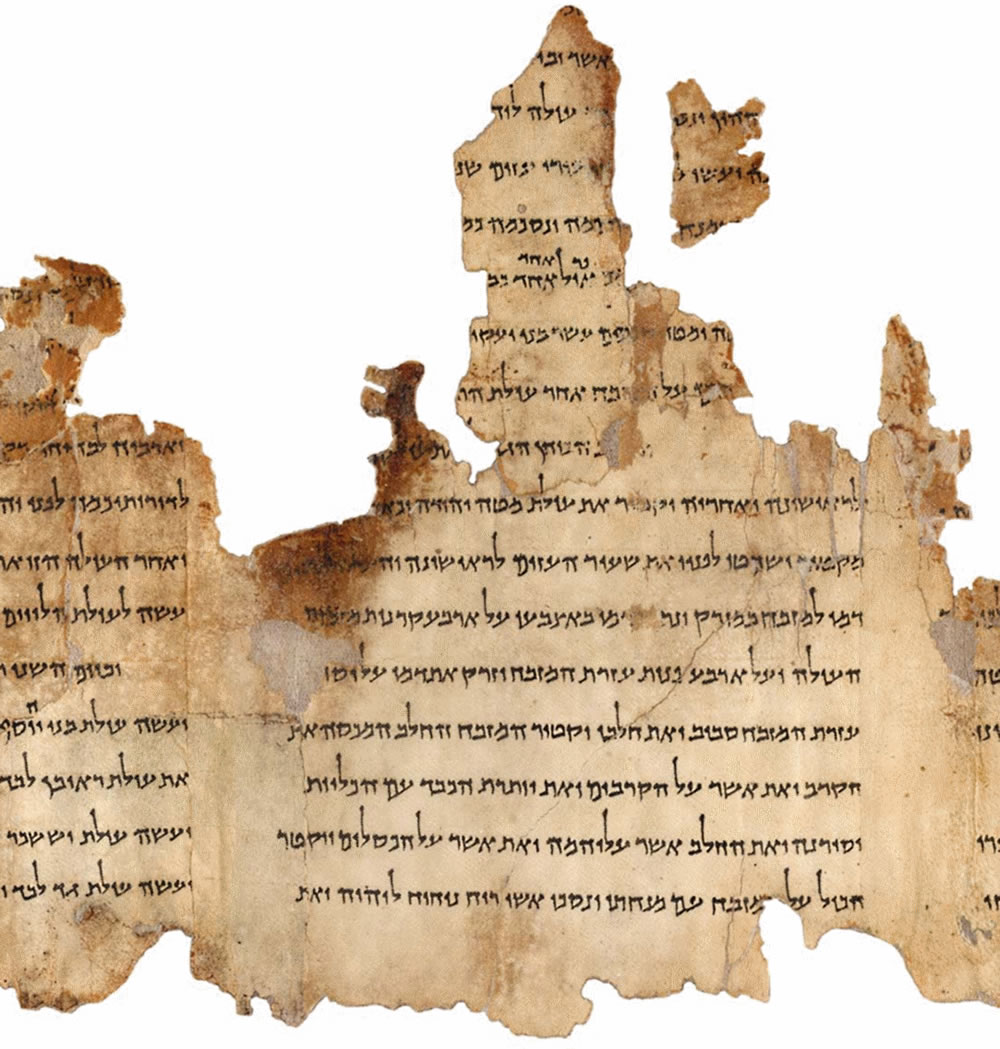
The Dead Sea Scrolls, discovered in caves near Qumran between 1947 and 1956 and held by the IAA in Jerusalem, include the earliest known manuscripts of many books of the Hebrew Bible, along with a vast collection of Jewish writings from the late Second Temple period.
Despite decades of research, scholars still debate whether the scrolls were copied by a Jewish community living at Qumran, brought from other centres such as Jerusalem for safekeeping during times of conflict, or deposited in the caves as part of an ancient library or genizah.
Working with the IAA, researchers will analyse about 250 samples of parchment, papyrus and ink from the Dead Sea Scrolls collection. For the first time, papyri from Egypt will be examined alongside those from Qumran and other Judean Desert sites to compare their chemical signatures and identify the origins of the raw materials and production methods.
The chemical data will then be combined with artificial intelligence, handwriting analysis, codicology (the study of ancient manuscripts as physical objects) and linguistic research to map the more than 25,000 Dead Sea Scroll fragments preserved by the IAA.
“This is the largest research project to date to use artificial intelligence to investigate the cultural context of the Dead Sea Scrolls,” said Popović.
“By combining advanced laboratory analysis with the study of ancient handwriting and the remarkable advances in artificial intelligence made in recent years, we are now able to address questions that were previously beyond our reach: who copied these manuscripts, where they were produced, how knowledge circulated, and the role these texts played within the society of their time,” he continued.
The project builds on Popović’s earlier ERC-funded research, The Hands That Wrote the Bible, which pioneered the use of artificial intelligence to identify individual scribes who copied the Dead Sea Scrolls.
Ilit Cohen-Ofri of the IAA, a collaborator on the project, said the research would create an unprecedented database on the chemical composition of the scrolls.
“In recent years we have come to recognize the wealth of information that can be recovered from the materials themselves—parchment, papyrus and ink—revealing hidden insights preserved within thousands of manuscript fragments that have survived for more than two millennia,” she said.
The project also involves researchers from the University of Pisa, the University of Naples Federico II, the University of Southern Denmark, KU Leuven, and the Egyptian museums in Berlin and Turin.