
The Friday talks will not take place after Tehran suspended participation over developments in Lebanon.
Planned talks between the United States and Iran in Switzerland were cancelled on Friday after U.S. Vice President JD Vance postponed a trip to meet Iranian negotiators, amid mounting tensions over the fragile ceasefire in Lebanon.
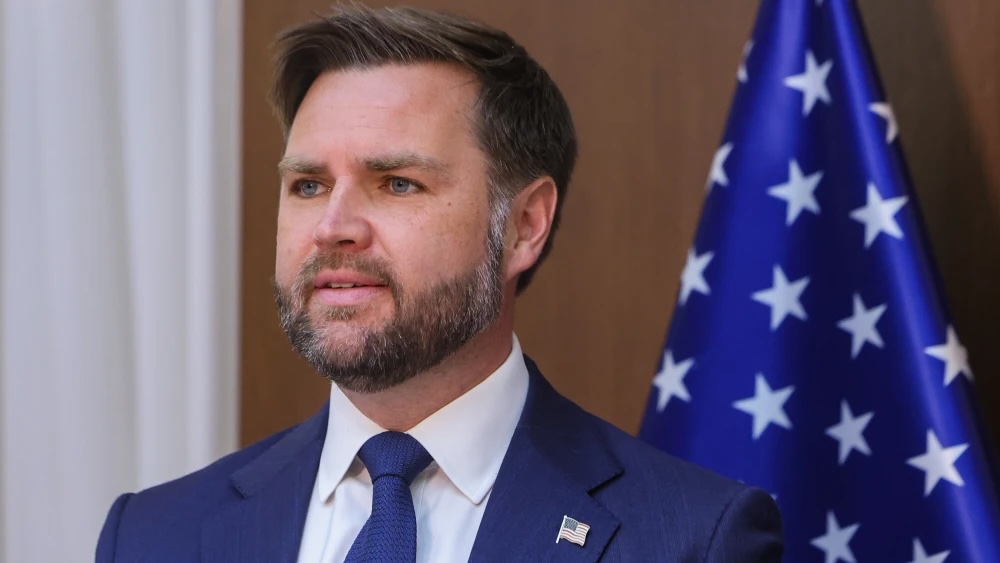
Switzerland’s Foreign Ministry confirmed that negotiations scheduled for Friday at the Qatari-owned Bürgenstock resort would not take place. “Talks that had been planned for Friday between the United States and Iran at the Bürgenstock mountaintop resort in Switzerland will not take place,” the ministry said.
The White House announced late Thursday that Vance would not travel to Switzerland, citing logistical issues.
“The plans for the upcoming technical talks have not been finalised, and the U.S. delegation has been prepared to depart at the first available opportunity,” the White House said in a statement. “But the logistics of these negotiations have never been simple or predictable.”
The cancellation came hours after reports that Iran had suspended its own delegation’s travel plans, citing continued Israeli military operations against Hezbollah in Southern Lebanon.
Earlier this week, President Donald Trump announced a Memorandum of Understanding aimed at ending the U.S.-Iran war. The agreement was signed Wednesday night at the Palace of Versailles in France by Trump and Iranian President Masoud Pezeshkian, with Vance and Iranian Parliament Speaker Mohammad Bagher Ghalibaf signing electronically as witnesses to the accord.
Friday’s planned meeting was intended to launch negotiations to implement the provisions of the MoU, including discussions on Iran’s nuclear program.
Despite the cancellation, the White House said it expected technical talks to begin “as soon as possible.”
Vance rebukes Israeli critics
At a White House briefing on Thursday, Vance sharply criticised Israeli Cabinet ministers who have publicly attacked the agreement.
“My message to them would be twofold,” Vance said. “Donald J. Trump is the only head of state in the entire world who is sympathetic to the nation of Israel at this moment in time. If I was in the Cabinet of the Israeli government, I might not be attacking the only powerful ally that I have anywhere left in the entire world.”
Vance defended the agreement against critics who argue it fails to address Iran’s ballistic missile program and leaves unresolved questions about Tehran’s nuclear capabilities.
The vice president singled out National Security Minister Itamar Ben-Gvir and Finance Minister Bezalel Smotrich, both of whom have criticized the deal.
“What is your exact proposal?” Vance said in an interview with The New York Times. “You’re a country of 9 million people. You can’t just kill your way out of solving every single national security problem that you have.”
Ben-Gvir responded on X, saying: “This is the proposal … To deal with the Nazis of the 21st century, just as the United States dealt with the Nazis of the 20th century.”
Vance stressed the extent of American military support for Israel.
“I would remind those Cabinet members that two-thirds of the defensive weapons that have protected Israel have been built by American hands and paid for by American tax dollars,” he said.
The disagreement over Lebanon has emerged as one of the central points of friction between Washington and Jerusalem following the agreement with Iran.
Israeli Prime Minister Benjamin Netanyahu has not publicly criticised the U.S.-Iran agreement. Speaking in Gush Etzion on Thursday, he reiterated Israel’s intention to maintain a buffer in Southern Lebanon.
“This requires maintaining the security zone in Southern Lebanon,” Netanyahu said. “It requires that we do not withdraw from there as long as Israel’s security needs demand it.”
Vance’s veiled threats to Israel, which frankly are disgusting, the disrespectful and careless attitude to Israel’s need to defend itself against the very regime the US is talking ‘peace’ with, due to no heed being paid to Iran’s continuing assaults via its proxies, shows the true colours of the US. How many times has the US walked away, or deviated from support, in regard to alliances in other countries? Nearly every time is the answer. We have been able to do what we’ve done with US assistance, yes, however we shall not roll over and die in the name of a so-called US deal.