
“I have become accustomed to threats of violence. That should disturb every Australian.”
A survey of more than 300 families from one Sydney synagogue has found that between 60 and 70 per cent reported experiencing antisemitic abuse, Rabbi Levi Wolff told the Royal Commission into Antisemitism today.
Presenting the findings, Wolff, the spiritual leader of Sydney’s Central Synagogue, said the results reflected a level of fear and disruption now embedded in everyday Jewish life.
Congregants described hiding Jewish symbols, changing their clothing or movements to avoid abuse and limiting their children’s participation in Jewish activities.
View this post on Instagram
Wolff also spoke of receiving abusive messages and violent threats almost every day and said the normalisation of that abuse should concern the whole country.
“That shouldn’t disturb the Jewish community solely,” he said. “That should disturb every Australian.”
He told the commission that rising antisemitism was forcing Jewish Australians to conceal their identity, rethink everyday activities and question whether they had a future in the country.
Wolff recounted finding a mezuzah, a small religious scroll traditionally attached to a Jewish home’s doorpost, anonymously left in his letterbox several months earlier.
A note with it read: “I am afraid to have this. I’m afraid to have this on my door. Please pass it on to somebody who’s brave enough and who needs it.”
“No one should have to have courage simply to place a symbol of their faith on the doorpost of their very own home,” Wolff said.
“Jewish Australians are not simply afraid because of antisemitism. They’re having to change how they live.”
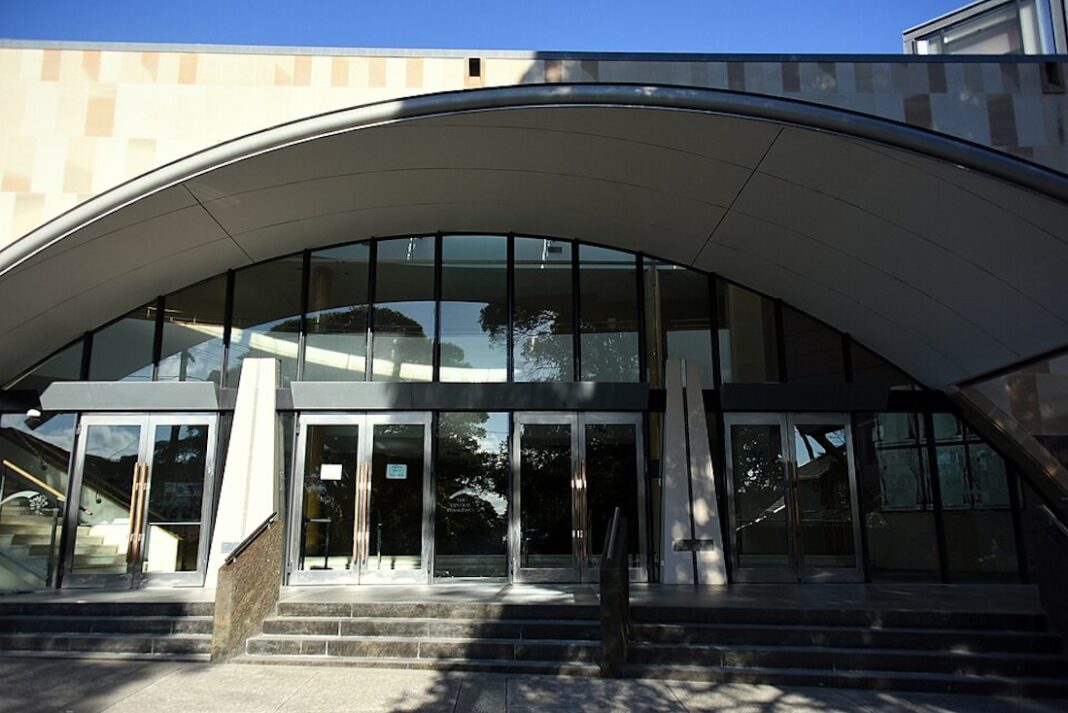
Wolff leads one of Australia’s largest Orthodox congregations, with about 1,800 member families who regard Central Synagogue as their spiritual home.
Wolff said some children changed out of their Jewish school uniforms before visiting Westfield Bondi Junction because they feared being identified.
One respondent said they chose not to disclose their religion on a hospital admission form following the Bankstown Hospital nurses controversy and an antizionist social media post by a senior surgeon.
“At a time when I felt most vulnerable and at the mercy of others, I felt the need to shield myself by not openly identifying as a Jew,” the respondent wrote.
Another respondent reported motorists shouting “* Jews” and “Heil Hitler” while they walked along the road near the synagogue in Sydney’s eastern suburbs.
Wolff said security surrounding Jewish life had also become accepted as routine.
He recalled standing outside St Mary’s Cathedral with Archbishop Anthony Fisher about a week and a half after the Bondi terror attack and noticing the cathedral’s doors were open without visible guards.
“I couldn’t help but wonder: could I ever leave the doors of my synagogue open?” he said.
“My children, as all Jewish children in this country, are growing up attending schools where they have armed guards in front of their schools and their houses of worship.
“They are not normal, and we should never allow this to become Australia’s normal.”
The commission heard that Central Synagogue spent about $640,000 on security in 2025, including $540,000 on guards and another $100,000 on security infrastructure.
Millions of dollars had previously been spent strengthening the site, while annual security costs had risen by about 20 to 25 per cent over four years.
Wolff said the measures followed advice from police, government agencies and Jewish community security organisations.
He warned that growing fear was also prompting Jewish Australians to consider leaving the country.
Wolff said he had recently read about a group of 100 Jewish doctors discussing plans to relocate.
“When talented Australians conclude that their future is better served elsewhere, Australia becomes poorer not only economically, but socially, culturally and morally,” he said.
He said many families had bought homes or apartments in Israel during the past three years, while others were seriously considering relocation.
“So many Australian Jews feel that they’re being asked to justify their place in a country to which they have contributed loyally and peacefully and constructively for generations,” he said.
Wolff told the commission that Australia’s international reputation had also changed.
Before October 7, 2023, he said he felt proud telling people in the United States that he came from Australia. Now, their first response was often: “What’s going on in Australia?”
Questioned by Commissioner Virginia Bell about Palestinian self-determination, Wolff said criticism of Israeli governments was legitimate.
He drew a distinction between political criticism and opposition to Jewish self-determination, particularly when accompanied by calls for Israel’s destruction.
“When crowds march through the streets of Sydney and Melbourne, Jewish Australians do not hear a nuanced political debate,” he said.
“They hear threats directed to their families and to their communities.”
Wolff urged governments to confront antisemitism through stronger security, effective laws and better education.
He said Holocaust education remained essential but should be accompanied by teaching about Jewish life, traditions, values and contributions to Australia.
“Education should encompass how Jews live, not only how Jews died,” he said.
“I believe antisemitism should be fought with ‘pro-Semitism’.”
“If we want Australians to stand with the Jewish community, they must first understand the Jewish community,” he said.
The Royal Commission’s fifth hearing block is examining security at Jewish institutions, government funding, policing and cooperation between authorities and community security organisations.