
Countries, like individuals, have consciences. For those of us who reject the extremism, bigotry and intolerance of Benjamin Netanyahu’s government, Israelis and liberal Zionists around the world alike, President Isaac Herzog personifies both Israel’s conscience and its soul.
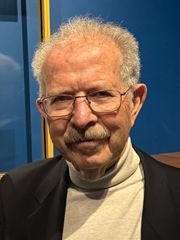
Herzog admirably did not mince words yesterday in condemning extremist Israeli (read Jewish) West Bank settlers as an “anarchist mob” whose all-too-frequent violent attacks against Palestinian civilians “defile our home and depart from every basic norm — moral, legal or Jewish.” In sharp contrast to Netanyahu who callously dismisses such settler violence as the work of “a handful of kids,” Herzog declared that “We must not tolerate this brutishness that comes from the margins of society and threatens us all.”
In the same speech, delivered at his official residence on the occasion of the presentation of the annual Jerusalem Unity Prize, Herzog also implicitly denounced last week’s physical and psychological abuse, mistreatment and humiliation of detained flotilla activists at the hands of National Security Minister Itamar Ben Gvir, albeit without mentioning Ben Gvir by name.
Emphasising that it is “forbidden to abuse prisoners” regardless of any crimes they may have committed, Herzog said unequivocally that “We are exposed to barbaric acts by a handful of people who think that detainees, those under investigation, or suspects have no human rights whatsoever.”
Here again, Herzog’s words were diametrically opposite of Netanyahu’s who merely commented, bereft of any apparent sincerity and in an effort to distance himself from the shameful incident, but not too much, that “the way that Minister Ben Gvir dealt with the flotilla activists is not in line with Israel’s values and norms.”
Perhaps most importantly, Herzog reminded not just his audience but the public at large that Israel’s non-Jewish minorities must be respected and that their country must not be allowed to descend into lawlessness. “We are exposed to degrading and ugly behaviour by extremists against Christians and Muslims living among us,” he said, adding that “We must not take the law into our own hands. We must not harm members of other religions and their symbols.”
Herzog clearly touched a nerve. A member of Ben Gvir’s fascist Otzma Yehudit party stormed out of the event in protest and Ben Gvir himself brayed on X, formerly Twitter, that “A president who calls hundreds of thousands of Israeli citizens brutes is not fit to be president.”
Being boycotted by Otzma Yehudit and vilified by Ben Gvir are badges of honour.
Herzog’s is a rare voice of decency and tolerance in a governmental arena far too often epitomized by the jingoism and narrowminded illiberality embodied by Ben Gvir and others in the Netanyahu coalition such as Treasury Minister Bezalel Smotrich, Justice Minister Yariv Levin, Diaspora Minister Amichai Chikli, Likud Knesset member Tally Gotliv, and, except on the rare occasions when he is trying to curry favour outside his far-right base, Netanyahu himself.
Throughout his presidency, but especially as a counterweight to Netanyahu, Herzog has personified the values and principles on which Israel was created. As made clear in its 1948 declaration of independence, Israel is meant to be a Jewish and democratic state. Herzog is committed to these values. Netanyahu and the members of his government are not.
I have known Isaac Herzog for over 30 years and was also privileged to know his father, the late President Chaim Herzog, who was a friend of my parents ever since he came to the newly liberated Nazi concentration camp of Bergen-Belsen in Germany in the spring of 1945 as Captain Vivian Herzog, a British army officer.
Chaim Herzog went on to become a major-general in the IDF, Israel’s ambassador to the United Nations, a founding member of one of Israel’s most prominent law firms, and Israel’s sixth president. When my mother turned 80, he sent her a heartfelt letter of congratulations in which he recalled how they had met at Bergen-Belsen 47 years earlier.
In 1984, after the neo-fascist Rabbi Meir Kahane was elected to the Knesset on a platform calling for the expulsion of Arabs from Israel, Chaim Herzog emphasised that Israel’s declaration of independence guarantees ”social and political rights for all its citizens, without distinction of creed, race or sex.” Clearly referring to Kahane and the phenomenon of Kahanism, Herzog went on to warn against any “obstruction and twisting of that will and its diversion into anti-democratic channels.”
In early September 2022, I accompanied President Isaac Herzog on his visit to the mass graves of Bergen-Belsen. We were both keenly aware that we stood where our fathers had stood, and he told me how profoundly his father’s visit to Belsen had shaped his worldview, a worldview he passed on to his son.
To be sure, other Israeli politicians espouse ideologies similar to or at least not inconsistent with Herzog’s. Naftali Bennett, Gadi Eisenkot, Yair Golan, Yair Lapid and Gilad Kariv come readily to mind. So do former Prime Minister Ehud Olmert, former Foreign Minister Tsipi Livni, and former Knesset members Colette Avital and Dan Meridor. But they are all part of the opposition and seek to oust the Netanyahu cohort from power in the coming elections (may it happen speedily and in our days).
Isaac Herzog, as president, is the remaining non-fascist, non-extremist official face of Israel who has just reminded Israelis and Israel’s supporters across the globe of what a pre-Netanyahu, pre-Ben Gvir Israel looked and sounded like, and foreshadowed what it may yet be again.
Menachem Z. Rosensaft is adjunct professor of law at Cornell Law School and lecturer-in-law at Columbia Law School. He is the author of the forthcoming Burning Psalms: Confronting Adonai after Auschwitz (Ben Yehuda Press, 2025).