
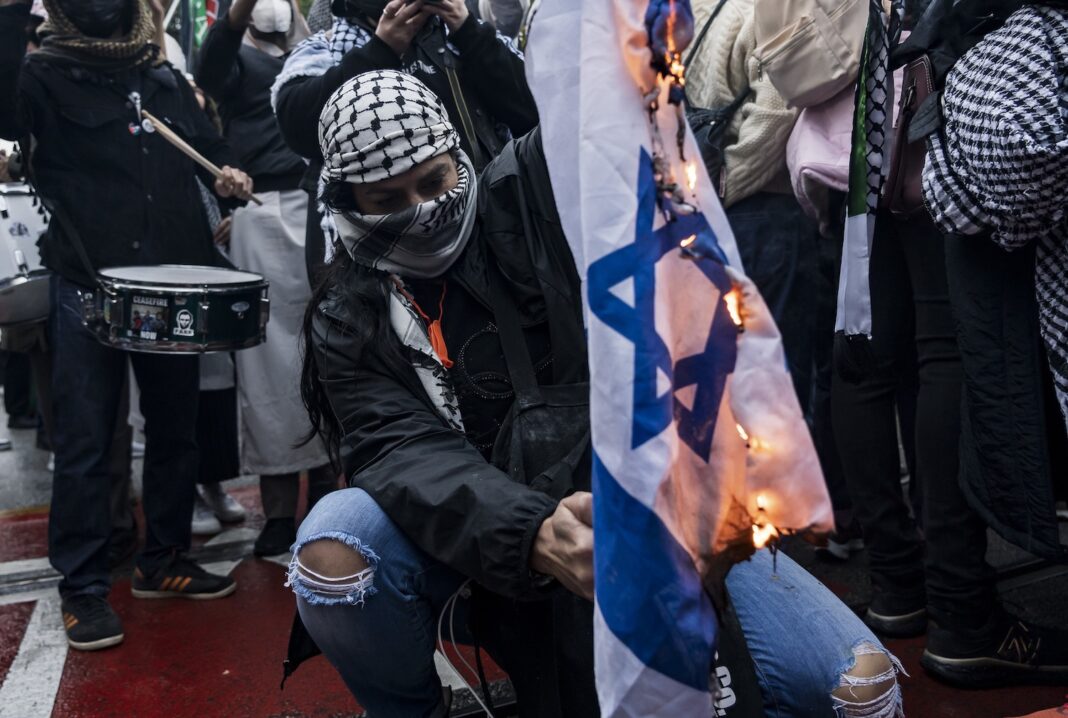
Jewish protesters and supporters, including people in wheelchairs, were attacked during what has been described as Victoria’s “worst day” of antisemitic incidents
Police failed to intervene as the community expected, the Royal Commission into Antisemitism and Social Cohesion has heard.
Jewish Community Council of Victoria chief executive Naomi Levin said the violence erupted outside Victoria’s Parliament on May 19, 2024, when members of a weekly pro-Palestinian protest confronted participants in the Never Again Is Now rally.
Organisers of the rally received about 56 complaints of antisemitism following the clash.
“There was a level of vitriol against Jewish people who were peacefully demonstrating that was outside what we’d ever seen before,” Levin said.
“It was the worst day we’ve ever experienced here in Victoria for antisemitic incidents.”
Police formed lines between the groups and arrested six people, but Levin said many in the Jewish community believed officers had failed to act decisively enough.
“There was a perception that police didn’t step in and didn’t do what was needed to be done,” she said.
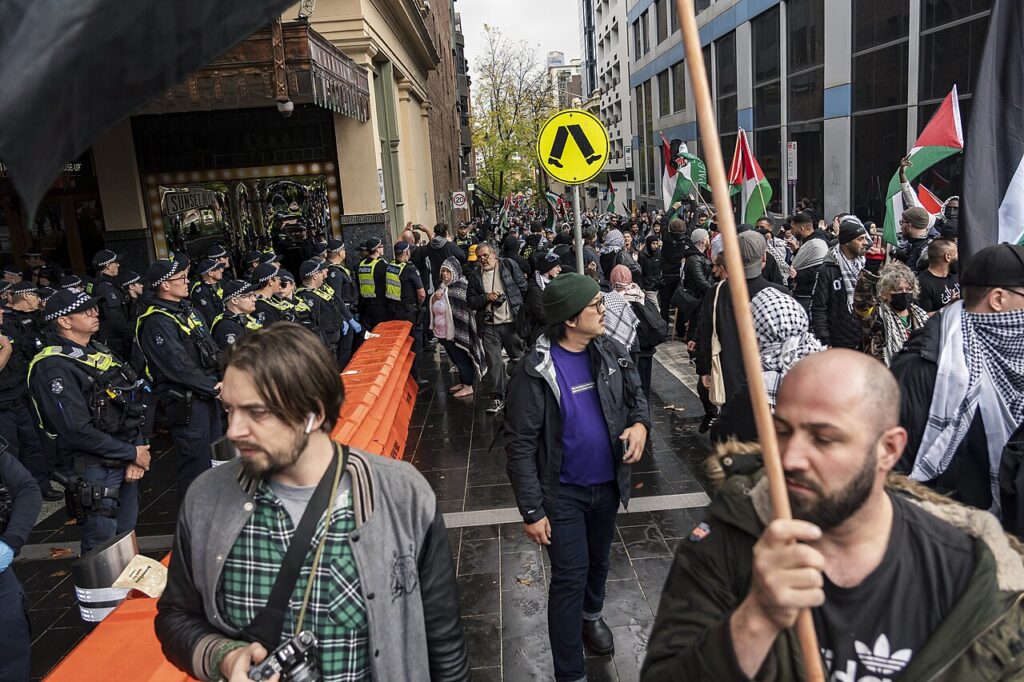
That sense of insecurity continued at later demonstrations, where Jewish groups were directed by police to leave parts of central Melbourne before pro-Palestinian rallies moved through the city.
Levin said community leaders sometimes understood the operational reasons behind those decisions, but many Jewish people felt they were the ones being displaced.
“The police engagement was not sufficient to create a sense of safety,” she said.
Levin estimated that before October 2023, about 20 per cent of the JCCV’s time was spent on antisemitism and security.
She said that had since flipped, with about 80 per cent of the organisation’s time now devoted to those issues.
The shift had fundamentally changed Jewish communal life, she said.
Levin described how Melbourne’s Beth Weizmann Jewish Community Centre had once operated as an open community hub with a cafe and unrestricted public access.
“There were no locked gates or guards or fences. People could just come in and out like you would expect of a community centre,” she said.
Today, visitors encounter gates, guards and extensive security arrangements before entering.
Levin said the centre had been locked down during an active incident and staff had been asked to leave when demonstrations were held nearby. She said the heightened security was necessary but came at a cost.
Levin contrasted the experience of entering a synagogue with passing a cathedral on her way to the hearing.

“To go into a synagogue is a completely different experience,” she said.
“It’s creating a barrier to be able to participate in the Jewish community.”
The changes extended beyond buildings.
People leaving synagogues and community events were often encouraged to disperse quickly rather than gather outside talking, she said, eroding the informal interactions that helped strengthen community bonds.
“We’re losing the opportunity to have those informal opportunities to build those social ties,” Levin said.
“It will ultimately weaken the fabric of our community.”
Her evidence came during the Commission’s hearings examining the security challenges facing Australia’s Jewish community and the response of governments and law enforcement to rising antisemitism.