
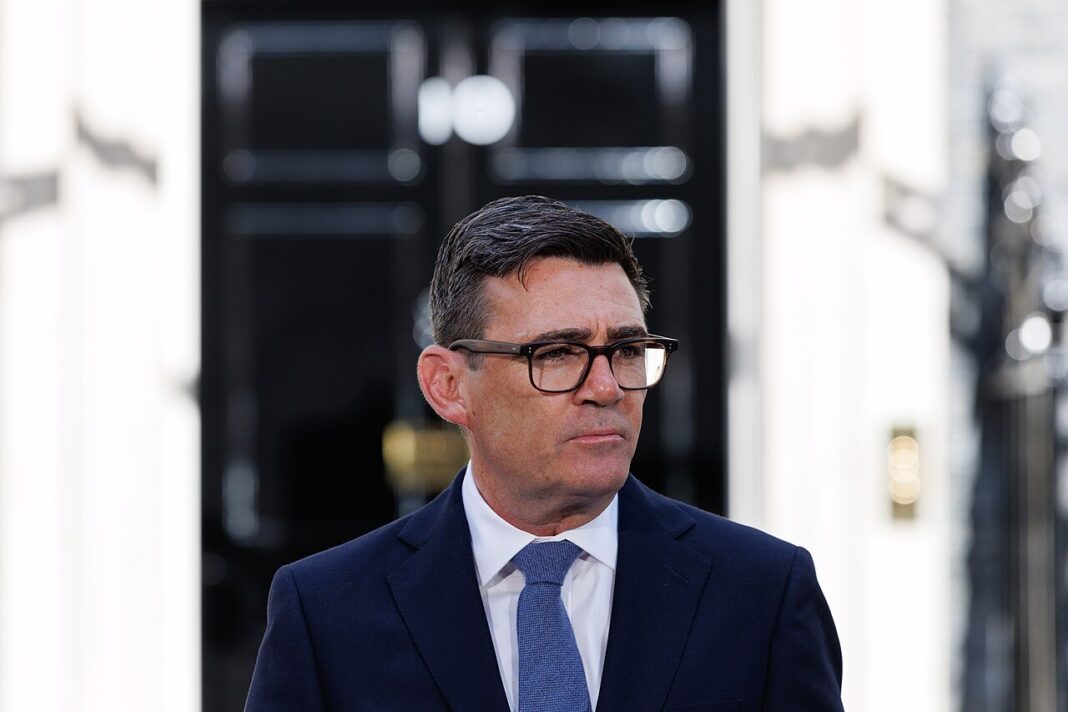
Prime Minister Andy Burnham begins his term facing immediate scrutiny from British Jewish communities, who are seeking reassurance that his government will confront rising antisemitism while advancing a more assertive policy on Israel.
Burnham succeeded Sir Keir Starmer as Labour leader and entered Downing Street on 20 July, taking office at a moment of strained UK–Israel relations and heightened anxiety among British Jews over hate crime, political rhetoric and threats to communal institutions.
During his nine years as mayor of Greater Manchester, Burnham maintained consistent engagement with Jewish organisations. He attended Holocaust remembrance events, supported local Jewish institutions and condemned antisemitic incidents. Many Jewish leaders have welcomed that record, though some remain uneasy about his recent comments on Israel and Gaza.
Throughout the Labour leadership contest, Burnham acknowledged that the party mishandled its initial response to Israel’s military campaign following the Hamas attacks of 7 October 2023. He apologised to those who felt Labour failed to respond adequately and said the party must improve its handling of such crises.
Burnham has argued that the UK should have backed a ceasefire earlier and has urged stronger pressure on Israel. He has also supported examining additional sanctions, tightening arms‑export controls and restricting trade connected to Israeli settlements.
These positions prompted the Board of Deputies of British Jews and the Jewish Leadership Council to raise concerns with his team before he entered office.
In a joint statement, the organisations welcomed Burnham’s commitment to zero tolerance for antisemitism and noted that criticism of Israeli policy is not inherently antisemitic. However, they warned that his comments on Gaza did not sufficiently address those exploiting the conflict to fuel hostility towards Jews and Israelis.
They emphasised that antisemitism in Britain is driven by multiple ideological currents — including Islamist, far-left and far-right extremism — and that political leaders must recognise Hamas’s responsibility for the 7 October attacks, the ongoing captivity of hostages and its use of civilian areas for military activity. They also cautioned against framing Israel as the sole cause of Palestinian suffering.
Burnham was mayor during the 2025 attack at the Heaton Park Hebrew Congregation in Manchester, in which two people were killed. The Board of Deputies and the JLC said that experience underscored the link between anti‑Israel extremism, antisemitic hatred and violence directed at British Jews.
The Campaign Against Antisemitism has likewise urged Burnham to place the issue near the top of his agenda. In an open letter, chief executive Gideon Falter said Jewish communities continue to face threats against schools, synagogues, community centres and individuals. He argued that while enhanced security is essential, it must be accompanied by stronger action against those spreading antisemitism.
Burnham’s approach has also drawn criticism from Israeli and Jewish commentators. In a column for JNS, Jeremy Havardi of B’nai B’rith UK said Burnham had downplayed Hamas’s role in the conflict and placed disproportionate responsibility on Israel for the devastation in Gaza.
Havardi argued that proposals for sanctions and trade restrictions risked pressuring Israel without imposing comparable demands on Hamas, such as releasing hostages or disarming. He warned that rhetoric portraying Israel as uniquely responsible for Palestinian suffering could contribute to hostility towards Jews in Britain.
These debates highlight a broader challenge for the new Prime Minister. Burnham has pledged to oppose antisemitism, but Jewish leaders will also watch whether he confronts anti‑Israel rhetoric when it crosses into collective blame, conspiracy narratives or hostility towards Jewish communities. He has repeatedly said that criticism of Israeli policy must never become hatred of Jews and that British Jews must not be held responsible for decisions made by the Israeli government.
Burnham’s long engagement with Jewish communities in Manchester provides a foundation for rebuilding confidence. His Middle East policy, however, is likely to remain a point of tension.
The appointment of Ed Miliband as Foreign Secretary will also be closely monitored in Israel. Miliband has previously criticised the Israeli government and is expected to play a central role in decisions on sanctions, arms exports and Britain’s broader approach to the Gaza conflict.
For Israel, Burnham’s election signals continued pressure from London rather than an immediate improvement in relations. For British Jews, the key question is whether his promise of zero tolerance will be reflected in policy, policing and public language.
His government will be judged not only on the security it provides, but on whether it confronts the political and ideological forces driving antisemitism across the country.