
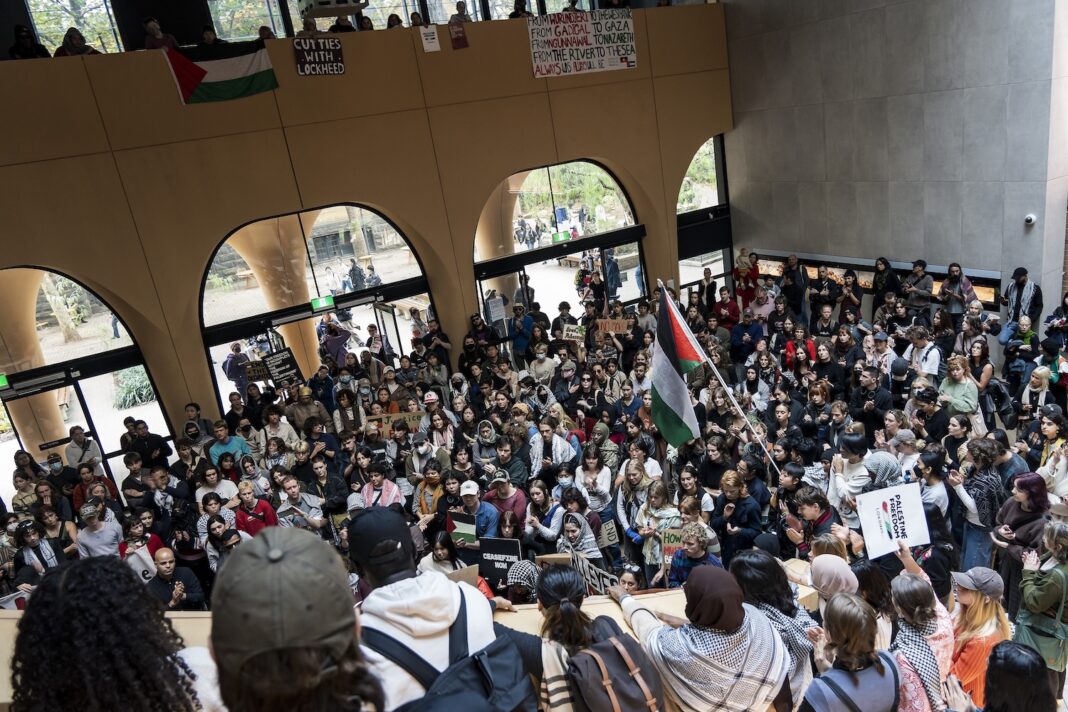
Jewish students have accused Australian universities of allowing antisemitic abuse, intimidation and exclusion to grow while complaints were delayed, minimised or ignored.
Their accounts are featured in Teaching Hate, a documentary produced after a six-month investigation by The Sunday Telegraph, as the Royal Commission on Antisemitism and Social Cohesion begins five days of hearings into antisemitism at universities.
The Melbourne hearings, from Monday, July 13, to Friday, July 17, will examine the experiences of Jewish students and academics, the prevalence and impact of campus antisemitism and the responses of universities and other educational institutions.
The allegations raised in the documentary follow years of reports of Jewish students hiding their identity, avoiding campus and facing hostility linked to Israel and Zionism.
A national survey in August 2023 found 64 per cent of Jewish university students had experienced antisemitism, more than half had hidden their Jewish identity and one in five had avoided campus because of antisemitism.
Former ANU student Liat Granot told The Sunday Telegraph she lost most of her non-Jewish friends after the Hamas-led attacks on Israel on October 7, 2023.
“I got yelled at a lot, a ‘genocide supporter’, a ‘baby killer’. I know I’m not those things, but that doesn’t lessen how hurtful it is to be in your backyard being yelled at by members of your university community.”
Granot said Jewish students increasingly stayed away from ANU while a pro-Palestinian encampment operated on campus.
She recalled seeing material declaring “all Zionists are terrorists”, stickers referring to an intifada and an image of an Orthodox Jew accompanied by a reference to stealing.
“It created an environment where Jews didn’t want to come to campus,” she said.
Granot also accused the university of failing to acknowledge Jewish students as hostility grew.
“As the encampment and as antisemitism escalated on campus, you can look through all the statements that the university put out, not a single one mentions Jews,” she said.
Granot, whose grandparents and great-grandparents survived the Holocaust, said chants calling to “globalise the intifada” could no longer be dismissed as harmless political rhetoric after the December 2025 terrorist attack on a Chanukah celebration at Bondi Beach.
“What we saw in Bondi was the globalisation of the intifada,” she said.
“It’s not a call for peace. It’s not peaceful coexistence. It is a removal of Jews from the map.”
Similar claims have been made at other universities.
In September 2024, University of Sydney AUJS president Isaac Wine told a rally he had been followed, harassed and doxxed on Instagram, where he was falsely accused of being a paedophile. Wine said the abuse occurred because he was Jewish.
An external review of the University of Sydney’s response to its eight-week pro-Palestinian encampment later found Jewish students and staff had reported feeling unsafe and unwelcome. It recommended tighter controls on disruptive protests, a central complaints office and clearer penalties for breaches of university rules.
In October 2025, a University of Sydney employee was filmed abusing Jewish students, academics and a rabbi during a Sukkot celebration on campus.
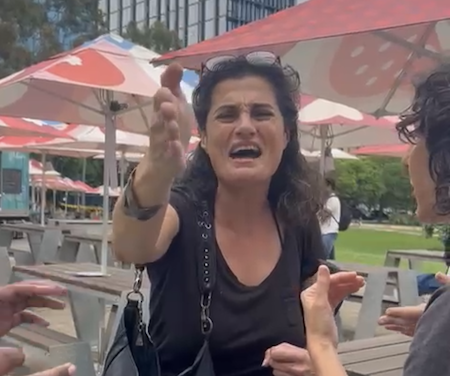
Jewish students at Macquarie University have also alleged repeated verbal abuse, harassment and intimidation, as well as dissatisfaction with the university’s handling of complaints.
At Monash University, student Jeremy Suss told Teaching Hate that he and other visibly Jewish students were singled out during a campus encampment rally in 2024.
He said a speaker pointed towards them and declared, “These people make me sick. They disgust me.”
The latest national research has added to concerns that the problem is entrenched.
Research released in February found 94 per cent of Jewish respondents to the Australian Human Rights Commission’s Racism@Uni survey said they had experienced some form of antisemitism. More than 40 per cent of religious Jewish respondents said they felt unsafe on campus.
University of Sydney Vice-Chancellor Mark Scott acknowledged in Teaching Hate that mistakes had been made during the 2024 encampment.
“We had some dark and challenging days. We made some mistakes. We had to learn a lot,” he said.
The university has since prohibited encampments and indoor protests and imposed controls on megaphones and amplified sound.
UTS Vice-Chancellor Andrew Parfitt said antisemitism, racism and violence had no place at the university and acknowledged that Jewish students had not always felt safe.
ANU said it rejected antisemitism, racism and vilification and would engage fully with the Royal Commission.
Executive Council of Australian Jewry co-chief executive Alex Ryvchin said the lack of consequences had allowed the situation to worsen.
“The fact that we haven’t had proper consequences for two and a half years is why we’ve gotten to where we’ve gotten to,” he told The Sunday Telegraph.
A Group of Eight review released in June recommended universities incorporate the Universities Australia definition of antisemitism into disciplinary and complaints systems, aim to resolve complaints within 45 working days and establish closer links with police and security agencies before protests or threats escalate.
Federal Education Minister Jason Clare said the treatment of Jewish students was unacceptable.
“What starts as words can end up as bullets,” he told The Sunday Telegraph.
“Antisemitism is a poison. We’ve got to stop it, and we’ve got to weed it out.”