
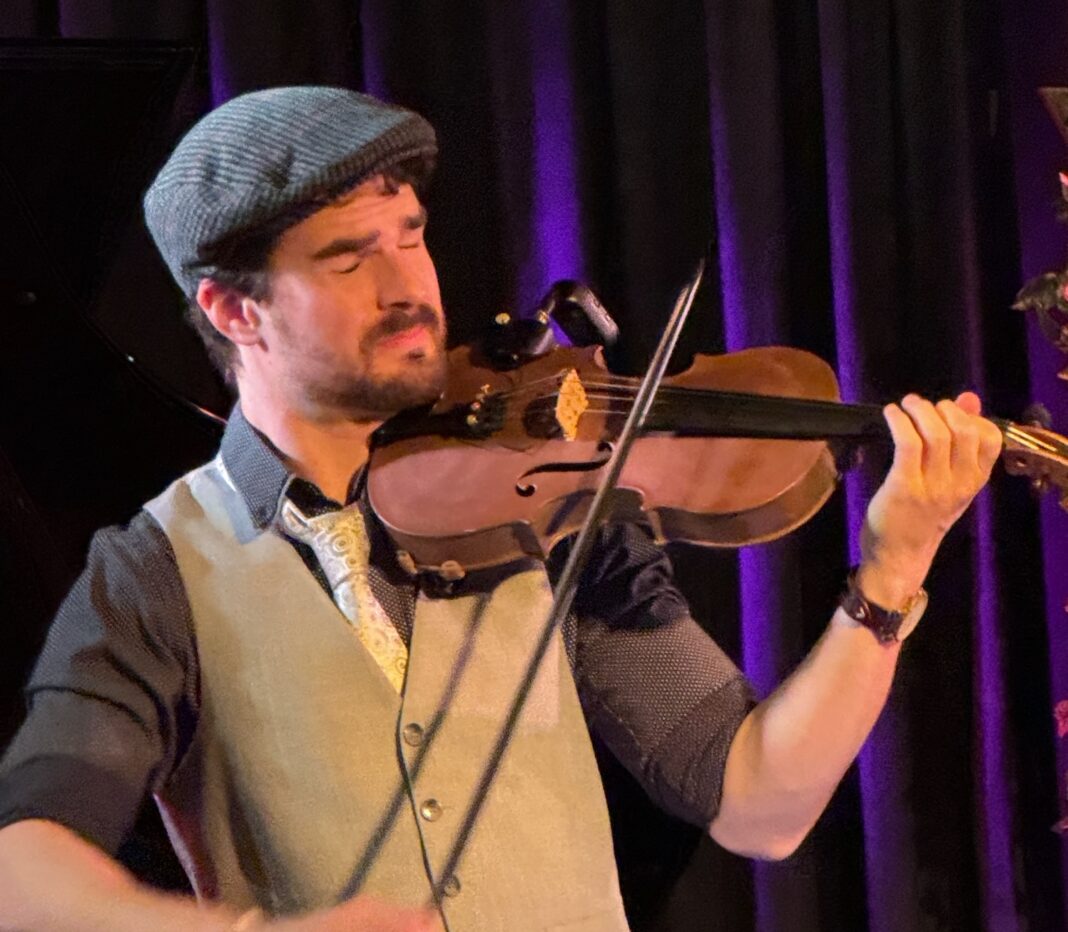
Sydney musician Ben Adler has told the Royal Commission into Antisemitism and Social Cohesion that Jewish artists are being forced to fight for space in Australia’s cultural life instead of focusing on their work.
Adler, 33, who is a violinist, leads the klezmer fusion band Chutney and directs the Shir Australian Jewish Music Festival, gave evidence on June 30 about the pressure placed on Jewish performers since the Hamas attacks on Israel on October 7, 2023.
He said his connection to Australia had been shaken by repeated incidents that made him feel unwelcome.
A Chutney performance scheduled for Marrickville on October 12, 2023, was altered before the attacks to avoid identifying the band as Jewish or Israeli. Adler told the Commission the band described itself only as “folk funk fusion” and avoided mention of “the J word or the I word”. The performance was later cancelled.
Adler said Jewish artists were being targeted in different ways.
Some pressure, he argued, came from antizionist ideology. Other cases involved organisers and cultural groups who were not hostile to Jews but were frightened of being targeted themselves.
“They fear repercussions from the bullying tactics of those people,” Adler said.
Commissioner Virginia Bell AC SC asked Adler whether the pressure he described was simply criticism of Israel’s present government.
Adler rejected that view, telling the Commission that antizionism was not the same as disagreement with Israeli policy. He described it as an “eradicationist, eliminationist movement that seeks the removal of Israel”.
“It doesn’t matter what Israel does; they will have problems with Israel,” he said.
He accepted that some people involved were motivated by genuine concern for Palestinians, but said the result for Jewish artists was the same.
“It is the new hate movement of the day,” he said.
Adler also gave evidence about a Victorian music festival that had booked Chutney in August 2023 for a public klezmer performance.
After October 7, organisers told him the performance was no longer appropriate, referring to the conflict overseas and concern about an antizionist group among festivalgoers.
Adler argued that the booking should remain, warning the festival that removing Jewish music in response to political tensions would push Jewish culture out of public view. The festival kept the performance.
He later shared a de-identified version of his letter with a private WhatsApp group of Jewish artists. Adler said the group was created so Jewish creatives could support each other and respond to cancellations and exclusion.
“It had nothing to do with Israel. It was not a political group whatsoever,” he said.
He told the Commission he was later doxxed, included in a “top 100 Zio” list and accused of spreading Zionist propaganda because he had defended his band’s right to perform.
“There’s no relation whatsoever,” Adler said.
Nicholas Bender, counsel for Australia’s mainstream Jewish communal organisations, asked Adler about the WhatsApp group and the letter. Adler agreed the letter was private and said Jewish artists were entitled to discuss shared professional problems, just as members of any other minority group would be.
He said claims linking the group to Israel were “completely fallacious”.
The Commission was shown examples of online abuse directed at Jewish music and cultural events.
They included comments on a video of Papir Rosen, a Yiddish Holocaust song that predates the modern State of Israel, and abuse directed at advertisements for the Shir festival.
One comment described Jews as a “cancer on the world”. Another referred to using Molotov cocktails at a Melbourne concert.
Adler said he reported the Molotov cocktail comment to the venue and to police. The venue later cancelled the booking, forcing Shir to find another location within eight days.
He said he had followed up with Victoria Police at least 15 times since September 2025 but had not received a substantive response.
Adler urged the Commission to recognise culture as part of social cohesion.
He warned that Jewish Australians could not be properly understood by the broader public if festivals, venues, awards, broadcasters and other cultural bodies continued to keep Jewish expression out of view.
“If these unelected gatekeepers, be they festivals or venues or awards or media or radio, continue to lock us out … we will never have a chance to be humanised properly,” he said.
I really cry for the disappearance of the Australian Liberal Society. I have been to Australia in the past and admired its freedom’ its acceptance and considered it as a “Model”, the world should follow. I was unaware of the undercurrents caused by immigration from Non-democratic countries that is destroying Europe and now, Australia. Unfortunately, the “Silent takeover” of the hue numbers of immigrants and the “naive” thought that the “Freedom to vote” is synonym with “Freedom of thought” is proven as “malignant” in Australia’s case. What a pity! Just remember that “Hating Jews”, brought all the regimes who embraced it in the past, to persecute others, until they disappeared.