
Iranian missile attacks on Israel and Israeli strikes on Iranian targets on Monday highlighted a growing gap between Washington and Jerusalem over how to confront Tehran, even as both allies remain formally aligned on core strategic goals.
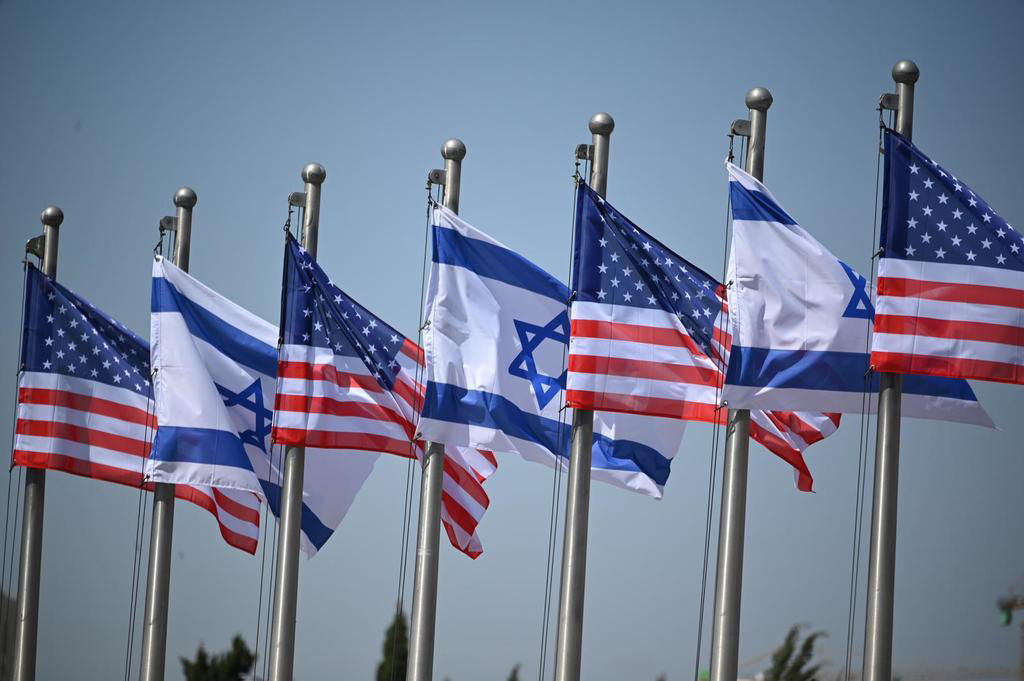
Israeli experts told The Press Service of Israel that the escalation reflects not a breakdown in coordination, but rising friction over whether diplomacy or sustained military pressure should take priority.
Following continuing Hezbollah rocket and drone attacks, the Israel Defence Forces (IDF) struck Beirut’s Dahiyeh district. Iran then fired around 20 ballistic missiles at Israel, prompting Israeli airstrikes on Iranian targets. Both sides subsequently backed down after U.S. President Donald Trump demanded Iran and Israel to “stop shooting.”
Brig. Gen. (ret.) Amir Avivi, founder of Israel Defence and Security Forum, said the exchange should be viewed as part of a continuing campaign rather than isolated incidents. “From the IDF’s perspective, it was an act within an ongoing campaign,” he said, adding that Israel aims to deepen damage to Iranian capabilities.
He said Iran’s missile fire reflected concern over Hezbollah’s weakening position. “They feel that Hezbollah is on the verge of collapse,” he said.
Avivi said Israel seeks sustained operational freedom and is prepared for prolonged escalation. “Israel will not play this game of rounds,” he said. “If we go to a campaign, then we go to a powerful campaign for as long as necessary.”
He also cited Israeli strikes on Iranian infrastructure. “We went straight to the most painful place,” he said, referring to attacks on petrochemical facilities linked to missile production.
Same Goals, Different Approaches
Prof. Eytan Gilboa, who teaches political science and communications at Reichmann University in Herzliya, told TPS-IL that the United States and Israel remain aligned on end goals but differ on methods.
“So yes, there is a fairly significant agreement about the goals,” he said. “But sometimes there is disagreement about the means to achieve these goals.”
He said both countries agree that Hamas must be disarmed, Hezbollah must be disarmed, and Iran must be prevented from obtaining nuclear weapons. Israel relies primarily on hard power and, according to Gilboa, Prime Minister Benjamin Netanyahu is sceptical of diplomacy and negotiated arrangements with Tehran.
By contrast, he said Washington—particularly under former President Donald Trump—takes a transactional approach. “He talks about a compromise in terms of a business, a deal,” Gilboa said. “There are no agreements, there are only deals.”
Gilboa pointed to Lebanon, where stabilisation efforts have repeatedly faltered amid continued Hezbollah activity. “Trump announced that there is a ceasefire there, but no one respects it,” he said.
Prof. Eyal Zisser of Tel Aviv University said the United States and Israel are broadly aligned on goals but differ on timing. “It seems that the US and Israel have goals,” he said, “I wouldn’t say opposing ones, but not only does the US want to end the incident and leave the war with Iran behind, Israel has an interest in continuing to strike while the iron is hot.”
He added that Washington is especially sensitive to political timing and prefers rapid de-escalation. Iran, meanwhile, balances deterrence with messaging, projecting confidence while avoiding escalation. “It broadcasts as if it has the upper hand,” he said.
Zisser described the situation as mutual restraint. “We are walking on eggshells,” he said.
He said Israel favours sustained military pressure, while Washington prioritises negotiated arrangements and de-escalation, especially under domestic political constraints.
Avivi added that sustained pressure is needed to alter Iran’s strategy, while Zisser characterised the situation as continued “mutual deterrence” and strategic signalling.
By Pesach Benson and Omer Novoselsky/TPS