
Wednesday, Jul 1st 2026
Australia, NZ & worldwide Jewish news that matters

Romería 

A movie review by Alex First

Her parents died when she was young.
She only knew fragments of their lives, material she had pieced together from her mother’s diary.
Her grandparents on her father’s side kept her at arm’s length, but why?

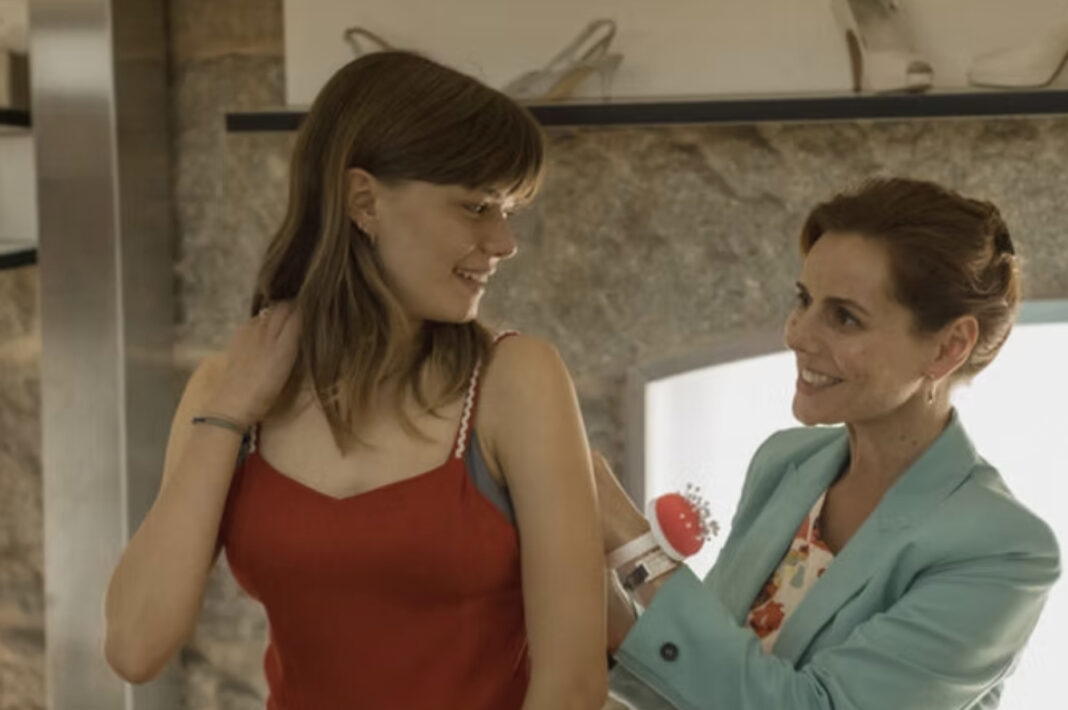
This is the story of 18-year-old Marina (Llúcia Garcia) who is looking for answers. 

The year is 2004 and she arrives in Vigo, on the Spanish Atlantic coast.

She wants her grandparents’ signature on documents she needs for a scholarship application.

But before she meets them, she will be greeted by her uncles, aunties and cousins.

They have different accounts of where her parents lived and exactly what went down.

Marina doesn’t want to be shielded from the truth. She really wants to understand.

There is no doubt that her folks were very much into each other, but the 1980s in Spain was a time when heroin was in abundant supply and AIDS was raging.

 Marina finds that her grandmother isn’t exactly the warmest person in the world and, along with her grandfather, is holding onto a long-buried secret. 

Marina, who is keen to document all she is seeing and doing on her video camera (she wants to study cinema), gradually unpeels the layers.

ROMERÍA, which means pilgrimage, is exactly that – a trip back in time to unravel a mystery that has followed Marina throughout her young life.

Naturalistic in style, with plenty of handheld camera usage, it is a slow burn film that unfolds over five days.

A decent component is shot on and from a yacht that is in the family.

Marina’s parents’ tale starts out as a love story, but descends into darkness and shame.

Written and directed by Carla Simón, there is a semi-autobiographical background to this picture. 

Simón’s biological mother Neus Pipó Simón is also given a writing credit because material in the movie is drawn from letters that Neus Pipó wrote.

Carla lost her parents when she was young (she was only six when her mother died) and then went to live with her aunt and uncle.

In turn, her parents were young during Spain’s democratic transition in the 1980s, a time of freedom and experimentation.

As Simón puts it, young people broke with the inherited values of a deeply Catholic and conservative society.

However, this long-awaited period of freedom also brought with it a heroin crisis, which resulted in Spain having the highest rate of AIDS-related deaths in Europe.

Simón tried to reconstruct her parents’ story, but failed. Out of that though emerged ROMERÍA. 

It is not a film for everyone, especially those who don’t have the patience to wade through elongated periods of family interactions.

But while the family dynamic is complicated, I stuck with it and found it rewarding.

A lot of that has to do with the strong showing of Llúcia Garcia in the lead.

As Marina, she is a keen observer of the world around her, but remains determined to get answers.
And she refuses to leave until she has the documentation she is looking for. That won’t happen until she uncovers the truth, as ugly as it might be.

The film also features attractive cinematography of Galicia’s rugged coast by Hélène Louvart. 

Nominated for the Palme d’Or at the Cannes Film Festival last year, ROMERÍA scores a 7 out of 10.


Got something to say about this?

This site uses Akismet to reduce spam. Learn how your comment data is processed.

Popular Categories

Advertisementspot_img

Discover more from J-Wire

Subscribe now to keep reading and get access to the full archive.

Continue reading