
Jewish Australians are being urged to identify accurately in the 2026 Census, as senior religious leaders launch a national campaign encouraging Australians to record their religious affiliation.
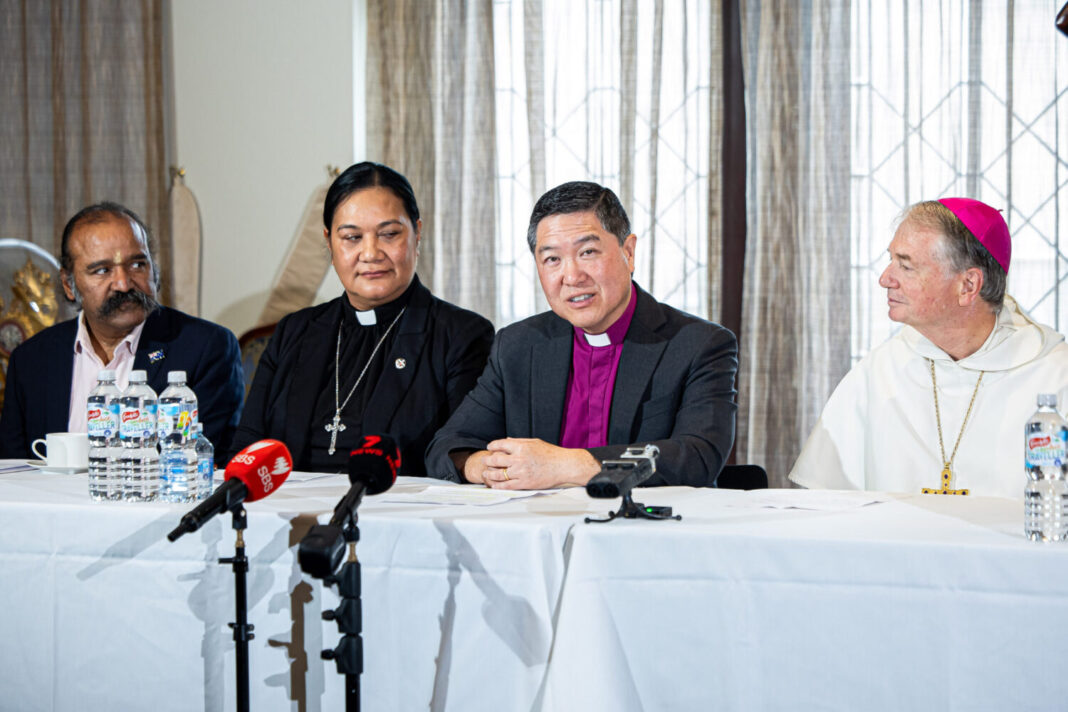
The campaign, led by the Catholic Archdiocese of Sydney, was launched this week at St Mary’s Cathedral and brought together Christian, Jewish, Hindu and Buddhist leaders in a public call for people whose lives have been shaped by faith, culture or religious tradition to be counted.
The 2021 Census recorded 99,956 Australians identifying Judaism as their religion, the highest raw Census figure recorded for the community. That was up 9.8 per cent from 91,023 in 2016, when the Jewish religion count had fallen about 6.5 per cent from 97,335 in 2011.
Researchers have linked the 2016 decline to privacy concerns around that Census and reluctance among some Jewish Australians to disclose their religion.
A 2024 report by demographer Dr David Graham estimated Australia’s total Jewish population at 116,967 in 2021, highlighting the gap between Census religion data and broader Jewish identity.
The issue is especially significant for Jewish Australians because Jewish identity is often religious, cultural, ancestral and communal at the same time. Some Jews may not consider themselves religious, but remain connected to Jewish life through family, history, community, tradition or peoplehood.
Community leaders say the 2026 Census will be particularly important because Jewish identity has become more publicly sensitive since the rise in antisemitism following the 7 October attacks in Israel.
There is no official evidence yet that antisemitism will affect Census responses, but Jewish organisations are concerned that fear, privacy worries or discomfort about public identification could lead some people not to record their Jewish identity.
NSW Jewish Board of Deputies Chief Executive Officer Michele Goldman said the Census question was especially important for communities where faith, culture, ancestry and identity are closely connected.
“For many Jewish Australians, identity cannot be separated neatly into religious or non-religious categories,” Goldman said.
“Traditions, history, family life and sense of belonging are often inseparable from how we understand ourselves and our place in Australia.”
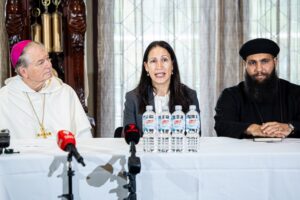
Among those supporting the campaign launch were Archbishop Anthony Fisher OP, Archbishop of the Catholic Archdiocese of Sydney; Bishop Peter Lin of South Western Sydney; Michele Goldman, CEO of the NSW Jewish Board of Deputies; Rev. Heather Topp, member of the Interfaith and Chaplaincy Planning Committees of the NSW Buddhist Council; Rev. Faaimata Havea Hiliau, Moderator of the NSW Uniting Church; Sai Paravastu, President of the Hindu Council of Australia; and Father John Sorial of the Coptic Orthodox Diocese of Australia.
The campaign’s broader message is aimed at Australians whose lives have been shaped by faith, spirituality, family tradition, culture or religious community, even if they are not regular worshippers.
Organisers say the campaign responds to a long-term rise in the number of Australians selecting “No religion” in the Census, despite many still maintaining a connection to faith through family, heritage, culture, values or personal belief.
In the 2021 Census, 38.9 per cent of Australians reported having no religion, up from 30.1 per cent in 2016 and 22.3 per cent in 2011. Christianity remained the largest religious grouping at 43.9 per cent, followed by Islam at 3.2 per cent, Hinduism at 2.7 per cent and Buddhism at 2.4 per cent.
Archbishop Fisher said the campaign was not about persuading people to change their beliefs or practise religion in a particular way.
“This initiative is not about persuading anyone to change their beliefs or practise religion in a particular way,” Archbishop Fisher said.
Imam Alsuleiman said the campaign sent an important message to Australians from different backgrounds, including those whose faith is part of family, heritage and community rather than formal observance.
“For Muslim Australians, faith is deeply connected to family, heritage, values and community, even if it is practised differently from person to person or expressed quietly in everyday life,” Imam Alsuleiman said.
“It is about encouraging Australians to answer the Census honestly and confidently, recognising the role faith and spiritual identity continue to play in many people’s lives, families and communities.”
He said faith communities continued to play a major role in Australian life through schools, aged care, healthcare, immigration support and other community services.
“Australia’s religious communities are deeply woven into the social fabric of this country,” Archbishop Fisher said.

“Every day, millions of Australians actively choose faith-based schools, aged care, healthcare, immigration support and other essential community services because of the trust, care and sense of community these institutions provide.
“This demonstrates the continuing and valuable role religious communities play in Australian life, regardless of how often someone attends a service or practises their faith.”
Demographer and Census expert Mark McCrindle said the religion question had real-world implications because the data helped inform planning for education, healthcare, aged care, chaplaincy, settlement support and other services.
“The Census is Australia’s most important national dataset, and its value depends on people accurately reflecting who they are,” McCrindle said.
“Accurate Census data helps ensure governments and policymakers have a genuine understanding of the people, values and communities that make up our nation.”
Religion is one of the few optional Census questions, but it is answered by most Australians. In 2021, 93.1 per cent of the population answered the religion question, up from 90.9 per cent in 2016.
McCrindle said the question should not be seen as a measure of religious observance.
“The challenge is helping people understand that this is not a test of religious practice or perfection,” he said.
“Many Australians still identify with a faith tradition culturally, historically or personally, even if they are not regular attendees or strongly connected to a denomination.”
He said people whose exact denomination or sect was not listed could still write in their response.
Imam Shadi Alsuleiman, President of the Australian National Imams Council, said the campaign sent an important message to Australians of different backgrounds.
“For Muslim Australians, faith is deeply connected to family, heritage, values and community, even if it is practised differently from person to person or expressed quietly in everyday life,” he said.
“This initiative recognises there is no single standard that determines whether someone is ‘religious enough’ to identify with their faith.”
Rev Topp said the campaign showed how faith communities could work together with mutual respect.
“People from many different traditions have come together around the simple principle that everyone deserves to feel acknowledged and be counted,” Rev Topp said.
“This is a positive and inclusive invitation for Australians to reflect honestly on the beliefs, traditions and communities that have shaped their lives.”
Organisers stressed that Australians are under no obligation to identify with a religion. The campaign is aimed at people for whom faith, spirituality or religious tradition remains meaningful in some way, whether culturally, socially, personally or spiritually.
The campaign will run until the end of the official Census period and will include multilingual outreach, educational resources and engagement across faith communities. Census Night will be held on Tuesday, 11 August 2026.
If they don’t want to then they shouldn’t be coerced in my opinion.
Past history when forgotten repeats itself and trust is/has been short changed for far too long.