
The Royal Commission on Antisemitism and Social Cohesion received more than 20,000 submissions, one of the largest public responses to an Australian royal commission.
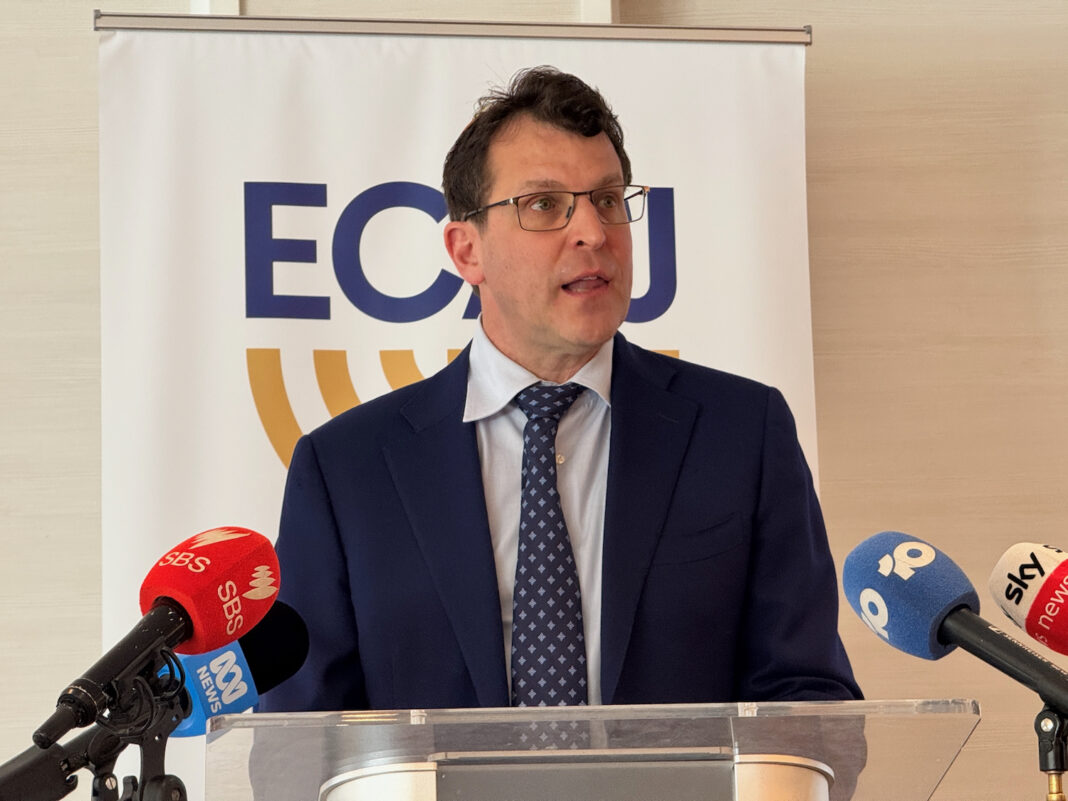
Among them is a deeply personal account from Executive Council of Australian Jewry president Daniel Aghion KC, who has warned that antisemitism is far more widespread than recorded incidents suggest.
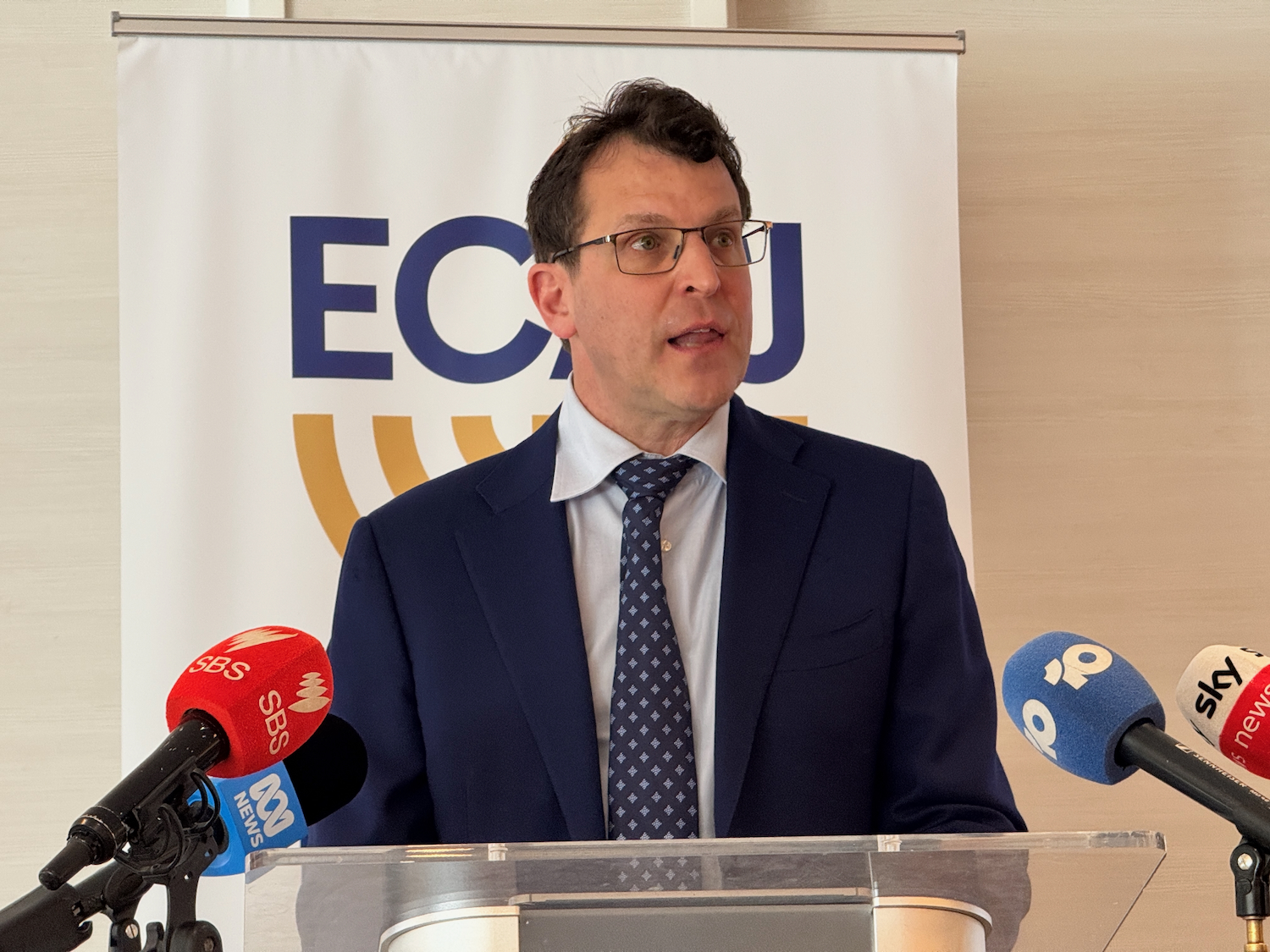
Aghion described antisemitism in Australia as “a light sleeper” that needs only a social trigger to awaken.
His warning comes amid ECAJ figures showing anti-Jewish incidents remain at historically high levels following the Hamas attacks of 7 October 2023.
The organisation recorded 2,062 incidents in the 12 months to 30 September 2024, up from an annual average of 342 during the previous decade.
The figure fell to 1,654 in the following 12 months but remained almost five times the earlier annual average. ECAJ also recorded increases in serious vandalism and arson.
In his personal submission, the Melbourne barrister said the surge in anti-Jewish hatred had exposed prejudice that already existed but had previously been kept out of public view.
Aghion, who has led the ECAJ since November 2023, referred in his argument on a conversation he overheard on a crowded Melbourne train on the morning of 11 October 2023.
Two men in casual business clothing were speaking loudly enough to be easily heard by between 20 and 30 people in the carriage. One said Israel “got everything it deserved” and that American support for Israel existed because “the Jews control all the money”. The other agreed.
Aghion said the men could not have developed those views in the 72 hours since the Hamas attack. Instead, the event appeared to have given them permission to express views they already held.
“If I am correct, then hatred of Jews is more prevalent than one might expect or the data might show,” he wrote.
“It would mean that antisemitism exists in this country, but it is a light sleeper.”
Aghion said recorded incidents could therefore represent only part of the problem, with many antisemitic views remaining unspoken until a newsworthy event provided social permission to express them.
He compared the train conversation with an episode during Melbourne’s COVID lockdowns, when footage of a Jewish engagement party held in breach of restrictions prompted antisemitic social media posts, threatening emails and abusive messages left on synagogue voicemail services.
After the Jewish Community Council of Victoria sought government assistance, then-premier Daniel Andrews used a widely watched COVID media conference to condemn antisemitism as unacceptable and “pure evil”.
Aghion said the abuse stopped almost immediately.
He said the episode demonstrated the importance of strong political leadership delivered early. By contrast, he described the federal government’s response after 7 October as hesitant and reactive.
Aghion said conversations with Jewish Australians in every state and territory had revealed deep fear, despair and anger.
One community member told him he was terrified to take his children to Purim celebrations. Another suggested that soldiers armed with heavy weapons should protect synagogues after fearing that a terrorist could enter while he was praying.
Self-defence classes have become common, while families have enrolled themselves and their children in Hebrew classes in case they need to leave Australia for Israel.
Advertisements for Tel Aviv apartments have appeared regularly in Australian Jewish media, while some families have investigated whether their ancestry makes them eligible for foreign passports.
Aghion said the possibility of emigrating, once treated as a remote last resort, had become a serious discussion in Jewish households.
“If there were another massacre like Bondi, I would not be surprised to see a large exodus of Jews from Australia,” he wrote.
He said Jewish Australians were watching to see whether conditions improved and whether the country could keep them safe. The Jewish community had spent increasing amounts securing its institutions, he said, with federal assistance covering only part of the cost.
Aghion added that security funding intended to protect a community facing threats to life had itself been used by some people to promote anti-Jewish hostility.
He began his submission with his family’s history of persecution, displacement and migration.
“My family came to Australia as a place of safety and security, far away from the troubles of the world,” he wrote.
Aghion also described Israel as part of his identity. He spent six months there in 1993, studying at the Hebrew University of Jerusalem and volunteering with the Magen David Adom ambulance service.
Because his mother was born in Israel, he is an Israeli citizen by descent. He said chants calling for the death of members of the Israel Defence Forces were understood by Australians such as him as calls for people like them to be killed.
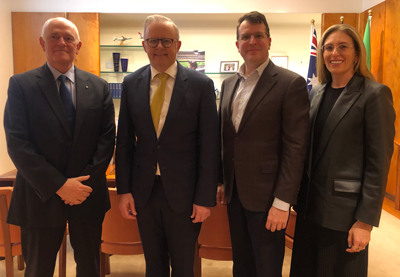
Aghion, who previously served as JCCV president, said he had visited Canberra five times in the previous two and a half years and met the prime minister and senior cabinet ministers.
Although politicians had listened to his concerns, he said the government had, until recently, lacked the political will to act proactively and effectively.
He criticised early federal statements that condemned antisemitism and Islamophobia together, even when responding to cases in which no Islamophobia was present.
Aghion said he advised the government that such language diminished and neutralised the condemnation. The practice ceased around the middle of 2024.
He also criticised delays in appointing a Special Envoy to Combat Antisemitism.
Aghion, Jillian Segal and ECAJ co-CEO Peter Wertheim first proposed the position to the prime minister in December 2023.
The government indicated it would agree to the proposal if an Islamophobia envoy was also appointed. Aghion accepted that approach, provided the two positions were held by different people.
Segal’s appointment was not announced until 9 July 2024. The Islamophobia envoy was appointed on 30 September.
Segal released her Plan to Combat Antisemitism on 10 July 2025. The government did not respond until December, days after the Bondi Beach massacre.
“I do not accuse the federal government of ill-will,” Aghion wrote.
“I do, however, contend that until Bondi, the federal government failed to appreciate the significance and scale and severity of the problem that the Australian Jewish community was facing.”
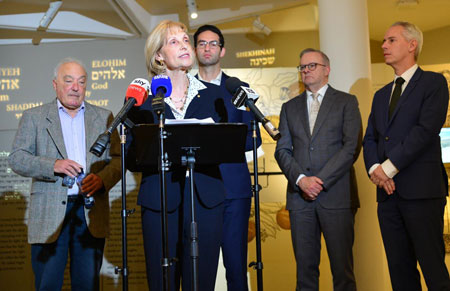
He acknowledged positive government measures, including increased security funding, reforms dealing with hate speech and doxxing, stronger visa controls, the establishment of Special Operation Avalite and the creation of the Royal Commission.
Aghion also criticised NSW Greens MP Jenny Leong for telling a Palestine solidarity forum in December 2023 that the “Jewish lobby and the Zionist lobby” were infiltrating ethnic community groups and that their “tentacles” reached into areas of influence.
He said her later apology addressed the word “tentacles” but did not retract the broader allegation that Jews were improperly influencing community organisations and centres of power.
Aghion also cited Antoun Issa, then chief of staff to Greens senator Mehreen Faruqi, who suggested on social media that the December 2024 firebombing of Melbourne’s Adass Israel Synagogue could have been a “Zionist false flag”.
Issa was counselled and apologised.
“I am deeply troubled that neither Ms Leong nor Mr Issa faced significant punitive consequences for their actions from within their own party,” Aghion wrote.
He said he feared the Greens leadership was, at best, indifferent to the harm being caused to Australian Jews.
The pressure of responding to antisemitism was also taking a heavy toll on Jewish community organisations, Aghion said.
The ECAJ had grown from six staff when he became president to 13, with 15 expected by the end of 2026. He said the growth reflected work caused solely by antisemitism and the measures needed to combat it.
Almost all staff were due to begin four weeks of uninterrupted leave on 18 December 2025 after two years of crisis work. Following the Bondi massacre, most instead worked throughout December and January.
The ECAJ’s media director was shot and injured in the attack, while co-CEO Alex Ryvchin was a member of Bondi Chabad and was close to Rabbi Eli Schlanger, who was killed.
Aghion said his own unpaid communal workload had increased from between 10 and 15 hours a week to at least 30 to 40 hours, significantly reducing his legal practice.
He warned that the professional, personal and emotional demands of communal leadership could deter suitable people from taking senior roles.
“Communal leadership within Australia is much more complex, traumatic and time consuming than it has ever been,” he wrote.
Aghion said Australia’s international reputation as a safe country for Jews had also been seriously damaged.
Jewish leaders overseas had reacted with shock at the scale and violence of antisemitism in a country previously regarded as a refuge where Jews could integrate and thrive.
In March 2026, Aghion appeared on the main stage at the Anti-Defamation League’s Never Is Now summit in New York alongside representatives of communities affected by violent antisemitic attacks in Washington, Boulder, Manchester, Bondi and Jackson, Mississippi.
He said that during visits to Israel, people had responded with concern as soon as he told them he was Australian.
“Australia now has a terrible reputation amongst Jewish people and organisations around the world,” he wrote.
“That reputation is of extreme violence against Jews and of an inability of government to stem the tide.”
Aghion warned that the perception could make it more difficult to attract Jewish migrants to Australia.
He ended the submission with qualified hope, recalling hundreds of messages and gestures of solidarity from non-Jewish Australians after the Bondi massacre.
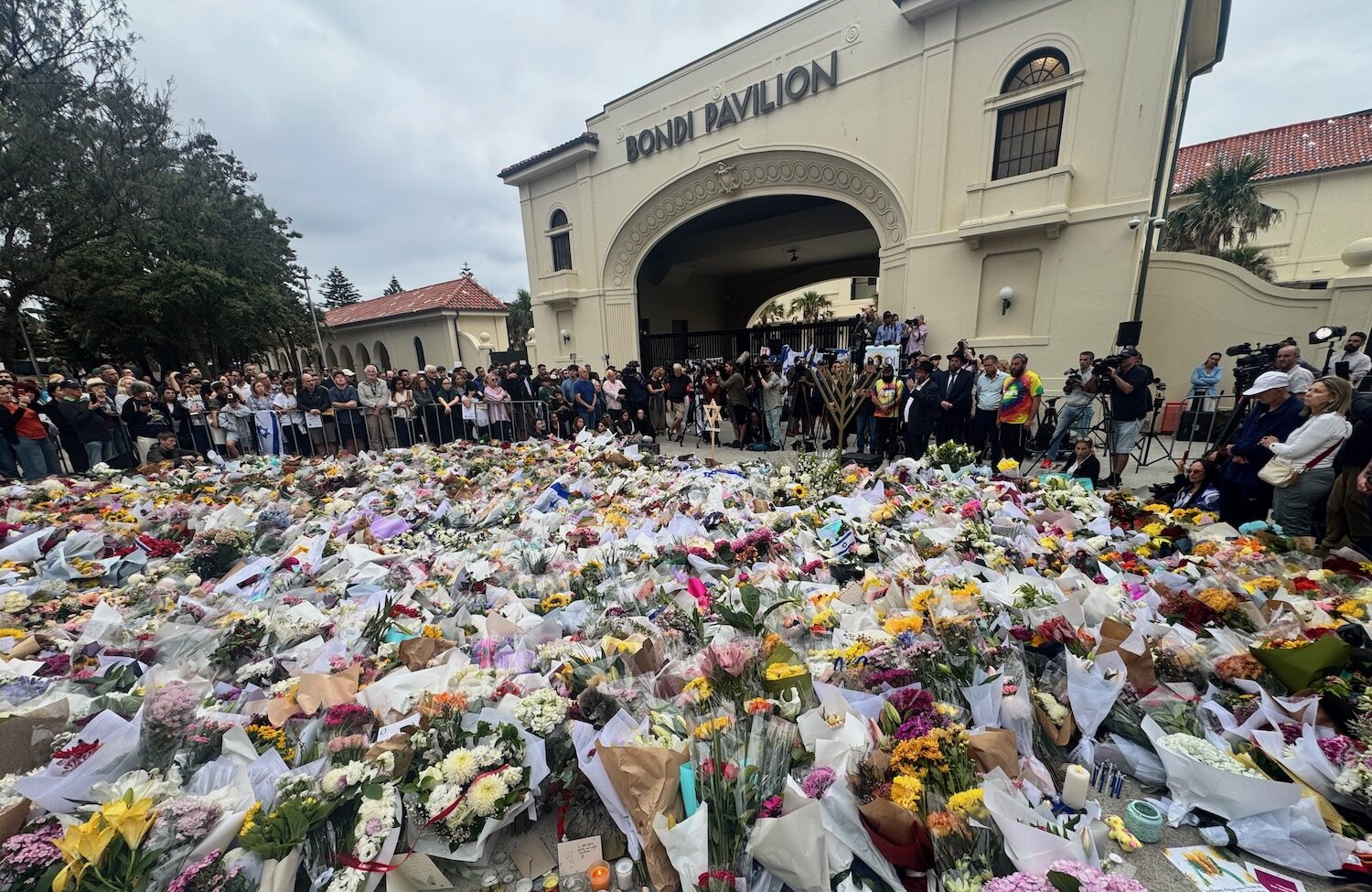
Flowers were left outside Bondi Pavilion and at synagogue gates around Australia, helping Jewish Australians feel that they were not alone and continued to belong in the country.
“This Commission is a powerful opportunity for Australia to be set on a path of tolerance, inclusion and understanding for the Jewish community and for all Australians,” Aghion wrote.
“That is how social cohesion can be achieved in this country.”