
The federal government’s attempt to keep information from the Royal Commission on Antisemitism and Social Cohesion raises a question that goes well beyond Cabinet confidentiality.
What message does it send when a Royal Commission established to investigate antisemitism, terrorism and the murder of Australians has to fight for access to information held by the government itself?
For the Jewish community, the answer is alarming, although unfortunately not surprising. It creates the impression that protecting government decisions may still be taking priority over full accountability.
The government sought to prevent the Commission from accessing Cabinet material concerning counter-terrorism funding and priorities and to maintain redactions in evidence from ASIO Director-General Mike Burgess. It argued that Cabinet confidentiality and public interest immunity are longstanding principles.
That may be legally correct, but it does not answer the real question. Why, in these circumstances, was the government’s instinct to restrict access rather than help the Commission examine every relevant decision?
The Royal Commission was established following the antisemitic terrorist attack at Bondi Beach on 14 December 2025. Australians were murdered at a Jewish event, families were devastated, and the attack confirmed what the Jewish community had warned for years: antisemitism had moved well beyond hateful words and intimidation. It had become a national security threat.
The Commission is now examining whether Australia’s intelligence, policing and counter-terrorism systems were properly focused and resourced. That goes directly to whether warnings were taken seriously and whether government decisions left Australia less prepared for a threat that had been growing in plain sight.
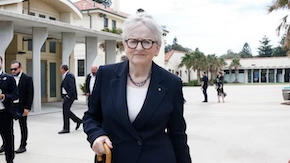
Commissioner Virginia Bell rejected the attempt to keep the relevant material from the inquiry. Importantly, she did not order sensitive information to be released publicly. It can be examined confidentially by the Commissioner and appropriately cleared staff.
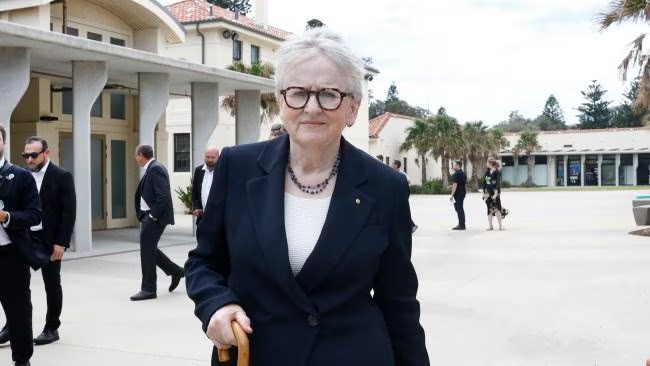
This was never simply a choice between transparency and national security. The question was whether the Commissioner should be allowed to privately examine information she believes is necessary to understand what went wrong.
There is a great deal of faith being placed in this Royal Commission. For many Jewish Australians, it represents one of the last real opportunities to have the scale of the crisis acknowledged, institutional failures exposed and meaningful recommendations delivered.
That faith exists because confidence in so many other institutions has already been damaged. Governments were slow to respond, universities failed Jewish students, extremist rhetoric was allowed to spread, and repeated community warnings were too often dismissed or treated as politically inconvenient.
The Royal Commission was meant to be different. It was meant to provide an independent and authoritative account of what happened, why it happened and what must change.
The government’s attempt to withhold information places another layer of doubt over a process people want to trust. It feeds concerns that the inquiry could be limited, that responsibility may be blurred or that difficult recommendations will eventually be placed on a shelf.
Commissioner Bell’s rulings should provide some confidence. They show that she is prepared to defend the Commission’s independence and insist on the evidence she needs.
But the government should never have placed her in that position.
Once access to relevant material has been delayed or contested, people naturally wonder what else may not have been disclosed. That suspicion risks hanging over the final report, regardless of how strong its findings may be.
There may be reasonable explanations for the decisions made about counter-terrorism funding and priorities. The Commission may ultimately find that the government acted appropriately. But resisting access has made suspicion stronger, not weaker.
The government cannot ask Australians to have faith in the Royal Commission while appearing to limit what it can examine. It cannot establish an inquiry into systemic failure and expect its own decisions to sit beyond scrutiny.
The Commission must be allowed to follow the evidence wherever it leads, including into Cabinet, government departments and the decisions of ministers.
People want to believe this Royal Commission will uncover the truth and lead to real change. The government should be reinforcing that confidence, not weakening it.
After the warnings, the violence and the lives lost, there should be no doubt that every relevant decision will be examined. No institution, department or Cabinet process should be protected from scrutiny when Australian lives and the safety of the Jewish community are at stake.
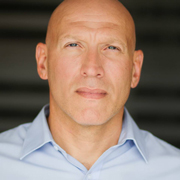
Michael Gencher is CEO of Standwithus Australia. He is the Liberal candidate for Pittwater.