
Senior University of Melbourne officials will be the first higher education leaders questioned by the royal commission examining antisemitism on campuses.
University vice-chancellors will face questioning from the royal commission as representatives of Australia’s highest-ranked institution prepare to become the first to give evidence.
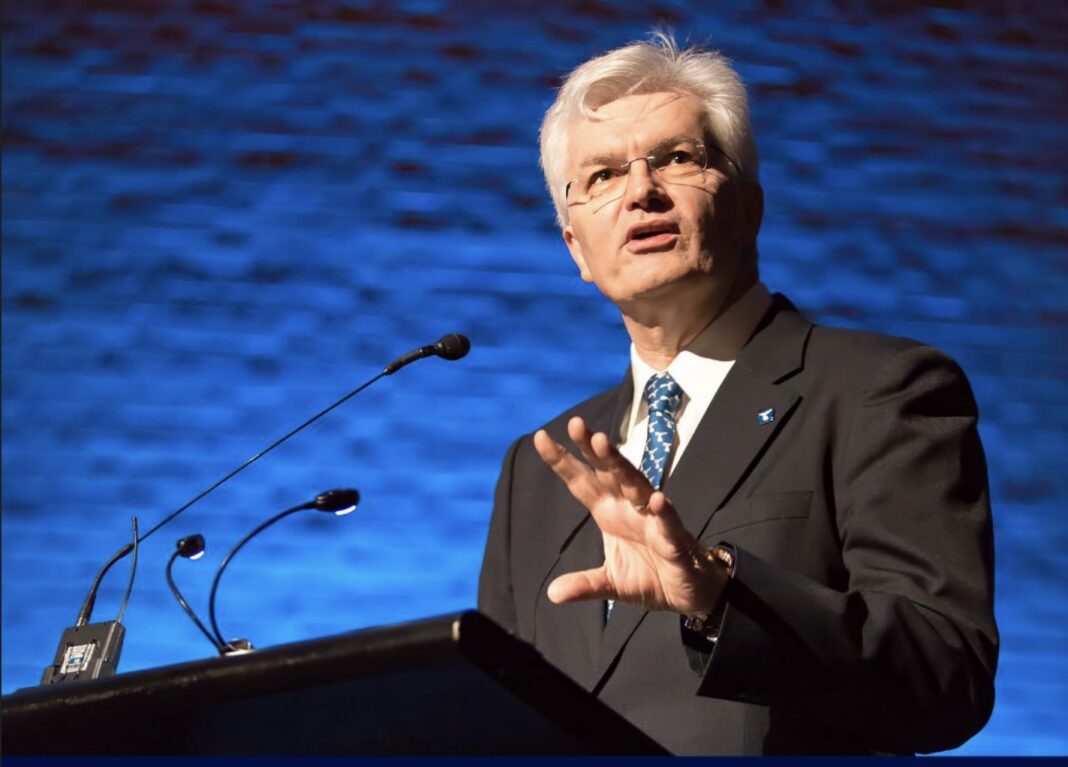
The University of Melbourne’s interim vice-chancellor, Glyn Davis, will appear at the commission’s public hearing on Wednesday.
Professor Davis’ appearance will follow damning testimony given a day earlier by Jewish academic Steven Prawer, whose campus office was broken into and occupied by protesters in 2024.
“We reaffirm our commitment to a safe, inclusive and supportive environment for all and acknowledge the important work of the Royal Commission,” a University of Melbourne statement said.
“As a diverse university community, we must come together and stand united in our continued efforts to eradicate hate and discrimination in all forms.”
An Israeli academic told the inquiry he had been “rushed” by protesters when he tried to speak with students.
Yotam Barazani, a 29-year-old cybersecurity professional and tutor at Deakin University, attended a pro-Palestinian encampment in May 2024 while holding a sign that read, “I want peace for all. Let’s talk.”
He said he was pushed to the ground and had his sign taken.
“I thought I’d be clever, and there was a sign of theirs, the protesters, next to me,” he said.
“I picked it up with the hope to say, ‘Hey, give me back my sign and I’ll give you back yours,’ but that could not come to fruition because the moment I touched the sign, I got rushed by what seemed to be 20 to 30 protesters.”
In addition, over the previous two days, Jewish students told the commission they had faced threats, harassment, social exclusion and intimidation on campus, particularly since the October 7 attacks.
Witnesses described hiding their Jewish identity, avoiding classes and university spaces, losing friendships and suffering declining mental health, while complaints to university authorities were often delayed, dismissed or produced no clear outcome.
The Royal Commission on Antisemitism and Social Cohesion is spending a week hearing from university staff and students about their experiences of hatred and examining the distinction between hate speech and legitimate criticism of Israel.
By Lucinda Garbutt-Young/AAP