
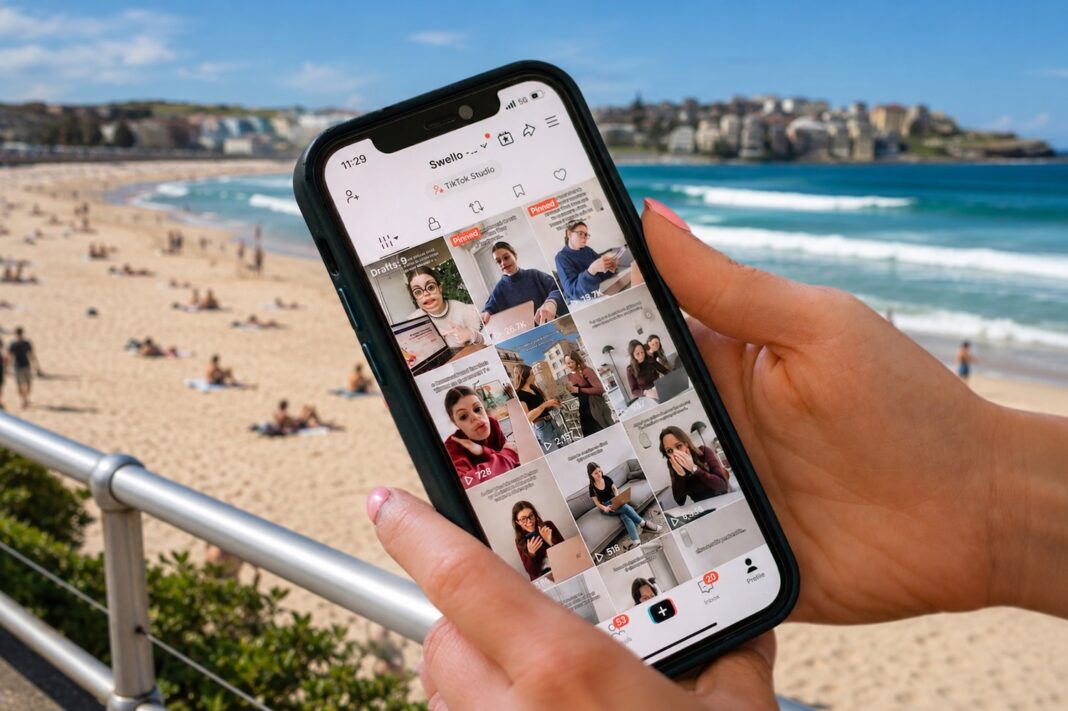
TikTok deployed crisis teams within 90 minutes of the Bondi terror attack to stop footage of the massacre spreading across its platform, the Royal Commission into Antisemitism and Social Cohesion has heard.
The Chinese-owned social media company told the inquiry on Tuesday that specialist teams were used to identify fast-moving harmful trends before they went viral, despite TikTok having no content moderators based in Australia.
“It’s like our basic police force versus a SWAT team,” TikTok’s global head of partnerships, elections and market integrity, Valiant Richey, told the commission.
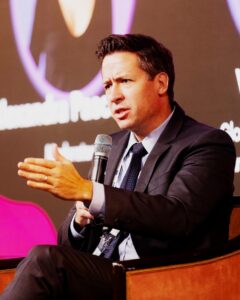
Mr Richey said TikTok employed 760 staff and 16 contractors in Sydney and Melbourne, but none were involved in content moderation.
He said moderators were based across a large number of locations around the world for reasons including labour supply, language and local regulation.
When asked why there were no moderators in Australia, Mr Richey said he did not know.
TikTok’s global head of policy, trust and safety, Zachary Hecht, said every video uploaded to the platform went through automated moderation.
“We also have human moderation at the point of upload, but auto moderation oversees everything,” Mr Hecht said.
The New York-based executive, who travelled to Australia to give evidence, said TikTok’s policies had been shaped through discussions with members of the Jewish community and hate speech experts.
Mr Hecht told the inquiry that about 98 per cent of harmful content uploaded to TikTok was automatically removed before it could be seen by users in Australia in the first quarter of the year.
He said that of more than 110 million videos uploaded in the first three months of 2026, just over 67,000 were removed under TikTok’s safety and civility policy, with most removals made through artificial intelligence.
The commission was also told TikTok’s artificial intelligence had correctly identified an antisemitic post for removal, but human moderators later allowed it back online after an appeal.
Mr Hecht acknowledged the post breached TikTok’s rules and said the case showed human error could undermine automated systems, even when the technology made the right call.
The TikTok evidence followed questioning of Meta executives, who defended the company’s decision to move away from some proactive moderation and fact-checking measures.
Meta’s global director of core policy, Benjamin Good, told the commission that over-enforcement could harm the communities the company was trying to protect. The company said it had acted against some uses of the word “Zionist” when it was deployed as a proxy for Jewish people in conspiracy theories about control of the media, government or other institutions.
Four antisemitic Facebook posts raised during the hearings, which had initially been found not to breach Meta’s community standards, were removed after further review.
Earlier evidence to the commission also examined the role of other platforms, including YouTube, X, Reddit, Telegram and LinkedIn, in spreading or failing to remove antisemitic material.
The commission also heard that Reddit’s reliance on volunteer moderators created problems in dealing with fast-changing hate speech, while witnesses raised concerns about LinkedIn’s handling of antisemitic rhetoric directed at “Zionists”.
CyberWell founder and chief executive Tal-Or Cohen Montemayor told the inquiry that young people had been targeted with antisemitic memes using the popular cartoon My Little Pony.
One post using the children’s cartoon claimed it was impossible to bake six million muffins, which Ms Cohen Montemayor said was a coded form of Holocaust denial.
“You’re priming them to also see the Holocaust and the story of the Holocaust through the lens of denial,” she said.
CyberWell’s analysis showed TikTok removed about 93 per cent of posts that breached content rules, compared with 77 per cent on Meta platforms and 37 per cent on YouTube.
Ms Cohen Montemayor, who established CyberWell in 2022, said platforms were generally more effective at policing Holocaust denial than other forms of antisemitism. She said more work was needed to better identify and categorise different forms of online hate targeting Jews.
The hearing followed earlier evidence about extremist groups using coded language, memes and children’s content to avoid detection by platforms and regulators.
Representatives of YouTube were also scheduled to give evidence to the inquiry on Tuesday.