

There is a particular kind of unease that comes from reading reports that a woman recently repatriated from Syria, after spending years living under ISIS rule, said the thing she “missed most” was a coffee on Melbourne’s Little Collins Street.
As of May 7, 2026, three more Australian women from the Roj and Al-Hol detention camps in Syria had arrived back in Australia. They returned not as refugees from a natural disaster, but as Australian citizens who had spent years in territory once controlled by ISIS.
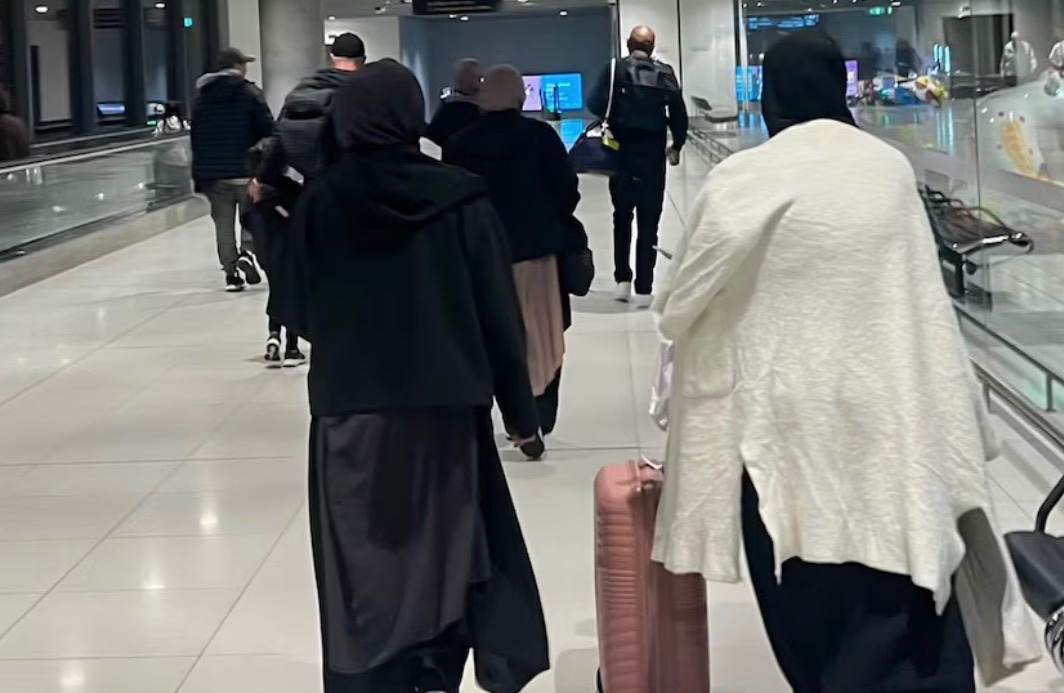
While much of the public discussion has focused on the logistics and legality of their return, many within the Australian Jewish community are asking difficult questions about national security, accountability, and the message these repatriations send in the aftermath of the Bondi Beach terror attack.
The story of the so-called “ISIS brides” is not merely one of misguided decisions or failed idealism. It is also a story of Australians who chose to travel to territory controlled by one of the world’s most violent terrorist organisations.

Who are we bringing home?
To understand why these repatriations have generated such anger, it is necessary to examine the backgrounds of some of the Australians who travelled to Syria and Iraq during the height of the ISIS caliphate.
One of the most prominent cases is that of Mariam Raad, who was repatriated to Australia in 2022 and later charged with entering a declared area in Syria controlled by ISIS. Authorities allege she travelled to Syria with her husband, Muhammad Zahab, who Australian officials have described as a significant ISIS recruiter involved in facilitating the travel of Australians to the region.
Among the women returned this week, several are now facing serious criminal charges, including allegations linked to slavery offences and crimes against humanity.
Those allegations remain before the courts, and the women are entitled to the presumption of innocence. However, the nature of the charges has intensified public concern about the repatriation program.
For years, advocates for repatriation argued that many of the women were themselves victims of coercion, manipulation, or abuse. Others argue that at least some of the women were active participants in ISIS-controlled society and supported the organisation in various ways.
Australian Federal Police investigations have reportedly examined allegations involving the treatment of Yazidi women and girls during the ISIS era. One woman has been charged with crimes against humanity offences relating to alleged slavery conduct.
Sickening timing: Bondi, the ISIS flag, and the Royal Commission
The timing of these repatriations has deeply unsettled many Australian Jews.
Less than five months ago, on December 14, 2025, Australia suffered one of its deadliest terrorist attacks when two ISIS-inspired gunmen opened fire during a Chanukah celebration at Bondi Beach, killing 15 people.
Among the victims were prominent members of Sydney’s Jewish community, including a Holocaust survivor and religious leaders.
Authorities later said ISIS propaganda channels had claimed responsibility for the massacre.
The attackers reportedly displayed an ISIS flag on their vehicle, a symbol that has become synonymous worldwide with terror, sectarian violence, and genocide.
For many grieving families and community members, the return of Australians who willingly lived under ISIS rule has reopened raw wounds while the country is still processing the trauma of Bondi.
The issue has become even more politically charged because it is unfolding during the Royal Commission into Antisemitism and Social Cohesion, which is examining the growing sense of insecurity felt by Australian Jews since October 7, 2023.
Critics argue there is an uncomfortable contradiction between efforts to confront extremist ideology domestically while simultaneously repatriating individuals who chose to align themselves with ISIS during the height of the caliphate.
Life under ISIS
The term “ISIS bride” has long been controversial because critics say it can imply passivity or lack of agency.
Human rights investigators, journalists, and former captives have documented how women inside ISIS territory sometimes played roles beyond domestic life. These roles allegedly included online recruitment, enforcing strict religious rules on other women, and involvement in systems tied to slavery and coercion.
Not every woman who travelled to ISIS territory played the same role, and individual responsibility varies significantly from case to case. However, critics of repatriation argue that some public portrayals have understated the ideological commitment of certain returnees.
One of the women charged this week is accused of offences relating to the alleged possession and use of a slave. Those allegations remain before the courts.
An insult to real refugees
One of the strongest objections to the repatriations has come from members of Australia’s Yazidi community.
Thousands of Yazidis fled ISIS atrocities and rebuilt their lives in Australia after surviving massacres, kidnappings, rape, and slavery at the hands of ISIS fighters and their supporters.
Some Yazidi refugees have publicly spoken about the trauma of seeing former ISIS-associated women brought into the same country they viewed as a sanctuary from that terror.
Yazidi refugee Hayam Bakkir has previously described being abused by women associated with ISIS during her captivity. For survivors such as Bakkir, the repatriations have been emotionally devastating.
Critics argue the Australian government has focused heavily on the legal rights of returning citizens while paying insufficient attention to the psychological impact on ISIS survivors now living in Australia.
The soldiers we forgot
The repatriations have also disturbed some Australian military veterans.
Between 2014 and 2024, Australian Defence Force personnel served in Operation Okra alongside coalition partners fighting ISIS in Iraq and Syria.
Australian troops witnessed firsthand the destruction caused by ISIS, including evidence of executions, mass graves, and atrocities committed against minority communities.
Some veterans and commentators have questioned whether repatriating ISIS-associated Australians undermines the sacrifices made by coalition forces to dismantle the caliphate.
Others argue that bringing Australians home for prosecution and monitoring is preferable to leaving them in unstable detention camps overseas.
The citizenship debate
Supporters of repatriation often argue that Australian citizens cannot simply be abandoned overseas, particularly where children are involved.
Critics counter that citizenship should involve responsibilities as well as rights.
Australia’s citizenship laws do permit citizenship revocation in limited circumstances, particularly involving dual nationals and terrorism offences. However, the legal framework is complex, and many of the women returned from Syria remained legally entitled to Australian citizenship.
The debate ultimately raises difficult questions about national security, rehabilitation, justice, and whether people who voluntarily joined extremist movements can ever fully reintegrate into Australian society.
The “vetted” assurance
The Australian government has repeatedly stated that returnees undergo extensive security assessments and monitoring.
However, scepticism remains widespread.
Proving crimes allegedly committed in a foreign war zone years earlier is extremely difficult. Evidence may be limited, witnesses dispersed, and documentation incomplete.
As a result, some Australians fear that individuals who supported ISIS may avoid conviction despite serious allegations.
For Jewish Australians still traumatised by the Bondi attack, and for Yazidi refugees who survived ISIS atrocities, those fears are not abstract.
A nation of dignity or a nation uncertain of itself?
The repatriation of Australians linked to ISIS raises painful moral and political questions that will not disappear quickly.
For many in the Jewish community, the issue is inseparable from the trauma of Bondi Beach and the broader rise in antisemitism now being examined by the Royal Commission.
Others argue Australia has a legal and moral obligation to bring citizens home, prosecute them where possible, and monitor them closely.
What remains undeniable is that the debate cuts to the heart of how Australia defines citizenship, national responsibility, justice, and security in the aftermath of terrorism.
Elliot Vesely is a Sydney-based journalist who covers topics from sport, geopolitics, and diaspora affairs. He has written and worked with major sporting organisations and has been published regularly in The Times of Israel.
I care about truth, or truths that make up a semblance of truth. I also care about complexity and nuance, as well as the possibility of acknowledging mistakes – even bad mistakes – and perhaps turning your life around. This article ignores all of that.
No. 1. Not all the women were arrested in order to be interrogated and charged. One returnee to Melbourne was not, the older daughter of the mother/grandmother.
2. There are nine children and they have not been referred to and it matters that they are alive and need an opportunity, through reeducation and care, to perhaps live well.
3. The charges are one thing and then we have to see how the evidence plays out as to the extent and manner of guilt.
4. Nobody, if genuinely repentant and willing to learn differently, should have to live a whole life tied to mistakes made, unless what they have done truly warrants it..
5. These people were not repatriated. If the law says they can return as citizens under their own steam, then that’s what they can do. If we have bad citizens of any kind who are Australians – and we do – then we must own them, not deport them – indeed, why should any other country take them – and they must suffer the consequences of their actions through the laws of our country.
None of what I am saying should be seen as my support for these women. That’s not the reason I’m writing.