
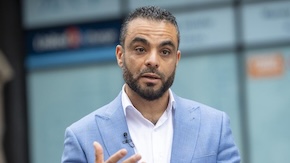
A Sydney councillor with a long record of antizionist activism has urged supporters of the pro-Palestinian movement to “flood” the Royal Commission on Antisemitism and Social Cohesion with submissions.
Many in the Jewish community and beyond are likely to see it as an attempt to counter testimony from Australians who have experienced genuine antisemitism.
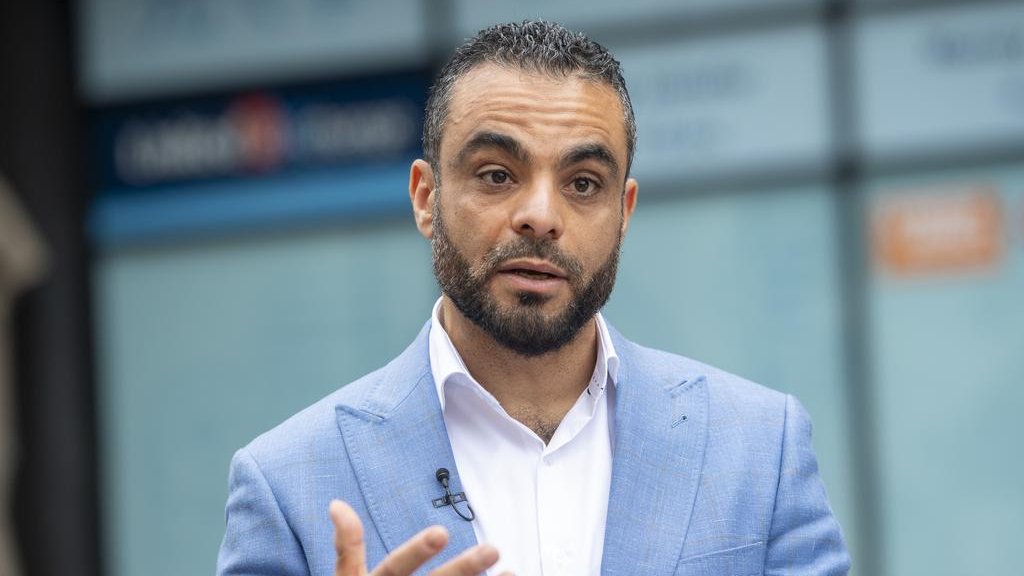
Ahmed Ouf, a councillor on Cumberland City Council, made the appeal in a Facebook post published on May 7, three days after Commissioner Virginia Bell had opened the first block of public hearings in Sydney, at which witnesses were already giving live testimony about their experiences of antisemitism.
“This is our time as Australians to flood the Royal Commission with submissions and bring balance,” Ouf wrote.
“What comes out of this Royal Commission could shape Australia leading into 2030 and beyond. Laws, policing, education, freedom of expression, protest rights and social cohesion may all be impacted.”
He called on “my brothers and sisters in the pro-Palestinian movement and in the movement for justice”, describing participation in the inquiry as “as important as anything we have done in the last two and a half years”.
The post encouraged submissions from “parents, students, workers and community members” and noted that “even children and young people can share their experiences”.
The day before Ouf made his post, a Jewish St John’s Ambulance volunteer had described to the Commission how a firefighter, on finding out he was Jewish, had pulled out a large hunting knife and said, “I would skin you the way my family skinned yours in the camps.”
There is nothing improper about members of the public making submissions to a Royal Commission. Public inquiries are intended to hear a broad range of evidence and personal experiences. By the time hearings opened on May 4, the Commission had already received more than 7,400 submissions, a measure of the depth of feeling the inquiry has touched.
What has alarmed many Jewish Australians is the call by Ouf and other antizionists to “flood” the process and “bring balance”, wording that suggests the experiences of Jewish Australians require a political counterweight.
It stands in direct contrast to how Commissioner Virginia Bell herself framed the inquiry’s purpose. At the opening hearing, Bell emphasised that the Royal Commission wants to hear directly from Jewish Australians about their own lived and living experiences of antisemitism.
The Royal Commission on Antisemitism and Social Cohesion was established on January 9, 2026, following the Bondi Beach terrorist attack of December 14, 2025, in which ISIS-inspired gunmen murdered 15 people attending the Chanukah by the Sea celebration.
An interim report, delivered on April 30, focused on counter-terrorism responses to the attack itself. The current hearings, the first of three scheduled blocks for 2026, focus on defining antisemitism and assessing its prevalence in Australian society and institutions.
The Commission’s mandate is to investigate the rise in antisemitism in Australia and the broader social conditions that enabled hatred of Jews to become increasingly visible and, in some settings, normalised.
For many in the Jewish community, Ouf’s intervention appears to treat the inquiry not as a solemn national examination of antisemitism but as another political arena in which antizionist activists should organise to present “the other side”.
That position is deeply troubling.
The testimony before the Commission has included evidence from Jewish schoolchildren, university students, parents, educators and community leaders who have reported abuse, intimidation, threats and physical attacks. These are not abstract political arguments. They are first-hand accounts of fear and exclusion.
Ouf has for years been one of the most outspoken antizionist voices in local government. He has promoted boycott campaigns, participated in rallies and used social media to portray Israel as a pariah state while aligning himself with activist groups that characterise Zionism as a form of oppression.
In 2024, he drew criticism after supporting a boycott, divestment and sanctions motion in Cumberland City Council targeting Israel, prompting strong objections from Jewish organisations and others who argued that councils should focus on local governance rather than importing divisive Middle East politics into municipal affairs.
His record of public statements has drawn sustained scrutiny. In a sermon in November 2024, Ouf said of the October 7 Hamas attacks: “7th of October gave the brothers and sisters in Palestine a few hours of freedom from the concentration camp they were in for years,” adding, “I felt like I was dead, and 7th of October gave me life and did free me.”
His campaign subsequently described the remarks as metaphorical and spiritual in nature. The attacks, carried out by Hamas, a listed terrorist organisation, resulted in the murder of around 1,200 people in Israel and the abduction of 250 hostages.
Last week he was a speaker at a public forum in Sydney defending the phrase “globalise the intifada”, telling the audience: “It’s not just okay to say it; it is important that you do.”
Critics have also highlighted a 2012 trip to Gaza in which Ouf met senior Hamas leaders and paid respects to figures associated with the group’s military wing including Ahmed Jabari. He has faced further backlash for statements expressing solidarity with Iran, mourning its leaders, and using rhetoric around “jihad” and resistance in the context of the Israel-Palestine conflict.
On social media and in public commentary, others have echoed the push for “balance”. Some voices have warned against the inquiry being used to “demonise Palestinians, Muslims, immigrants and those speaking out against Israel’s genocide”, framing Jewish testimony itself as potentially part of a “right-wing agenda”.
Such statements parallel Ouf’s language by treating documented antisemitic incidents and the testimony of victims as one side of a contested political debate that requires organised counter-submissions.
They risk turning a commission that was launched from the massacre of 15 Jewish Australians into a forum for debating whether concern over antisemitism is overstated or a tool to silence protest.
Against that background, Ouf’s call to “flood” the Royal Commission is likely to be viewed by many as an attempt to overwhelm the inquiry with ideologically driven submissions designed to dilute its central focus: that antisemitism has become a serious and growing threat in Australia.
The Commission’s task is not to determine whether antizionist activists feel their protest rights are under pressure.
Its task is to understand why Australian Jews have increasingly felt unsafe in schools, universities, workplaces and public spaces.
Freedom of speech and the right to protest are fundamental democratic principles. But those freedoms do not extend to harassment, intimidation or rhetoric that normalises hostility towards Jews.
Royal Commissions are intended to establish facts and recommend solutions in the public interest. They are not designed to be inundated by coordinated campaigns seeking to recast the issue under investigation.
The murder of 15 people celebrating Chanukah at Bondi Beach was not a matter of competing narratives. It was an act of terrorism.
And for many Australian Jews, efforts to “flood” the Royal Commission and “bring balance” will be seen not as a search for truth, but as an attempt to obscure it.
If Ouf succeeds in his call to flood the Enquiry with counter submissions, he will contribute to it exactly the kind of material that has incited so many to antisemitic acts. What a nasty piece of work he is.