
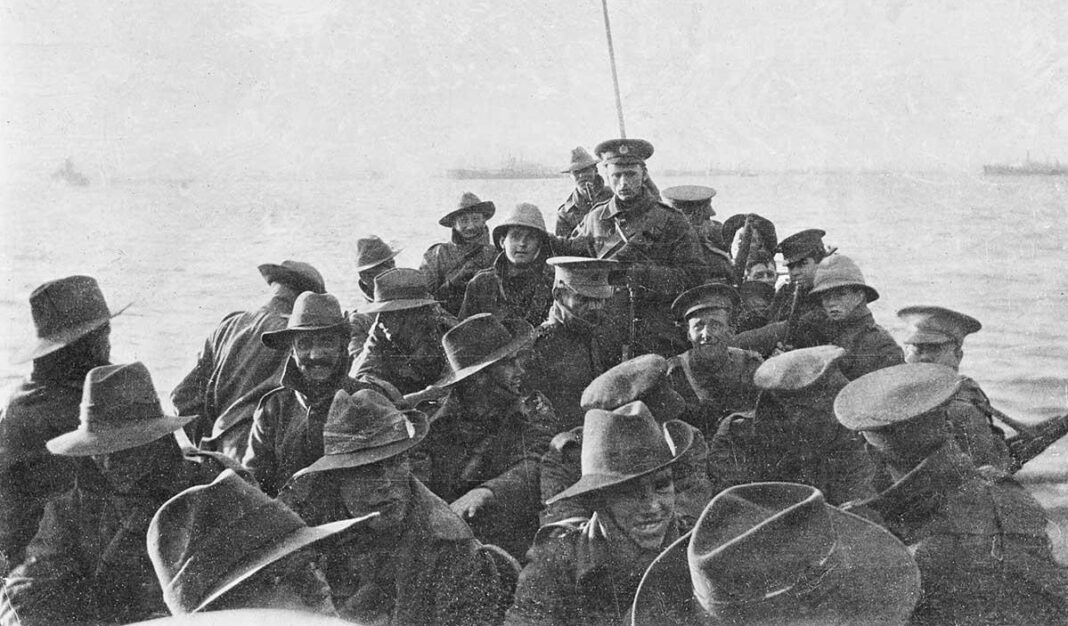
As Australians and New Zealanders mark ANZAC Day this week, the contribution of Jewish servicemen and women stands as a clear example of how a small community has played a significant role in the defence of both nations.
From the First World War onwards, Jewish Australians have served in numbers well beyond what their population might suggest.
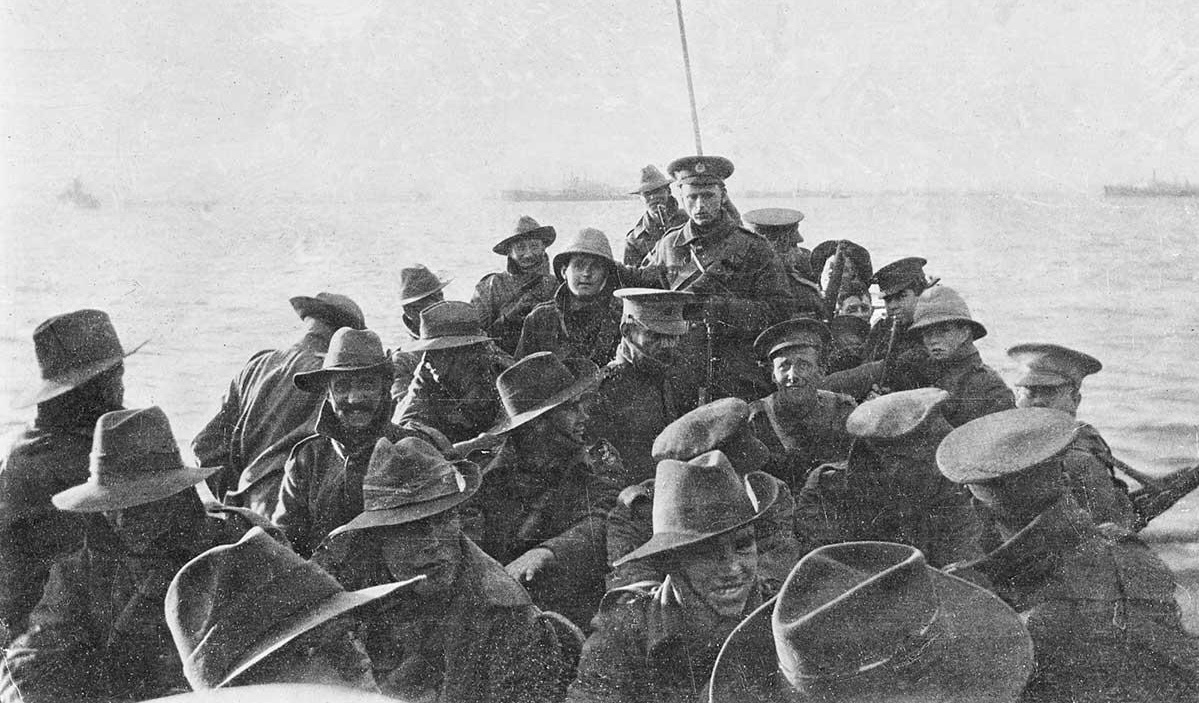
The most widely cited research indicates that more than 7,000 Jews have served in Australia’s armed forces, with more than 300 killed in action. That figure spans conflicts from the Boer War through to modern deployments, with some estimates higher when later service is included.
The pattern was already clear in 1914. Australia’s Jewish population was about 20,000, yet around 2,000 Jewish men enlisted in the First Australian Imperial Force. In New Zealand, where the Jewish population was only a few thousand, about 200 Jewish men enlisted. In both countries, this represented a very high proportion of eligible men, often estimated at close to or above half.
Jewish ANZACs were present from the earliest stages of the war, including the Gallipoli campaign. Among the most famous was Leonard Keysor, who was awarded the Victoria Cross for repeated acts of bravery under fire at Lone Pine. During the battle, he spent hours picking up live Ottoman grenades and throwing them back or smothering them, despite being wounded twice.
Other notable figures emerged during the First World War. Elazar Margolin, a farmer from Western Australia, served at Gallipoli with the 16th Battalion before going on to command the 39th Battalion of the Royal Fusiliers, part of the Jewish Legion, in the Palestine campaign. He was one of the few Australian officers to lead a specifically Jewish unit.
Medical and support roles were also critical. Captain Keith Levi, a medical officer from Perth, served at Gallipoli and was killed in action in August 1915 while treating the wounded under fire. Women also played a role, including Anita Polack, who served as a Voluntary Aid Detachment nurse in Britain and France, caring for soldiers from the Western Front.
Spiritual and welfare support helped sustain troops. Rabbi Jacob Danglow served as a chaplain during both world wars, providing religious and pastoral care to Jewish servicemen. Harold Boas, working through the YMCA, established support services for Jewish soldiers in London and compiled records that remain central to historical research.
No figure better captures the scale and significance of Jewish contribution than John Monash. Born in Melbourne to Jewish immigrant parents, Monash rose to command the Australian Corps on the Western Front in 1918. He was among the most senior Jewish officers in the British Empire and was knighted on the battlefield by King George V, one of the rare occasions such an honour was bestowed in the field during the war.
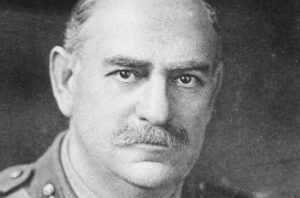
His leadership in battles such as Hamel and Amiens was marked by careful planning and coordination, helping to reduce casualties while achieving decisive results. Monash is widely regarded as one of Australia’s greatest military commanders, and his success carried broader meaning at a time when Jews were still a small minority within Australian society.
Jewish service continued strongly in the Second World War. More than 3,800 Jewish men and women served in the Australian forces, with over 130 killed. Their roles ranged from frontline combat to intelligence, medical and logistical support. Among those who rose to senior rank was Paul Cullen, born Paul Cohen, who served in the Middle East and the Pacific and later became a major general. Others, such as Maurice Ashkanasy, served in combat units before going on to prominent civilian careers.
In New Zealand, the pattern of high enlistment was just as clear. Within the Auckland Hebrew Congregation, about 30 per cent of eligible Jewish men volunteered for service in the First World War, with several killed. In the Second World War, enlistment rose even higher, with more than 60 per cent volunteering. Across the country, Jewish New Zealanders served in Europe, North Africa and the Pacific, often while aware that Jewish communities in Europe were facing persecution and, later, destruction during the Holocaust.
Jewish Australians and New Zealanders have continued to serve in more recent conflicts, including Korea, Vietnam, Iraq and Afghanistan. One of the most recent Australian Jewish soldiers to be killed on active service was Gregory Sher, who died in Afghanistan in 2009 while serving with the 1st Commando Regiment.
Historians and community organisations have consistently noted that Jewish enlistment rates in both countries were higher than the national average. For many, service was both a duty and a way of affirming their place within Australian and New Zealand society, reflecting a strong sense of responsibility to the countries in which they lived.
ANZAC Day is often framed as a national moment of remembrance, centred on sacrifice, service and shared identity. The Jewish experience sits firmly within that story. Jewish names appear on honour rolls, memorials and cemeteries across Australia, New Zealand and overseas battlefields. Some, like Monash, became central figures in national history. Many others are known mainly within families and communities, but their contribution is no less significant.
Together, they form part of the broader ANZAC legacy. Their service is not a separate chapter but an integral part of the story of Australians and New Zealanders who have served in uniform.
The form you have selected does not exist.
Aditionally there was a Jewish Star of David badged Zion Corps unit of the British army, formed in 1915 of Jews from Israel and Egypt, that fought at Galipoli