
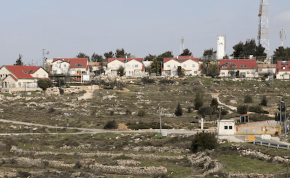
New Zealand has joined a coordinated statement with 10 Western governments and the European Union calling on Israel to halt settlement expansion in Judea and Samara (the “West Bank”) and warning of possible “legal and reputational consequences” for companies involved in construction projects linked to the controversial E1 corridor east of Jerusalem.
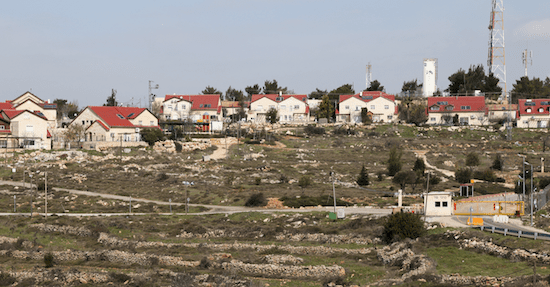
The statement was issued jointly by the governments of the United Kingdom, France, Germany, Italy, Canada, Australia, Norway, the Netherlands, Spain, Belgium, and the European Union.
The governments condemned rising settler violence and criticised Israeli policies they said were “undermining stability and prospects for a two-state solution”.
“International law is clear: Israeli settlements in the West Bank are illegal,” the statement said, specifically referencing planned development in the E1 area east of Jerusalem.
The E1 corridor has long been one of the most diplomatically contentious areas of the conflict. Israeli governments have argued that the area is strategically important for maintaining continuity between Jerusalem and Ma’ale Adumim, while critics argue that construction there would complicate territorial contiguity for a future Palestinian state.
The joint statement also called on Israel to:
- ensure accountability for settler violence,
- investigate allegations against Israeli forces,
- preserve the status quo at Jerusalem’s holy sites,
- and ease financial restrictions on the Palestinian Authority and Palestinian economy.
It additionally warned businesses against involvement in settlement-related projects, cautioning of potential “legal and reputational consequences”.
The diplomatic move reflects growing Western pressure on Israel over settlement policy following a series of Israeli administrative and land registration measures in Judea and Samaria during 2025 and 2026.
Critics, including several European governments, have characterised some of those measures as steps toward de facto annexation. Israel has defended them as governance and security measures within disputed territory.
Notably, the statement focused almost entirely on Israeli actions and settlement policy, while making little direct reference to Hamas, ongoing Palestinian political fragmentation, or the broader security environment that has shaped Israeli policy since the collapse of previous major negotiation rounds.
The language of the statement was also heavily juridical, repeatedly invoking concepts such as “international law”, “accountability”, “legal consequences”, and “investigations”, reflecting an increasingly legalistic Western diplomatic approach toward the conflict.
The Israeli government had not publicly responded to the statement at the time of publication.
She refuses to respond because she knows that her position is indefensible.
Perhaps it’s time that Israel brought the issue to a head by applying Israeli law to at least Area C.
“International law is clear: Israeli settlements in the West Bank are illegal,”
Rubbish: Australia and the othe signatory nations should be ashamed of themselves continuing to spread this canard.
Fact is Israeli settlements are legal in the West Bank under articles 6 and 25 of the League of Nations 1922 Mandate for Palestine – preserved by article 80 of the United Nations Charter.
I have written to Penny Wong pointing out this international law on many occasions. She refuses to respond.