
Archaeologists in Jerusalem have uncovered a mysterious ancient tunnel carved deep into bedrock near Kibbutz Ramat Rachel, a discovery that has left researchers puzzled.
The tunnel was found during excavations conducted by the Israel Antiquities Authority ahead of the construction of a new residential neighbourhood being advanced by the Israel Land Authority north of the kibbutz.
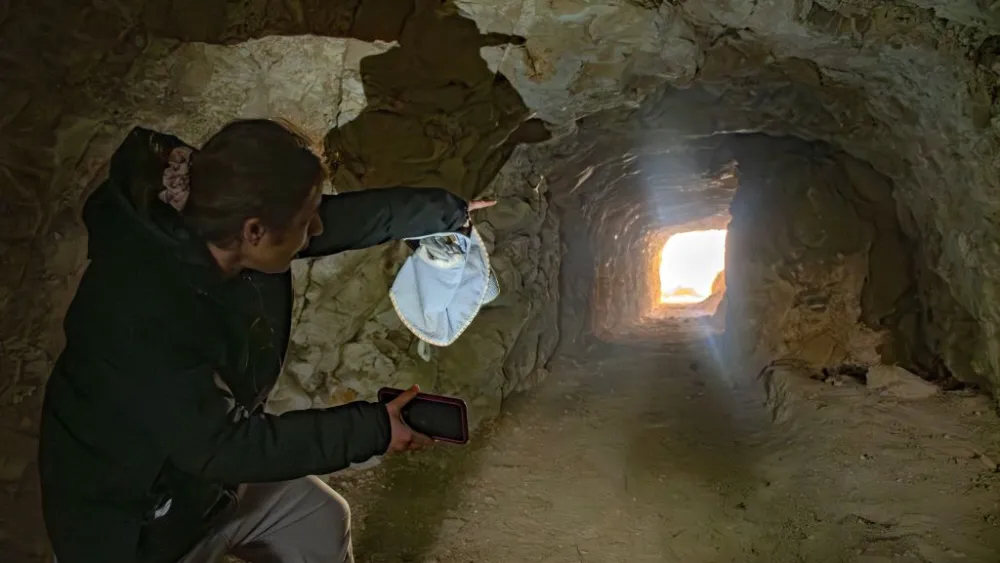
Stretching roughly 50 metres underground, the tunnel was discovered after archaeologists encountered what initially appeared to be a natural cavity in the rock.
“We were excavating in relatively rocky and exposed terrain when suddenly we discovered a natural karstic cavity,” excavation directors Sivan Mizrahi and Zinovi Matskevich said in a joint statement. “To our amazement, as the excavation progressed, this cavity developed into a long tunnel. Parts of it are still collapsed, so the tunnel has not yet revealed all of its secrets.”
The underground complex was accessed through a staircase descending from the surface into a hewn entrance leading to the tunnel. Archaeologists found the passage filled with layers of soil that had accumulated over hundreds, and possibly thousands, of years.
Excavations conducted at several points inside the tunnel revealed that some sections reach up to five metres in height and about three metres in width.
“The quarrying was executed carefully,” Mizrahi and Matskevich said. “It is clear that whoever carved this tunnel invested tremendous effort and careful planning and possessed the capabilities and resources necessary to achieve this goal.”
Despite the scale and sophistication of the work, researchers have not yet determined the tunnel’s purpose.
Initial theories suggested the passage may have served as an ancient water installation designed to reach an underground spring. That possibility was later dismissed because the tunnel walls showed no traces of plaster typically used in water systems, and geological consultations indicated there were no underground water sources in the area.
Researchers also examined whether the tunnel may have functioned as an agricultural or industrial installation, but the absence of similar sites nearby made that explanation unlikely.
Archaeologists now believe the tunnel may have been intended to reach a chalk layer suitable for quarrying building stones or producing lime. Supporting evidence includes a shaft carved into the ceiling that may have served as a ventilation opening, along with quarrying debris discovered on the floor.
Still, even that theory remains uncertain.
“It is possible that the quarrying and construction of the tunnel were never completed,” the excavation directors said, “and therefore its intended purpose and nature remain unknown.”
The tunnel’s age is also unclear because excavators found no pottery, coins or other artefacts that could help date the site.
“The date of the tunnel is also a mystery to us, since not even the smallest find was uncovered that could indicate when it was created,” Mizrahi and Matskevich said.
The site lies only a few hundred metres from major archaeological locations, including an Iron Age public building and Tel Ramat Rachel, where remains dating from the Iron Age through the Islamic period have been uncovered.
Shikma Sig, Jerusalem region planner at the Israel Land Authority, said the tunnel and surrounding discoveries would become part of a public archaeological park integrated into the new neighbourhood.
“The neighbourhood offers a rare combination of modern urban development and preservation of historical heritage,” Sig said.
Amit Re’em, the IAA’s Jerusalem district archaeologist, said the discovery reflects the city’s endless archaeological surprises.
“Usually we have explanations for the discoveries we uncover,” Re’em said, “but sometimes, as in this case, we stand astonished and amazed.”
Israeli Heritage Minister Amichai Eliyahu said the discovery, announced during Jerusalem Day week, was a reminder of the deep and ancient connection of the Jewish people to Jerusalem.
“Beneath the city’s soil, extraordinary enterprises of life, creativity and construction are revealed time and again, testifying to generations of people who lived and worked here and left their mark,” Eliyahu said.