
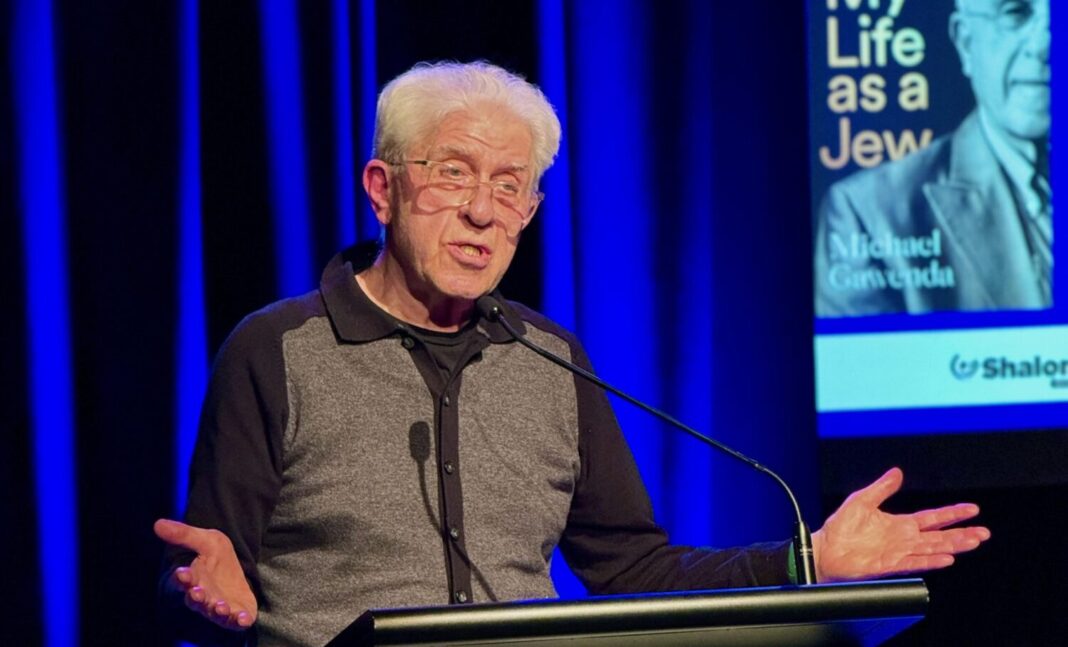
Veteran journalist Michael Gawenda has written a submission to the Royal Commission on Antisemitism and Social Cohesion, drawing on a long career in Australian media, including as editor in chief of The Age.
I am a former Editor in Chief of The Age, the first Jewish editor of the paper. I was a journalist for more than four decades. I was a foreign correspondent, a feature writer, and a senior editor at TIME magazine.
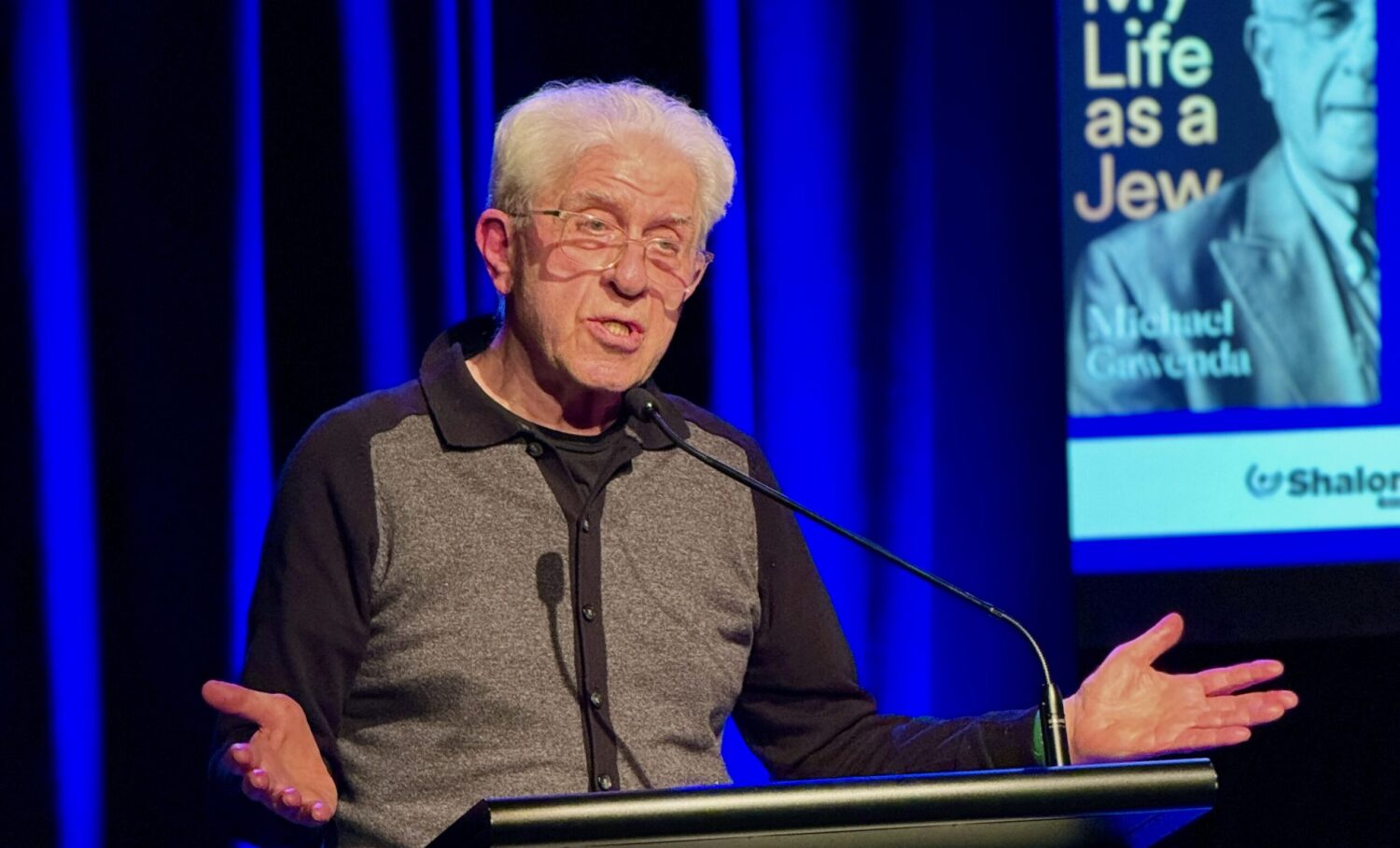
In 2007, I left full- time journalism when I was employed by Melbourne University to set up a centre for journalism and develop a Masters course in journalism. I was the Inaugural Director of the Centre for Advancing journalism, and I oversaw the development of the Masters program.
In 2014, I was lucky enough to be made a Member of the Order of Australia for my contribution to journalism and education.
I give these details to provide context for my submission to the Royal Commission that follows. I am prepared to appear before the Commission in an open session. I say this because I know that there are Jews who might wish to appear, but who may fear the repercussions of telling their story in an open session.
I have retired from full time journalism, but I continue to write commentary for various newspapers and news websites including The Australian, the Financial Review, The Saturday Paper, Haaretz and The Jewish Independent. I do not write for The Age, the paper where I worked for decades and which I edited, basically because they do not want to publish me on any issue to do with Israel and the Palestinians which has not been the focus of my journalism – nor on the issue of antisemitism about which I have written quite a lot. I have written quite a bit about the failure of journalism in particular to live by the ethical principles which I had always thought were the bedrock of what it meant to be a journalist. My old newspaper has not wanted to publish me on these issues.
In recent years, even before October 7, 2023, significant numbers of journalists with the support of the journalists’ union the MEAA, have become activists for a cause in which Israel and Zionism are something approaching evil and Jews are powerful and privileged and therefore oppressors rather than victims.
Antisemitism was seen by many journalists as a sort of weapon used by Jews to silence critics of Israel and Zionism. It wasn’t real, or it was exaggerated by the Jews. As a result, the media coverage of the impact of the October 7 massacre of Israelis and the taking of 251, on Australian society and Australian Jews in particular, has been superficial and biased.
Three days before October 7, 2023, my book My Life As a Jew, was launched at Readings bookshop in St Kilda, Melbourne. It was a festive occasion. Perhaps 120 people or more came for the launch. Many were old and current colleagues, people I had worked with and many I had mentored when I was Editor.
The book is about my journey towards an understanding of what it meant for me to be a Jew. And it was also about how Jews on the left, like me, who did not commit to antizionism, were being increasingly banished from the left by people who had once been my comrades. This was happening before October 7. In the culture, in politics and in journalism.
I had several bookshop gigs organised. Bookshops, it seemed were keen to have me. But after October 7, these were cancelled, mostly on the basis that staff at the bookshops did not feel safe to have a Jewish book featured this way. Readings in St Kilda took my book out of their window display. I was told that it was a difficult time for Jewish authors like me.
This was within days of the October 7 attacks. The attacks against Zionists in magazines and online began almost immediately. The magazine Overland, for instance, published a letter signed by journalists and writers that said that the attacks on October the 7th had to be seen in context. They were a form of resistance.
One of the organisers of this protest letter is a senior lecturer in the Masters course that I had helped established. Journalists signed another group letter which said the same thing, a letter supported by the MEAA. In other words, journalists were being asked to consider the massacre of more than 1200 Israeli men women and children as justified.
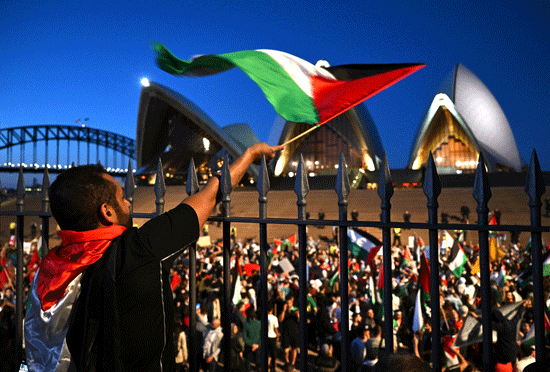
And then of course there was the infamous Opera House protest on October 9. The coverage of it in most of the media was minimal. As if this was a perfectly normal protest. If there was any controversy about it, it was about whether protesters had said `gas the Jews’ or `where are the Jews?’ with the implied suggestion that Jews were making the protest worse than it had actually been, as if ‘where are the Jews’ was a perfectly acceptable slogan.
I am a journalist and I wanted to write for my old paper about the way journalism was failing in covering what was happening in Australia to Jews, what was happening in Muslim communities and how we were in danger of normalising hostility to Jews. And putting multiculturalism in danger. I could not get published.
So I wrote for The Australian which treated my articles with respect. But of course, I wanted to talk to my old audience at The Age and to a lesser extent, The Sydney Morning Herald as well. I was refused the chance to do so.
I do not much care for the term antisemitism because its meaning is obscure and contested. I prefer Jew Hatred. What I experienced at first was not hatred but a sort of hostility towards Jews that I had never experienced before, certainly not in my professional life
I did not get invited to any of the major writers festivals, not Melbourne, not Sydney and not Adelaide. Not even Byron Bay where I had been on the program twice for books I had written. I had been on the program of Sydney and Melbourne and Adelaide in the past but not post October 7. My book had won the major Jewish literary prize in Australia but apparently was not interesting enough or `appropriate’ for these festivals.
I do believe that as the months passed, what had been a hostility towards Jews in the culture and at universities and in sections of the media, became something more than that. It was morphing into hatred.
For me, friendships ended. People I mentored did not contact me, not even when the physical attacks on Jews and Jewish institutions were growing, when it was clear that Jew hatred was becoming more pronounced. I am not much on social media thank goodness, but my children are and they showed me what some people were saying about Zionists, and I felt a sort of despair I had never felt before. I had lived my life in the public sphere, as an Australian journalist and editor and later as a journalism educator, but I was being reduced to a Zionist supporter of a genocidal Israel.
I write a Substack Called Gawenda Unleashed. I have had to block comments from people who just want to abuse me. Some are line ball and I do not block them. Comments like this for instance:
`The fact that most Jews are Zionists still doesn’t make hatred of Zionism hatred of Jews. It does make most Jews complicit in the crimes committed by the Zionist state.’
`Occasionally I prepare my gut for your nauseating apologism.
You are an apologist for Zionism and Israel. Those of us who aren’t, are nauseated.’
These are mild insults compared with those I have seen on social media. Not long after October 7, 2023, I was invited to join a WhatsApp group of Jewish people, most of them young. There were around 600 people in the group, and they had various political positions. I hardly ever took part in discussions. Instead, I just watched in horror as a New York Times journalist who had joined the group downloaded the whole of the WhatsApp discussions which somehow ended up in the hands of people who used the information to doxx members of the group including releasing their names, their addresses and even the names of their children. On social media there was an explosion of hate towards the ‘Zios’. Some of the posts were beyond disgusting and threatening.
I am a journalist and an author. I am an old man. I have lived my life in Australia. I am an Australian. This country has been a golden land for the Jews, for me personally. I arrived in Australia when I was two years old, having been born in a displaced persons camp in Austria. Mine is a post-war Australian story.
There are of course thousands of people like me. But that story is no longer a story that can be told with pride by Jews like me. What do I mean by Jews like me? I mean Jews who are not prepared to give up on Israel, not prepared to declare it irredeemably evil, not prepared to agree that Zionism is a colonialist and racist doctrine.
My parents, both of whom were on the left–my father in particular was a dedicated and active Labor supporter- would be appalled and frightened by what has happened to Jews in Australia. They had escaped the Nazis by fleeing with their daughters to the Soviet Union, to Siberia where they worked in Gulag like camps. Then they had fled to Australia, where they found a country that was welcoming to Jews like them. If they had lived to see what has happened to Jews in Australia, they would be deeply shocked. They would be fearful for the future of their grandchildren and great grandchildren. They would find what has happened to Australian Jews inexplicable.
I want to say something about my personal experience of the marches that have dominated the CBDs of Australian capital cities at weekends for more than 2 years. Some, the most notorious ones, were held in Jewish suburbs and one in particular, outside a synagogue.
These marches in my experience, are not just an expression of agony at what is happening in Gaza though many of the marchers desperately wanted an end to the war in Gaza. But the tone of the marches, the slogans that are everywhere, the chants, are not about peace but are essentially a call for the elimination of Israel and a hatred of Zionists.
But I have grown to have a deep connection with Israel and have come to see its importance to Jewish identity and the Jewish future. It is not safe, in my opinion, for Jews like me to be around these marches. Some of the slogans at these marches call for violence against Jews in Australia and wherever Jews live.
Post October 7, I have been the guest speaker at many Jewish gatherings and have spoken to and with many hundreds of Jewish people, young and older who have read my book and who felt they had been on similar Jewish journeys or who felt I could help explain why so suddenly they had come to be so unloved, feel so unsafe and so threatened, so unsure whether there was a future for them in Australia, for them and their grandchildren.
All of this was real and not a plot by the Israel Lobby as some journalists have suggested. And yet these experiences were hardly ever examined or described in much of the media. It was as if many journalists were convinced that the Jews were being hysterical, or alternatively, looking for undeserved sympathy. This remains true even after the massacre at Bondi which for many journalists had no context. It was an act of terrorism by two lone actors.
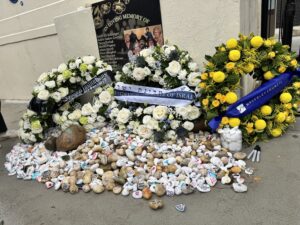
Not long after Bondi, the chants of `globalise the intifada’ and `from the river to the sea’ resumed at protests when the Israeli President visited Australia. Of course, this was a controversial visit for some people, but what did they mean these chants in the light of Bondi? Most of the media coverage of the visit did not ask these questions. Many Australian Jews, quite rightly, felt like their pain was being ignored at best.
I know personally of young people in my family and the children of friends of my family who had suffered cancelation of musical gigs because they were `Zionists.’ Appalling cases of careers cut short. Of lives made extremely hard. I had had my career at a time when Australia was a great place to be a Jew and so my cancelations and my isolation were not all that hard to take. The stories of these young Australians have not been told and in the main, they have received no support from cultural bodies that should be looking after them.
When the Albanese Government appointed envoy to combat antisemitism released her report, a report commissioned by the government, with a series of steps that she considered needed to be taken to combat antisemitism, the response from much of the media, including the ABC, was to dismiss it as either special pleading by the Jews, or a plan to silence critics of Israel, concocted by the Jewish Lobby of which the envoy, Jillian Segal, was a part. The government duly buried the report which it only started to respond to after the December massacre of Jews at Bondi.
The vast majority of Australian are either well-disposed to Jews or have no particular opinion about Jews which is not surprising given the tiny size of the Australian Jewish community.
I was beyond shocked by the Bondi attack against Australian Jews.
In my wildest imaginings, I did not imagine such a thing, not in Australia. But looking back, I see signs that this was not entirely a massacre out of the blue. A one-off attack by a couple of lone terrorists.
I believe that it is undeniable that hostility to Jews among certain sections of Australia society, mainly the elites the media, the culture, some universities and some semi government bodies had become endemic. I believe that some of this has morphed into outright hatred, the sort that leads, history tells us, to violence.
I do not have great faith in hate speech laws, nor do I think that banning slogans at demonstrations is workable, though I do believe that the slogans have become hateful and dangerous for Jews. I believe that what is needed, what has always been needed is leadership in those institutions that have, in my view, on some level, failed to deal with Jew hatred and hostility to Jews. Here is what I would advocate for:
- Governments and government institutions need to call out and condemn hateful slogans. Not ban them but consistently condemn them. The Federal Government has not done that until recently. The Australian Human Rights Commission has not done so and I believe that to be a significant failure.
- The bodies that support writers and artists and playwrights have failed in their duty to protect and advocate for Jewish creatives. That must be changed and that can be changed by governments that fund these bodies calling out failures to protect.
- In the media, editors and executive producers are failing to do their jobs which is to set ethical standards and make sure their journalists adhere to them. I know from personal experience that it is hard to enforce such standards when significant numbers of staff are dedicated social justice advocates for instance.
- Universities need to support free speech but must have a sort of code of conduct for academics when it comes to the question of whether the way they teach, the way they have become activists for a cause, has had serious impacts for Jewish students.
That’s a start, but all of this presupposes that it is possible to come to some sort of consensus about what Jew hatred or antisemitism if we must- actually is. If the Royal Commission can come to a sort of position on this question, it will have done an incredibly important thing for Australia s future and the future of multiculturalism.
Michael Gawenda
Well you certanly have been welcomed here……so continue to get it out.
It’s not easy for anyone’s comments to be written up, one never gives up when determined enough