
By Danielle Jaku-Greenfield
You wouldn’t believe how strange it is to see a man you don’t know perform as your grandfather on stage.
That’s what I did this week when I watched Anton Berezin play my grandfather, Eddie Jaku, in the theatre adaptation of his memoir “The Happiest Man on Earth”, written by US playwright Mark St Germain. I saw it at the Sydney Opera House, and even typing that feels surreal for me.
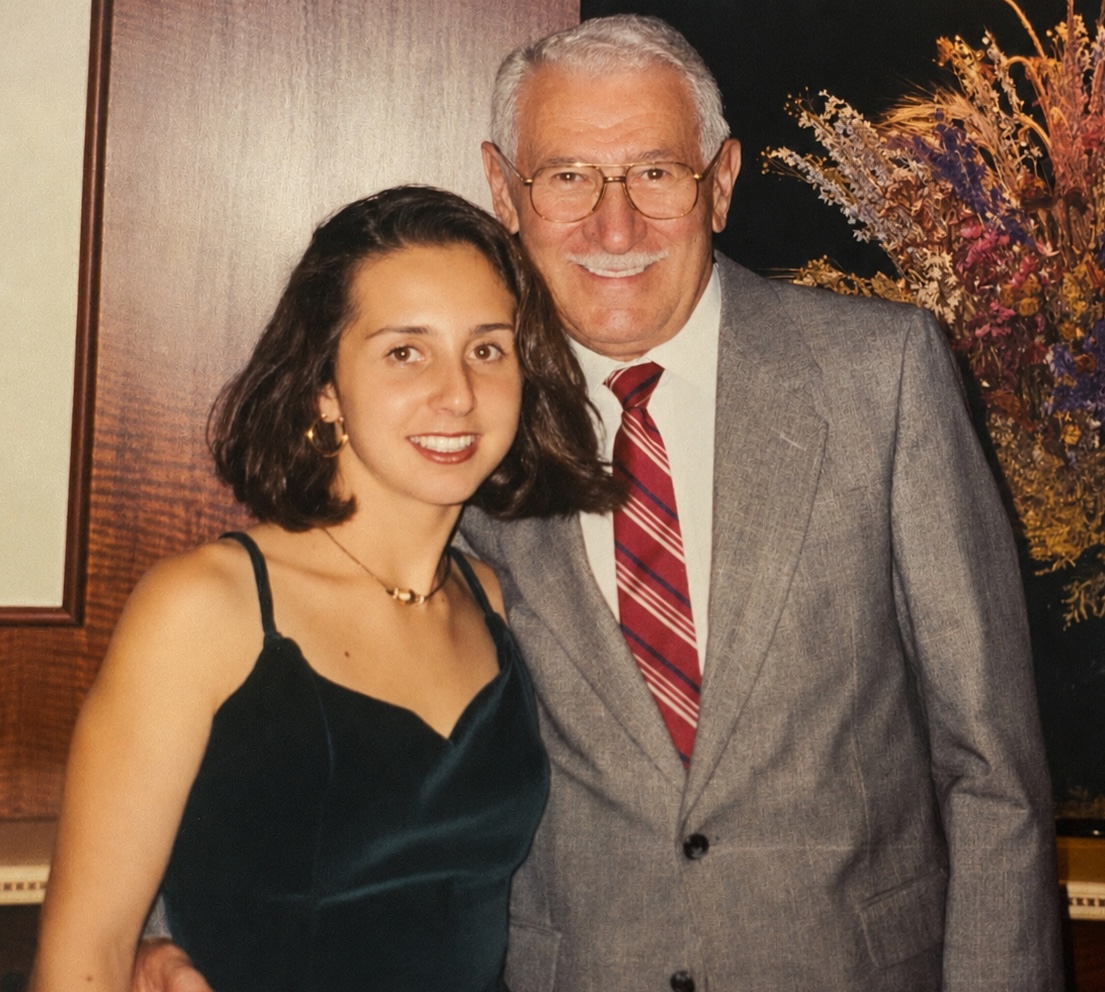
My family has been simultaneously incredulous and thrilled that my grandfather’s memoir has had such success and such a far-reaching impact since it was first published in 2020. We were only just getting over the standing ovation he received for his TED talk in 2019, at the age of 99, and the subsequent request from Pan Macmillan to publish his autobiography, which came just after his 100th birthday.
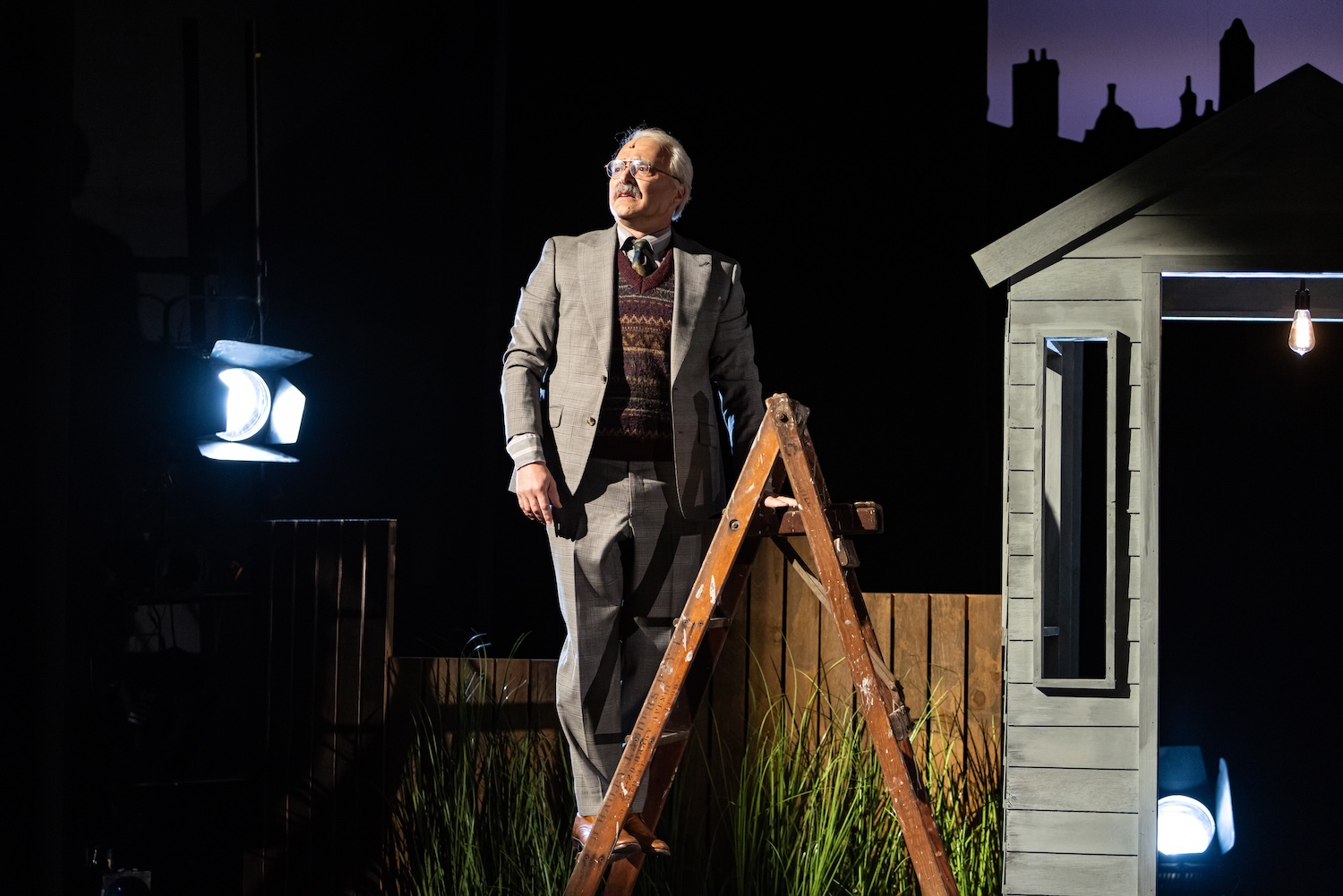
To walk into the Opera House Playhouse and see your grandfather’s story performed is next level. Once I got past the fact that the actor was dressed like my grandfather, looked a little like him but didn’t sound like him, I was able to concentrate on the acting, the set and the storytelling.
The acting was very good. Anton was sweating buckets by the end of this high-energy and exuberant one-man performance. He may not have reminded me of my grandfather, though I am told he did remind others of him.
I asked his wife and director, Theresa Borg, how Anton prepared for the role, and she told me he had been living and breathing Eddie since January, replaying his voice from the TED Talk and working with a voice coach. Theresa said she eventually had to put headphones on when they were travelling in the car together; otherwise, she would have ended up speaking with a German accent too.
The set was tasteful, and the props were cleverly multi-purpose. For example, the ladder was used vertically in one scene to help him climb up high to fix tall equipment in the factory where his life depended on working machinery, and horizontally down low in another scene as floorboards in a moving train, which he unpicked with a fortuitously found screwdriver to escape with nine other prisoners.
The story itself was mostly accurate, but with some artistic licence and, in my view, one major omission: the absence of my great-aunt, Eddie’s sister Johanna, also known as Henni. Instead of recounting that they were the only two survivors among hundreds in their family who were murdered during the Holocaust, Eddie in the play announced that he was the only living survivor in his family. Was this for added impact? Hard to say.
This omission troubled my 17-year-old son Joel the most. He had never even met my great-aunt, yet he asked director Theresa Borg directly after the play why Henni had been written out of the story. It is, of course, a question for Mark St Germain, the playwright, who, at the time of writing this review, had not yet been contacted for comment.
In addition to that edit of the true story, Eddie’s best friend Kurt only met his future wife, Charlotte, after the war, not before. The play would have you believe they were already married and then forcibly torn apart when he was sent to the camps. Perhaps this too was to add to the drama, though I do not believe any additional drama was required.
Like the book, the play makes you feel that my grandfather had nine lives, and you are reminded of the miracle that he survived. In that way, it was very successful storytelling. Similarly, the ability to condense my grandfather’s story into 80 minutes was impressive, even though, if you had already read the book, you knew there were missing parts.
Perhaps the most noticeable thing, for some family and friends I spoke to afterwards, was that the play did not focus as much on his happy, positive outlook after the war in Australia as the book did. Only five to 10 minutes of the 80-minute performance were dedicated to Eddie in happier times.
The feedback so far has been very positive. People have reached out to tell me how much they enjoyed the play. I know that I watched it through a very subjective lens and, when I zoom out, I am very proud of my grandfather, Pepe. I also take my hat off to Anton for taking on the role of a giant, whose love and appreciation for the smallest things in life forever inspired me and all those around him.
So, after the play at the Opera House, what’s next? I am told there is hope it will be shown in Melbourne and plans for it to tour regionally. Then what? A movie?
I’ll be keen to see which actor plays my grandfather on screen.