Hostility as a Virtue: The Moral Logic of Antizionism
Distinct forms of anti-Jewish hostility are produced in response to what a given society considers morally persuasive, intellectually legitimate, or politically necessary. What changes is the language through which violence justifies itself.
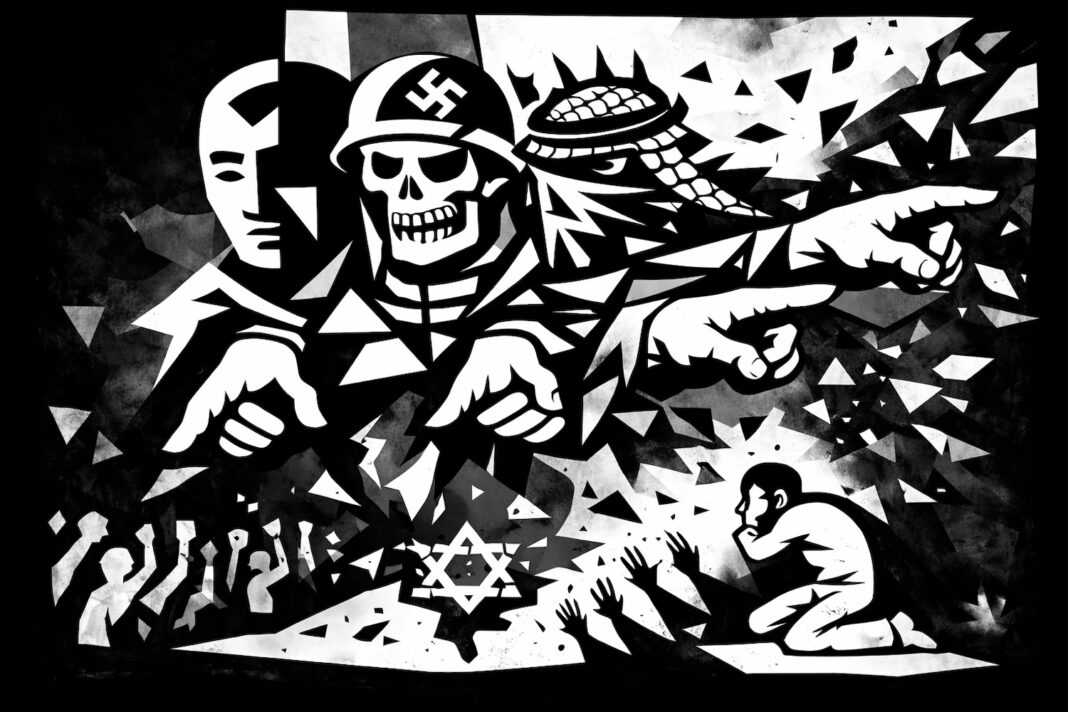
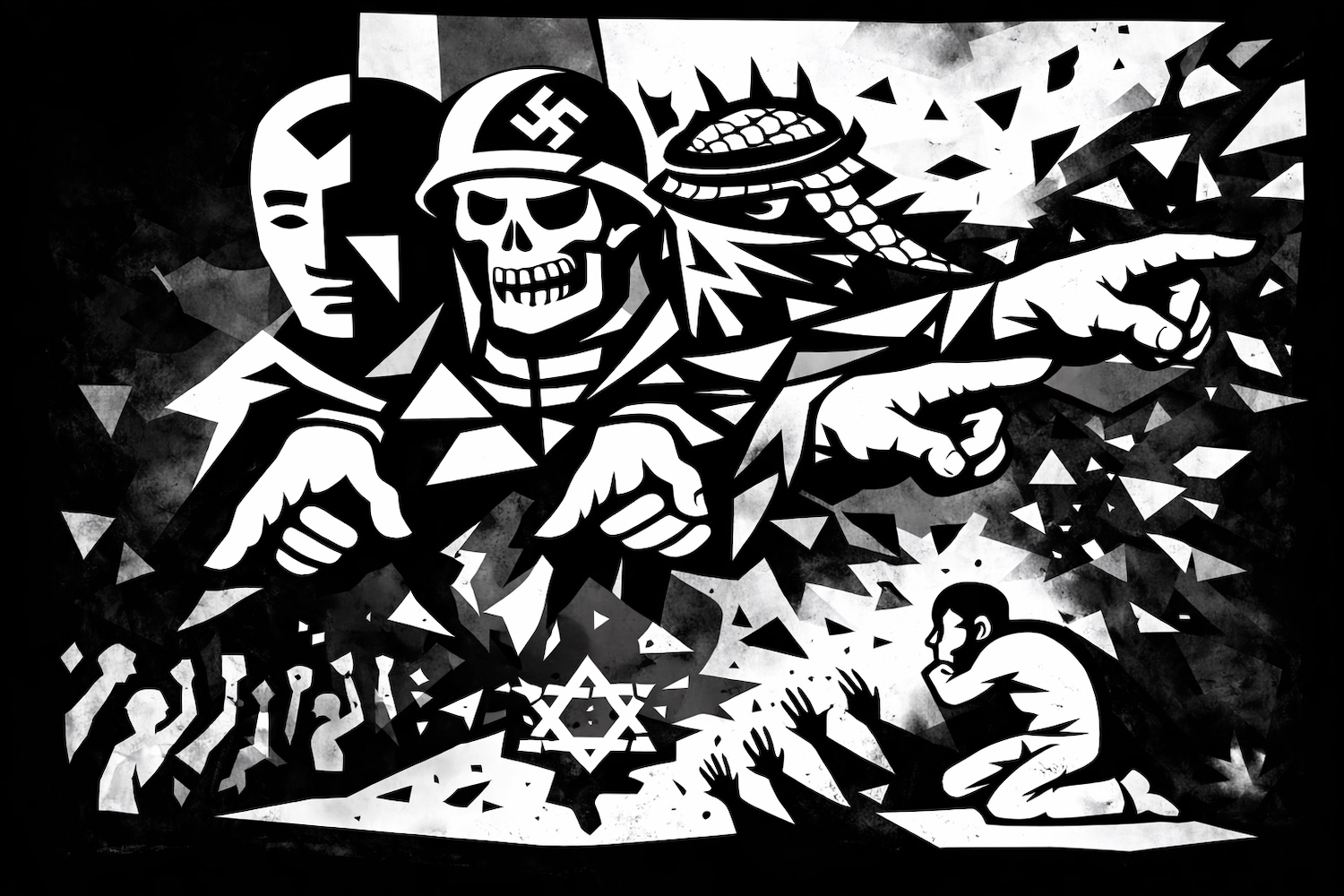
This hostility tends to cluster into three dominant configurations. Each targets a different aspect of Jewish existence, mobilises a different justificatory language, and presents itself as a moral response to a problem of its own construction.
Antijudaism targets the Jewish religion—or rather, invents a conspiratorial, evil cult that it calls Judaism. As second-class citizens in states overseen by evangelising, conquering Abrahamic sequels, Judaism is spiritually deviant, morally corrupt, resistant to truth, and in need of correction. Antijudaist libels are theological, snowballing into grotesque caricatures from Christ-killing to blood rituals. The responses are coercive: exclusion, forced conversion, and violence.
For centuries, Judaism itself was never meaningfully examined by anti-Judaism. Jews were in violation of dominant religious orders, positioned as moral opposites of their contemporaries’ ‘New Testaments’ or ‘final truths’. In a world without separation between church and state, this framing carried institutional legitimacy, generating conspiracies and stigmas that outlived the theological systems that produced them. Current infanticide claims against Israel have a long history.
Antisemitism, popularised as a term by Wilhelm Marr in the late 19th century, was deliberately framed as a modern alternative to what its proponents saw as crude religious hostility. Jews were recast not as heretics but as an alien race—disloyal and corrosive to the enterprise of nation-state building and the consolidation of national identity.
Antisemitic libels focus not on religion but on race; the justification is modern, rational, even progressive when contrasted against anti-Judaism. It does not seek to convert Jews, but to exclude or eliminate them. The new ghettoes are different to those of Vienna’s Middle Ages and Early Modern Period. Jews are separated as a racial pollutant.
Antizionism targets Jewish collective existence expressed politically. It does not engage with Israel or “Zionism” in the same way that its predecessors did not engage with Judaism or “semitism.” It constructs a symbolic entity—“Zionism”—and sullies it with the most morally loaded crimes available: colonial, apartheid, white supremacist, genocidal by design.
These are not criticisms of Israeli policy. They are totalising indictments of Jewish self-determination that stigmatise Jews worldwide, marking both Israelis and diaspora Jews as legitimate targets. The anti-Zionists’ construction is similar to the anti-Judaists’ and the antisemites’. The object of its hatred is non-reformable. Criticism or constructive engagement with Judaism, Jewish ethnicity, or Israel are anathema to these systems.
Each of these systems follows the same structure. A fictional version of the Jew—or the Jewish collective—is constructed and positioned as the inverse of all that is good. Each context has its own, distinct conception of ‘goodness’, producing three distinct Jewish enemies. The straw man is filled with everything a society feels morally obliged to purge.
Ordinary people—friends, colleagues, neighbours—become convinced that both their safety and their moral standing depend on opposing this imagined enemy.
Harm against real Jews becomes easily justified when that libels masquerade as “critique”. Stigmatisation and dehumanisation follow, but feel righteous and rooted in reason. Today, instead of identifying anti-Zionist libels, we treat them as criticism—something to be debated with facts, dates, and infographics.
This approach does not defuse the witch hunt—it legitimises it. It grants assent to the premise that Jews should be on trial. Like Jews of Medieval Europe showing up to disputations, or Alfred Dreyfus showing up to court with a briefcase and a defence, we invest our energy in letting our abusers mock us as we turn our pockets out.
We pool our resources and pour them into Hasbara, we hire graphic designers who might finally unlock the perfect way to make an explanation of “Zionism” go viral, and we become amateur historians, rote learning key dates and statistics to regurgitate in comments sections.
It’s not working. Logic and education fail to stop anti-Zionism because it isn’t a product of logic and education. When an abusive husband accuses his tired wife for ‘not doing the dishes’, the abuse doesn’t stop when she says, ‘actually, I did do them’ or ‘I almost always do them’. We say, ‘Lebanon never does the dishes!’ ‘Iran is over there smashing dishes; look! ’.
Until antizionism is identified as an abuse—as a hate movement—we will continue to suffer.
The Contemporary Shift
Antizionism does not present itself as hatred. It flows uninhibited through public discourse as a moral response to “Zionist” evil. It draws on the language of human rights and international law to construct a case in which the Jewish state is irredeemably illegitimate. Antizionism positions itself as an agent that must suck the venom from a Jewish wound of its own nightmarish conjuring.
The claim is not that Israel behaves badly. It is that Israel is conceived in irrevocable sin, beyond rehabilitation and marked for postnatal abortion.
The permission to push anti-Zionist hate-mongering is only available because its libellous construction of “Zionism” has been laundered through pseudo-academia, human rights organisations, and mainstream media. Public intellectuals and renowned journalists recycle conspiracy theories today no differently to how misinformation has been peddled for centuries. We are encouraged to believe that Israel harvests the skins of Palestinians and that Jews, again, are hunting children.
Antizionism, like its predecessors, constructs a moral framework that renders elimination not only thinkable, but morally necessary.
From the murder and mutilation of Israeli athletes at the Munich Olympics in 1972 to the 1994 AMIA bombing in Argentina that killed 85 and injured over 300: from Pittsburgh to October 7, Colorado to Manchester, Washington to Bondi. Anti-Zionists hunt Jews because we live in an era that deems Jewish civilians reasonable targets or admissible collateral for a greater moral crusade to terrorise the Jewish state into submission.
This is only possible because anti-Zionism is still considered a form of political critique.
Antizionists are propagandistically described as “pro-Palestinian” or “anti-Israel,” as if they are engaged in “disagreement” over policy or governance. At the same time, Jews are described as “people of the Jewish faith,”, as though they are simply adherents of a superseded religion rather than a people with a history, culture, and claim to collective existence.
If Jews are reduced to a faith, hostility towards them appears conditional—something tied to belief or behaviour. Antisemitism is likened to Islamophobia and then disregarded as incommensurate to the Islamophobia they hear about. If anti-Zionism is framed as political criticism, hostility towards Jewish collective existence appears reasonable, contextual, even principled.
Legal and institutional frameworks have been built to recognise antisemitism in its racial or religious forms. They have not adequately adapted.
Overt abuse is consistently treated as protected political expression—even where its practical effect is to make Jewish life demonstrably less safe.
This is not a loophole. It is precisely why anti-Zionism functions as it does.
By rejecting the importance of language, we legitimise the system that produces our own torture.
Part 3 will be published in JWire tomorrow.
Joshua Dabelstein is the Movement Against Antizionism’s Australian liaison.