
An interim report should be judged for what it is, not criticised for what it was never meant to be.
It is not the final word on antisemitism in Australia. It was never going to answer every question, examine every failure, or deal with every part of a problem that has been building for years. But we also need to be honest about what this report does, what it does not do, and what it cannot be expected to do at this stage of the process.
That is why I read the interim report of the Royal Commission into Antisemitism and Social Cohesion with appreciation, but also with concern.
The report deals with serious and urgent issues: security, counter-terrorism coordination, information sharing, firearms reform, and the protection of high-risk Jewish events. After the Bondi attack, and after everything Jewish Australians have experienced over the past two and a half years, these matters clearly need attention.
The Prime Minister has said the Government will implement all recommendations that apply federally and work with the states and territories on the rest. That is welcome. But it is also the minimum response anyone would expect.
The real test is not the announcement. It is whether the government will do the harder work that follows.
That is where I remain sceptical.
The interim report appears to focus mainly on systems and security. That is understandable, especially in the immediate aftermath of Bondi. But it does not settle the larger questions, and those questions cannot be left too long.
Jewish Australians are not only asking whether police, agencies, and departments had the right processes in place. We are asking why antisemitism was allowed to become so visible and aggressive in public life.
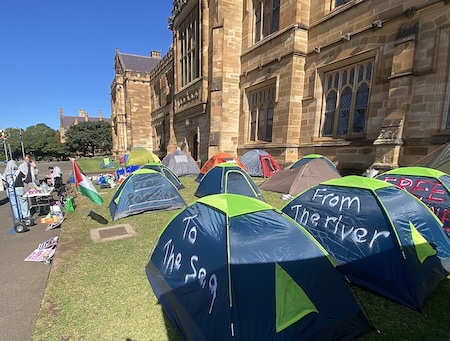
Why have Jewish students so often felt unsupported on campus?
Why have slogans linked to violence been treated by some as legitimate activism?
Why have public venues, council spaces, and community areas been used for rhetoric and events many Jewish Australians experience as hostile or threatening?
Why were warnings from the Jewish community not always taken seriously enough?
Those questions are not answered by better procedures alone.
Security matters. Better protection at Jewish events matters. Better information sharing matters. Firearms reform may well matter. But all of that deals largely with the response to danger. It does not fully deal with what is creating the danger.
That is what the final report must address.
It must examine the drivers of antisemitism in Australia. That includes radical Islamist extremism, named carefully and directly. This is not about blaming Muslim Australians or casting suspicion on whole communities. It is about being clear about a violent ideology that has targeted Jews, Israelis, Western democracies, and also Muslims who reject extremism.
It must also examine antisemitism from the far right, the hard left, conspiracy movements, and antizionist activism that too often crosses the line into Jew-hatred.
A serious response cannot choose only the forms of antisemitism that are easiest to discuss.
If the public conversation avoids radical Islamist extremism because it is uncomfortable, it will be incomplete. If it avoids hard-left antisemitism because universities, unions or activist groups find it inconvenient, it will be incomplete. If it avoids antizionism because too many people still pretend hostility to the Jewish state has nothing to do with hostility to Jews, it will be incomplete.
That is my concern.
It is not that the interim report has failed. It is that governments may treat the interim report and the acceptance of its recommendations as though the job is now well underway. It is not.
For Jewish Australians, the problem is not theoretical. Many people have changed how they live. They think twice about wearing a Magen David openly. They think about what their children might face at school. They think about walking onto campus as a Jewish student. They think about whether a public Jewish event can be held safely.
These are not normal questions in a healthy society.
The Prime Minister’s commitment is welcome, but it does not automatically rebuild trust. Trust was damaged when Jewish concerns were dismissed as overreaction, when political leaders responded too slowly or too cautiously, and when institutions treated antisemitism as a reputational issue rather than a real threat.
Trust will be rebuilt only through action.
That means clear timelines, proper funding, and public accountability. It means making sure recommendations do not disappear into meetings between departments. It means universities, councils, schools, and public institutions being held to account when they fail to protect Jewish Australians.
It also means using clear language.
Australia cannot fight antisemitism properly if it is afraid to name where it comes from. Sometimes it comes from extremists. Sometimes it comes from the far right. Sometimes it comes from the hard left. Sometimes it comes from conspiracy circles. Sometimes it comes wrapped in anti-Israel language that has little to do with policy and much to do with hostility towards Jews.
The Royal Commission still has the opportunity to deal with this properly. The interim report should be seen as a first step, not the full answer. The final report must go further and deal with the parts of the problem that are harder, more political, and more uncomfortable.
That includes what has happened on university campuses, the failure of some institutions to respond properly to Jewish students, public events and slogans that glorify violence, online hate, the normalisation of antizionism that crosses into antisemitism, and the need for proper education about contemporary antisemitism, not only historical antisemitism.
None of this should wait.
The Jewish community has already waited too long for others to understand what has been happening.
So yes, the interim report matters. Yes, the recommendations should be implemented. And yes, the Prime Minister’s commitment is welcome.
But I remain sceptical.
Not because I want to criticise an interim report for being interim. I remain sceptical because governments too often mistake a process for an outcome.
The outcome should be simple: Jewish Australians should be able to live openly, safely, and confidently in this country.
That is the test. Not the number of recommendations accepted. Not the language of a media statement. Not the number of meetings held after the report.
The test is whether Jewish Australians can see and feel a real change in their daily lives.
Until then, the interim report is a start. Nothing more.
Michael Gencher is Executive Director, StandWithUs Australia
I agree with everything you’ve written.