
The image of a gamer is often associated with young people immersed in virtual worlds for hours at a time.
But a new Israeli study suggests a different and more complex reality: for many older adults, digital gaming is not a casual pastime but a meaningful, ongoing activity that shapes identity, cognition, and daily life.

The Ben-Gurion University of the Negev study, conducted by researcher Hadas Avraham of the Department of Communication, was based on in-depth interviews with 20 adults aged 60 and over who regularly play digital games. Avraham told The Press Service of Israel that the activity had significant cognitive benefits for this age group.
“We found that gaming activity for these people was a source of growth, personal development, strengthening of cognitive abilities, alleviating loneliness, and even bonding with their grandchildren,” Avraham said. “For many, especially after retirement or a reduction in other activities, gaming provided a continued sense of intellectual challenge and mental sharpness,” she added.
The study examined a wide range of gaming habits, from solo computer-based activities such as Sudoku, puzzles, and crosswords to online multiplayer games including World of Warcraft and Call of Duty. Through qualitative analysis, Avraham found that gaming among older adults often involves sustained effort, learning, and skill development over time.
“One of our interviewees was a woman with dementia, who couldn’t remember certain life events but knew the rules of the game by heart,” Avraham said. “Participants described setting goals, tracking progress, and improving their skills,” she added.
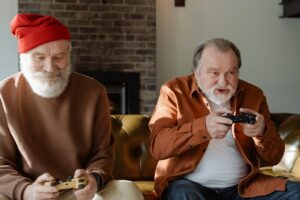
According to the study, gaming also served as an emotional outlet. Participants described feelings of satisfaction, enjoyment, and pride in their in-game achievements.
For some, it offered a sense of control and accomplishment during a stage of life when such feelings can be harder to maintain due to changes in health, family dynamics, or professional roles.
The study also found that the social dimension of gaming varies widely. While some participants reported forming connections and interacting with other players, the majority stressed the value of playing alone. For them, gaming provided a personal, quiet, and controlled space, free from social obligations.
However, the research also highlighted a persistent stigma surrounding gaming among older adults. Despite the benefits, many said their hobby is sometimes perceived as illegitimate or inappropriate for their age, Avraham said.
“Some admitted they do not always share their gaming habits with others, fearing they will be seen as childish or unserious. These perceptions can limit the range of acceptable leisure activities and discourage older adults from engaging in forms of expression that fall outside traditional expectations,” Avraham said.
The study does not suggest that digital gaming is suitable for everyone, nor does it present it as a universal solution. But Avraham said old-age homes and the gaming industry should be aware of the value of gaming activity for senior individuals.
“They should not ignore it and think it is only for the young. The gaming industry should enlarge the captions and slow the pace of games somewhat so it is accessible also for an older population. And retirement homes should see it as a serious, positive activity, in addition to other social and physical exercises.”
The findings point to concrete ways digital gaming can be used as a scalable, low-cost tool supporting cognition.
Retirement homes could integrate structured gaming programs into daily activities, similar to exercise or group hobbies. Because many older adults prefer solo, low-pressure play, facilities should also offer both private access and optional social gaming spaces.
In healthcare, games could be used as supplementary cognitive training tools for older adults at risk of isolation or mild cognitive decline. The preservation of procedural memory, even in dementia patients, may also support therapeutic approaches based on learned game mechanics.
The findings were published in the peer-reviewed journal Leisure Sciences.