
The first day of public hearings at the Royal Commission on Antisemitism and Social Cohesion has laid bare a mix of fear, anger and urgency within Australia’s Jewish community, with witnesses describing a shift from sporadic abuse to sustained intimidation and violence.
The Sydney hearings opened with a focus on lived experience. Much of the most confronting evidence came not only from named communal figures but also from anonymous witnesses who said they feared repercussions for speaking publicly.
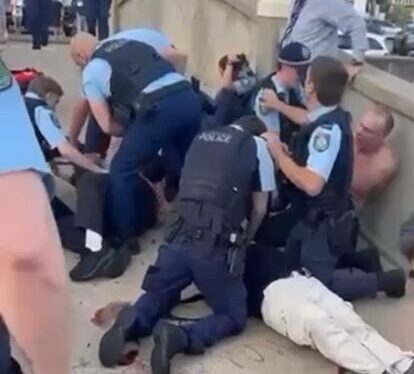
One such witness, appearing under the pseudonym AAL, told the commission that antisemitism in Australia was being fuelled by what he described as “vitriolic” messaging in public spaces, including schools and religious settings.
“Unless the root cause of antisemitism, which is a vitriolic, despicable preaching of antisemitic diatribes at schools, at mosques, at public gatherings, unless that is absolutely, totally stamped out, this country has no hope,” he said.
The witness said a substitute English teacher was giving a lecture about a book unrelated to Israel or Palestinian issues.
“The teacher performed several Hitler salutes,” the witness said.
“My granddaughter who was 13 or 14 at the stage and left the classroom … she was deeply shocked.”
Another anonymous witness, AAM, said her experience in Australia was beginning to mirror what she had previously seen in the United Kingdom where she had grown up.
“Precisely what we’re seeing in Australia now we saw in the UK many, many years ago,” she said.
“The rise in antisemitism, radical Islam, police doing nothing, government doing nothing.”
Other unnamed witnesses described direct encounters with violence. One said he was inside an Israeli restaurant in Melbourne in July 2025 when protesters smashed the glass front door while diners were observing Shabbat.
He told the commission that the incident was not just frightening in the moment but had lasting effects on his sense of safety in public.
These anonymous accounts sat alongside more widely reported testimony from communal leaders and victims’ families. They reinforced a pattern the commission is seeking to map: the normalisation of antisemitic abuse and its escalation into physical threats.
Sheina Gutnick, whose father Reuven Morrison was killed in the Bondi Beach terror attack, described how even before the massacre she had been targeted in public while with her baby.
“I felt shocked, exposed and unsafe. There were many people around me, but no one intervened,” she said after being called a “f***ing terrorist” at Bondi Junction.
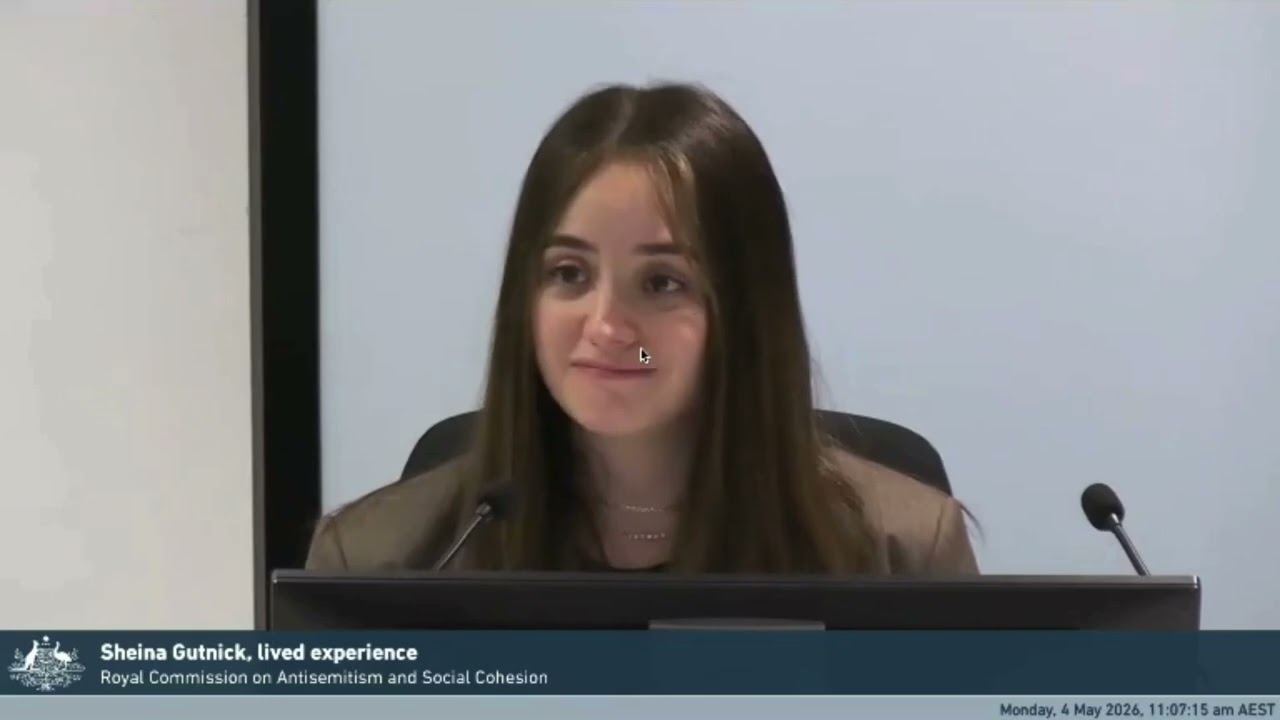
Gutnick said antisemitism had become more socially acceptable in Australia following the events of 7 October 2023, a view echoed by several other witnesses.
The psychological impact on children was also a major theme.
Mount Sinai College board president Stefanie Schwartz emotionally told the commission her daughter, who was at Bondi on the day of the attack, remained traumatised. She said the school environment had changed dramatically.
“You walk past our school, and it looks a lot more like a prison than a primary school,” she said, referring to the increased guards and police presence.
Schwartz said the school had been targeted with graffiti calling Jews “terrorists” and “dogs”. She pointed to a nearby arson attack on a daycare centre that she believed may have been intended for the school.
Community leaders used their evidence to link these lived experiences to broader trends.
Executive Council of Australian Jewry co-chief executive Alex Ryvchin said that after his former home was firebombed in 2025, many Jewish Australians began quietly asking whether they should leave the country.
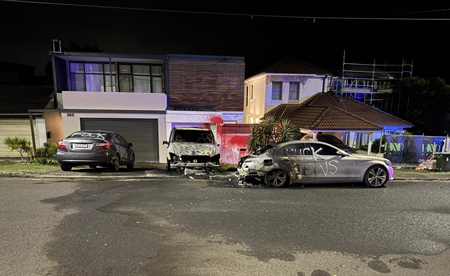
Mr Ryvchin said his family had been left terrified by the targeted attack on his home.
“I was bound for Poland at 6am, and I left my wife to answer the questions, questions from particularly our middle daughter, who was asking, are they still looking for our home?’
Why did they do this? Are we still in danger? And I still don’t know how to answer those questions,” he said.

He said he and his family had also experienced constant death threats.
“Streams of pages with abuse directed at myself … we’re talking about death threats, threats against my children, my wife, people seeking out my address, threatening my home.”
“I’ve had families calling me and saying completely calmly, ‘will you tell me when the time to go is?’” he said.
He described a process of “dehumanisation” that historically precedes violence. He warned that daily humiliation and ridicule were not minor issues but warning signs.
Rabbi Benjamin Elton of Sydney’s Great Synagogue said members of his congregation had been assaulted and threatened. He warned that rhetoric directed at Israel could spill over into hostility towards Jews locally.
He told the commission that during a pro-Palestinian protest in July 2024, a large “Sanction Israel” banner was carried past the synagogue, while “Free Palestine” stickers were placed on its gates.
“When you have a banner outside a synagogue that says sanction Israel, you are eliding Israel and the Australian Jewish community,” he said.
“You are holding Jews in Australia responsible for any actions of the Israeli government you feel are reprehensible.
Witness Toby Raphael, vice-president of Newtown Synagogue, said he encountered a pro-Palestine protest at the University of Sydney in April 2024, where he was subjected to antisemitic abuse.
He said someone shouted at him, “You dirty f****ing pig Jew” and “spat in my face”, adding that no one intervened.
Mr Raphael told the commission the incident left him “shell-shocked”.
“I was in trauma. I couldn’t believe it. I was probably quite livid, to be honest,” he said.
Anthony Halas, the son of Holocaust survivor Peter Halasz, gave evidence before the commission, appearing shortly after his father.
“It’s incredible to be giving this evidence straight after my father,” he said.
Mr Halas said he had a “wonderful upbringing” in Australia, but that following October 7, 2023, many Jewish Australians no longer felt safe.
He described the pro-Palestine protest at the Sydney Opera House in the days after the attacks as “chilling”.
“That demonstration… chilled me to the bone,” he said.
“To see people behaving… like we saw in those films… in Sydney in 2023… was chilling … On the steps of our beloved Opera House.
“I am a child of two Holocaust survivors… there is something deeply ingrained.
“We’re very aware… of what went on in Europe in the 1940s.”
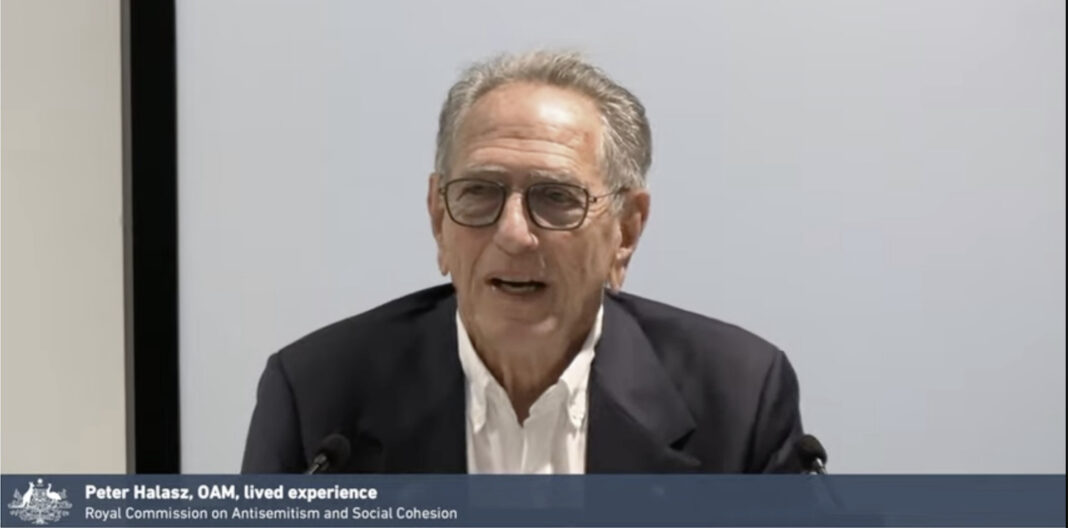
Earlier, his father Peter Halasz, 86, gave evidence as the tenth witness, drawing a direct link between current events and his experiences as a Holocaust survivor.
“What is happening in Australia today is not a faint echo of a distant past. For those of us who lived through the 1930s and 1940s it is something we recognise, and that recognition is frightening,” he said.
Mr Halasz told the commission he was a “proud Australian citizen” and felt a “deep obligation” to speak while he still could.
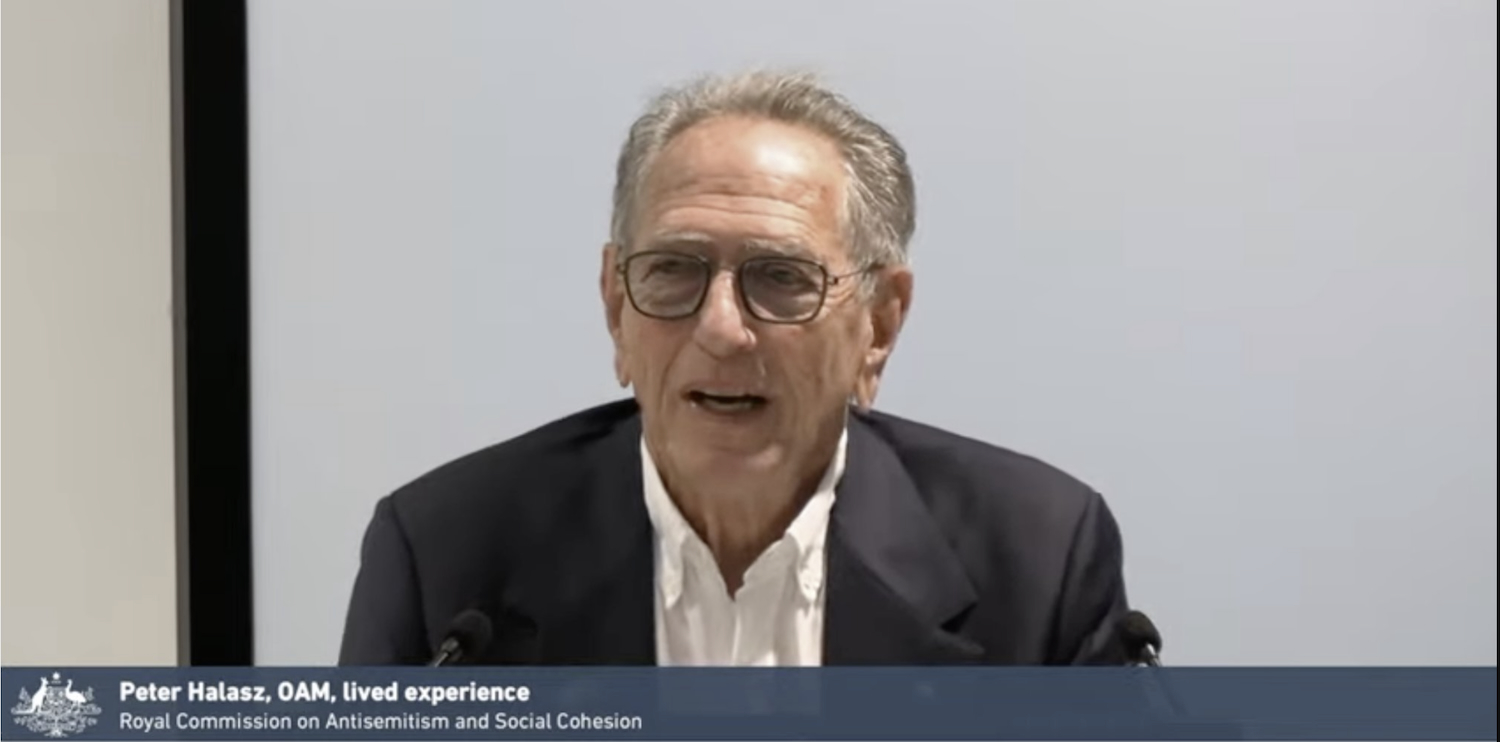
He described how his family went into hiding in Budapest during the Second World War, with relatives separated for safety.
“My grandparents … went into hiding in someone’s apartment, and my mother and I also went into hiding somewhere else … on December the 14. It’s ridiculous, but the December events sort of remind me of almost the same date.”
The commission also heard that many witnesses were reluctant to appear publicly due to fears of backlash. This concern was acknowledged by Commissioner Virginia Bell, who said protections such as pseudonyms were necessary to ensure people could give evidence safely.
Taken together, the testimony to date points to several issues of particular concern to the Jewish community:
- the normalisation of antisemitic abuse in everyday settings
- fear of attending public events, restaurants and communal spaces
- the psychological impact on children and families
- rising security costs and the “fortification” of Jewish institutions
- concern that authorities have not acted early enough to prevent escalation
- a growing, if still limited, conversation about emigration as a safety measure
The hearings form part of the first block of evidence, which runs until 15 May and is focused on lived experience and defining the scope of antisemitism in Australia.
Subsequent hearings will examine the intelligence and policing response to the Bondi attack and broader institutional failures before a final report is handed down in December. Jewish communal organisations have encouraged people to make their own submissions as to their experiences of antisemitism.
with AAP