
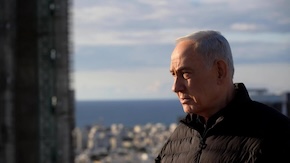
The Israeli prime minister sat down with a U.S. broadcaster to discuss a series of topics, including the declining rates for Israel support among young Americans.
The war with Iran “accomplished a great deal, but it’s not over,” Israeli Prime Minister Benjamin Netanyahu said in an interview aired on 60 Minutes last Sunday night.
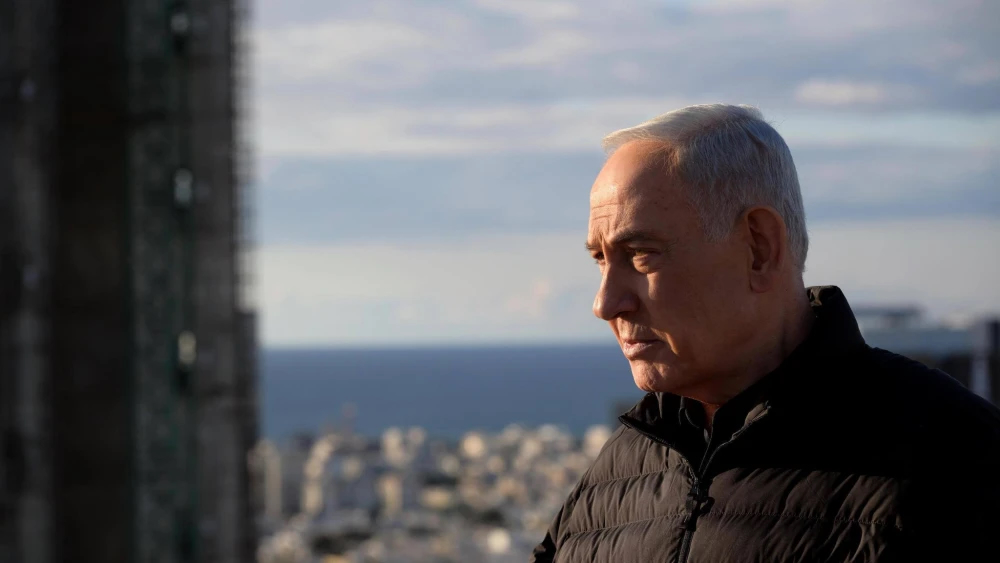
Speaking with CBS News correspondent Major Garrett, Netanyahu listed Iran’s enriched uranium, enrichment facilities that are still operating, Tehran-backed proxies in the Middle East, including Hezbollah and the Houthis, and Iran’s ballistic missiles as problems that have not yet been fully resolved.
“Now, we’ve degraded a lot of it. But all that is still there, and there’s work to be done,” Israel’s longest-serving prime minister told Garrett.
“I think it accomplished a great deal, but it’s not over,” Israeli Prime Minister Benjamin Netanyahu tells 60 Minutes about the war in Iran. Netanyahu says highly enriched uranium must be removed from Iran and believes “it can be done physically.” pic.twitter.com/N5XbvzpYa0
— 60 Minutes (@60Minutes) May 10, 2026
When asked how the enriched material could be removed by military means, Netanyahu refrained from giving details, saying, “If you have an agreement, and you go in, and you take it out, why not? That’s the best way.”
Netanyahu also said that while toppling the Iranian regime could not be guaranteed, it could trigger a positive chain reaction across the region.
“If this regime is indeed weakened or possibly toppled, I think it’s the end of Hezbollah; it’s the end of Hamas; it’s probably the end of the Houthis, because the whole scaffolding of the terrorist proxy network that Iran built collapses if the regime in Iran collapses,” he said.
Asked about his conversations with US President Donald Trump before the war, Netanyahu played down reports that the Israeli defence establishment was certain a joint US-Israeli military campaign would bring about regime change in Iran.
“We both agreed, you know, that there was both uncertainty and risk involved. And I remember that we, I said, and he said that there’s danger in action, in taking action. But there’s greater danger in not taking action,” Netanyahu said.
He also said the Strait of Hormuz problem “was understood as the fighting went on”.
When asked if the strategic chokepoint had been “misread”, Netanyahu replied: “I’m not sure it was misread. But the, you know, there’s a great risk for Iran to do it. And it took a while for them to understand how big that risk is, which they understand now. No, I don’t claim perfect foresight, and nobody had perfect foresight. Neither did the Iranians.”
Netanyahu also discussed recent polling in the United States indicating a decline in support for Israel among young Americans.
He said the deterioration “correlates almost 100% with the geometric rise of social media”.
He added that social media alone had not caused the decline and said he did not support censoring online platforms.
“But I’ll tell you what happened. We have several countries that basically manipulated social media. And they do it in a clever way. And that’s something that has hurt us badly,” he said.
Netanyahu said the war had also affected public opinion because “armies sometimes miss and civilians die”.
“And these are mistakes; these are not deliberate things that happen. Israel is besieged on the media front, on the propaganda front, and we’ve not done well on the propaganda war,” he said.
On future Israeli-US relations, Netanyahu said he wanted Israel to “draw down to zero the American financial support, the financial component of the military cooperation that we have”.
“Because we receive… $3.8 billion a year. And I think that it’s time that we weaned ourselves from the remaining… military support,” he said.