
Jewish patients became so frightened after the Bankstown Hospital nurses video that some asked for their religion to be removed from hospital records, the Royal Commission on Antisemitism and Social Cohesion has heard.
Meanwhile, Israeli patients feared speaking because their accents would identify them.
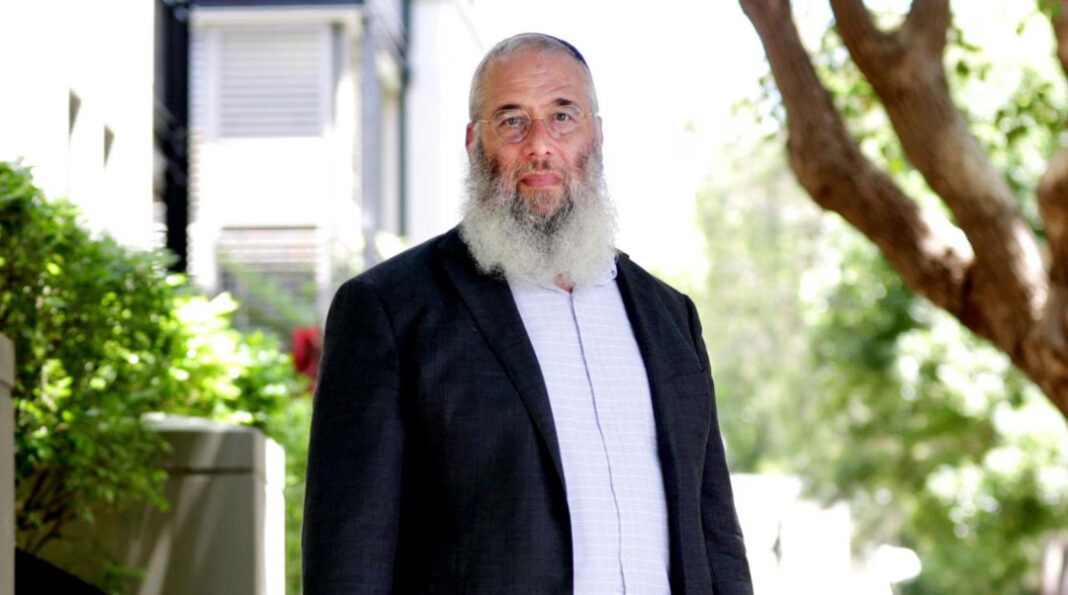
Rabbi Mendel Kastel, chief executive of Jewish House and a longstanding NSW Health chaplain, said discussions after the incident went as far as considering whether Jewish patients needed another way to obtain medical care.
“What we identified after the story with the nurses was real fear,” Kastel told the commission on Tuesday.
“To the extent that even my discussions with NSW Health was, should we create a diversion or another way that people can get healthcare because they’re too afraid to go to a hospital?
“My answer was absolutely not. We need to make sure that hospitals are safe and people feel safe in hospitals.”
Two Bankstown Hospital nurses were suspended after a video emerged in which they allegedly threatened violence against hypothetical Israeli patients.

Kastel said the incident deepened concerns that already existed among some Jewish patients.
“People are concerned about going to hospital. People are concerned about putting down on their admission form that they’re Jewish. People are afraid,” he said.
“I’ve had people who have an Israeli accent who are afraid to talk to the nurse because they’ll pick up that they might be Israeli.
“So there’s real fear out there.”
He said some hospitals received calls from patients asking for their religious identity to be removed from their records after the video became public.
“What we saw after the nurses’ incident, St Vincent’s, for instance, was taking calls from patients all through the hospital saying, ‘Please take my religion off my record’,” he said.
Kastel said Jewish doctors and health professionals had also been targeted and removed from professional chat groups.
He cited one case in which a patient refused treatment from a Jewish doctor, saying: “I’m not going to be treated by a Zionist pig.”
Kastel said he was nervous before visiting Bankstown Hospital after the video emerged.
“I didn’t know what to expect,” he said.
“I called colleagues to say, ‘Look, make sure that if anything happens, you know where I went.'”
However, he said staff at the hospital were overwhelmingly welcoming.
“The warmth and the kindness was just fantastic across the board,” he said.
“It didn’t matter what religion, which culture, everybody was welcoming, appreciative.”
Kastel visited the hospital with a Muslim chaplain and met its chief executive before the pair recorded a video reassuring the community.
“As somebody who’s worked in NSW hospitals for over 35 years, that’s not the kind of behaviour that we expect in NSW hospitals,” he said.
“If somebody needs to go to hospital, they should feel confident that they’ll get the appropriate care.”
He said his overall experience within NSW Health had been positive, but more work was required.
“There is a very good culture within NSW Health, but there’s still a lot of work to be done,” he said.
“The good thing is that there’s a willingness to be able to do it.”
Kastel said NSW Health was developing a formal process for reporting antisemitic and religious discrimination complaints.
Under the proposed system, an incident would first be raised with a senior staff member before a report was sent to hospital and local health district leaders, with oversight from the NSW Health ministry.
“They can actually keep track of the number of complaints, where complaints might be, and how they’re being dealt with,” he said.
The information was expected to contribute to reports about every six months and allow authorities to act earlier when problems emerged at a particular hospital.
“If we’re getting information that there’s particular issues in a hospital, we can jump in earlier to get that data and to make sure it’s dealt with,” Kastel said.
He also backed a review of hospital rules covering political symbols worn by medical staff.
Commissioner Virginia Bell asked whether nurses and other health workers should refrain from wearing pins displaying either the Palestinian or Israeli flag.
“Yes, I would support that,” Kastel said.
He said patients must not be left wondering whether a staff member’s political views would influence their treatment.
“People feel that if there’s somebody who’s pushing a particular agenda, they might prejudice or change the care of that particular patient, and we can’t have that happening,” he said.
Kastel called for mandatory training on antisemitism, hate speech and religious discrimination for public hospital employees.
“While we do fire safety, we do patient care, we do make sure germs are not spread, all kinds of great things and important, I think we need more of a focus on understanding the importance of hate speech and religious discrimination,” he said.
He said hospitals also needed to rebuild trust by showing patients that staff understood their religious and cultural needs.
He pointed to kosher food cabinets, access to chaplains and placing a mezuzah at hospital entrances as practical measures.
“Somebody walks in and they go, ‘They’re thinking of me. I’m safe here’,” he said.
“They might sound like little, trivial kinds of things, but I think they’re really important.”
Kastel said the wider response to antisemitism required more than legislation.
“We’re not going to be able to legislate ourselves out of this,” he said.
“It’s about culture. It’s about teaching people to behave in a way that makes people around you feel safe.”