
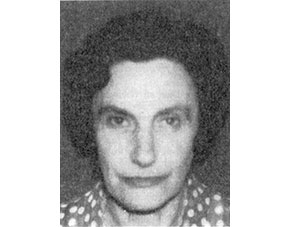
Dr Barbara Falk (Cohen) – pioneer in university teaching development, historian and psychotherapist
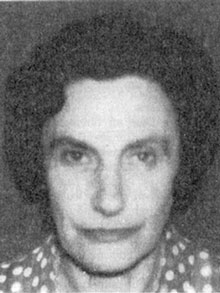
Barbara was born in Armadale, Victoria, on 18 November 1910. Her parents, Colonel Harold Edward Cohen, MLA and Freda Cohen, were fifth-generation Australians of Anglo-Jewish descent and were comfortably wealthy members of the Victorian community.
The family maintained a connection with the St Kilda Road Synagogue, although her paternal and maternal families were not observant Jews. By 1914, when her father departed for the Great War, the family moved to Malvern.
Barbara was educated at home by a governess until she attended Little PLC (Presbyterian Ladies College) in Malvern. At the age of eleven, she joined Lauriston Girls’ School, completing her secondary studies as dux in 1928. In 1929, she won a non-resident scholarship to Janet Clarke Hall at the University of Melbourne, where she commenced undergraduate studies in the Faculty of Arts. She gained first-class honours and first place in the School of History and Political Science, completing her Bachelor of Arts degree (with honours) in 1932, and her Master of Arts in 1933.
Soon after completing her Arts degree, Barbara travelled to the UK, where she undertook postgraduate studies in sociology at the London School of Economics and went on to complete a Diploma of Education at Oxford University. Whilst studying at Oxford, she worked as a psychotherapist in the Department of Psychology. She went on to study briefly, child development at the Gesell Clinic of Child Development at Yale University in the United States and then returned to Oxford, where she taught and carried out experimental work at the Oxford Child Guidance Clinic.
Whilst in England, Barbara met her husband, Werner (David), a German-Jewish refugee. The couple married in Oxford in 1936 and had three children: Anne Elisabeth, John Richard, and James Edward. The family spent some time in the United States before settling in Melbourne in 1950, when her husband accepted a position as a Reader in the Department of Philosophy at the University of Melbourne. After they separated in 1957, David moved to the US, and Barbara remained in Australia.
Barbara worked as a remedial teacher at the Melbourne Church of England Girls’ Grammar School for two years, and was then appointed Principal of Mercer House, the Associated Teachers’ Training Institute, and, during this time, represented the Victorian Independent Schools at the University of Melbourne’s Academic Board. There, she was an imaginative and successful innovator and a pioneer in university teaching development in Australia at a time when there was a widely-held view that academic staff did not need any professional preparation for their role as educators.
In 1960, she was appointed senior lecturer in the University of Melbourne’s School of Education. Barbara developed and organised what was to eventually become known as the University Teaching Project (UTP) — a consultancy service designed to facilitate the improvement of teaching and learning at the University. Some years later, the UTP was amalgamated with the University’s Educational Research Office and the Visual Aids Department to form the Centre for the Study of Higher Education (CSHE), with Barbara as its foundation chair. and later Director – a position she held until her retirement in 1975. Her work fulfilled a need identified in the Martin Report on Tertiary Education in Australia in 1964, for the effective teaching of undergraduates as an ‘essential responsibility of a university’. The model developed by Barbara led to an increased understanding of the teaching process at the University of Melbourne, which was later adapted elsewhere in Australia and overseas.
In 1980, she received the first Doctorate of Education (honoris causa) awarded by the University of Melbourne. When she was elected a Fellow of Janet Clarke Hall in 2005, the principal paid tribute to her achievements: ‘Her work in establishing the Centre for the Study of Higher Education marks her out as a true pioneer in the history of education’.
Barbara retired in 1975. Her intellectual pursuits and achievements by no means ended there, nor did her association with the University of Melbourne. Following her retirement, she resumed her pursuit of history and published three books: No Other Home: An Anglo-Jewish Story 1833-1987 (1988); Caught in a Snare: Hitler’s Refugee Academics 1933-1949 (1998); and DJ: Dorothy Jean Ross 1891-1982, with Cecile Trioli (2000).
As a Principal Fellow in the History Department, she remained a familiar figure on campus for, as she acknowledged, it was impossible for her to ‘spend a happy day without the expiation of work’ (taken from her obituary). She continued with her own research and contributed to departmental activities, including an orientation program for tutors.
She was elected to an Honorary Life Membership in recognition of her contribution to staff development, and in August 1980, was awarded the honorary degree of Doctor of Education by the University of Melbourne. The following is an extract from the citation read by Professor Kwong Lee Dow at that ceremony:
‘Barbara Falk has made a distinguished contribution to the development of Australian education. Her outstanding academic ability has been evident ever since her time ·as an undergraduate. She has become internationally recognised as a pioneering leader in the teaching of university teachers to teach and, at the same time, in the study of the learning activities of university students. In her provocative and original contributions to educational thought, she has combined successful practice with rigorous analysis of educational theory.
Her varied training and experience gave her a combination of humane, pedagogical, and clinical skills that were particularly valuable for initiating and developing studies of learning and teaching in higher education. With vision and diplomacy, she won the confidence and support of academics. She has the imagination and the talent to catch an idea and develop it in practice in the face of potentially suspicious or even hostile reactions. Her pioneering work at this University in the 1960s and 1970s gained attention in Australia and abroad. The Australian Universities’ Commission praised the Melbourne development and encouraged other universities to emulate it. Barbara Falk advised on the establishment of similar units in Australia, in New Zealand and in England. Together with myself, she wrote The Assessment of University Teaching, published by the Society for Research into Higher Education in London.
She took a leading part in the National Enquiry into Open Tertiary Education in 1973-74, having published together with John Anwyl, The Desirability of an Australian Open-Type University. Another interest of hers has been in educational problems in multi-cultural societies, and her 1978 Buntine Oration for the Australian College of Education, “Personal Identity in a Multi-Cultural Australia”, has been published.
In retirement, she has worked for the Schools’ Commission, the Education Research and Development Committee, the Committee of Enquiry into Post-Secondary Education in Victoria, and the Academic Planning Board of Deakin University. She has been President of the Higher Education Research and Development Society of Australasia, the Victorian Chapter of the Australian College of Education and elected a Fellow of the College.
Her expertise, wise and sympathetic counsel continue to be drawn upon far beyond this University and this city. Her work has directly influenced many among a generation of academics at this University, and indirectly many academics elsewhere.’
She died on 21 October 2008, aged ninety-seven. A meeting room, named in her honour, is in the Elisabeth Murdoch Building at the University of Melbourne. Her passing ended an association with the University of Melbourne spanning some eighty years.
The AJHS acknowledges the following references in the preparation of this story:
HERDSA – Higher Education Research and Development Society of Australasia; National Library of Australia; The Encyclopedia of Women & Leadership; University of Melbourne; Centre for the Study of Higher Education; Portrait of Barbara Falk, by Lina Bryans, hangs in the Centre, Sydney Morning Herald Obituary
From Australia’s Jewish Past is edited by Ruth Lilian