
For every witness who has appeared before the Royal Commission into Antisemitism and Social Cohesion, there are likely thousands of other Jewish Australians with equally compelling stories who have chosen not to testify publicly.
Many fear repercussions for themselves and their families at work, at school, at university and online. One of them is Sydney mediator Danielle Jaku-Greenfield, granddaughter of Holocaust survivor Eddie Jaku and a board member of the National Council of Jewish Women Australia.
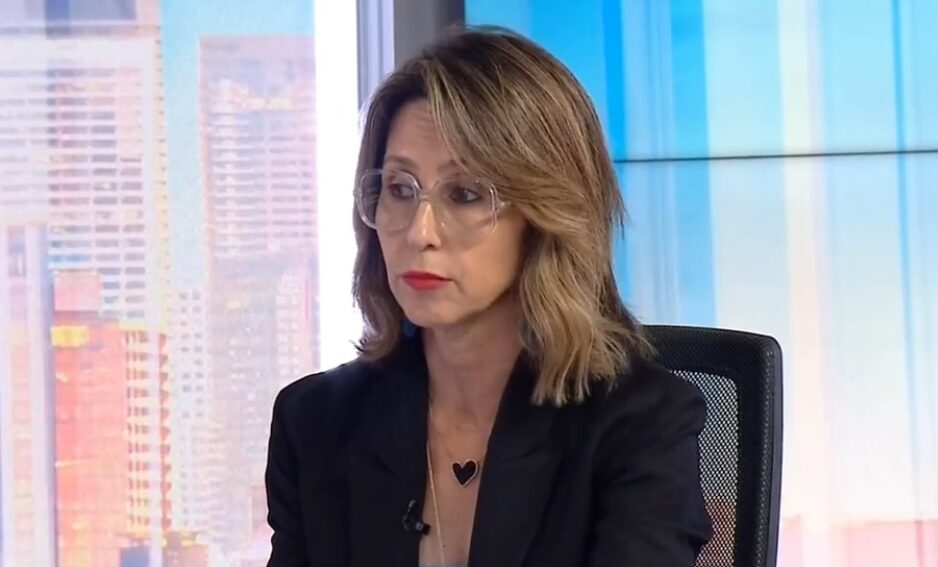
Jaku-Greenfield told JWire she withdrew from giving oral testimony before the Royal Commission because she felt too exposed and was concerned about the impact on her family, although she was willing to discuss her experience with JWire because she regarded the Jewish publication as a safe and trusted forum.
“In the commission, I felt too exposed, and I felt I was putting my family at too much risk,” she said.
Instead of appearing in person, she tendered her written statement to the commission, where it will be published on its website with sensitive operational details removed for security reasons.
Jaku-Greenfield works as a mediator, family dispute resolution practitioner and casual lecturer.
Her family history is central to her testimony. She is the daughter and granddaughter of Jewish migrants who came to Australia after the Holocaust from France, Germany and Greece via Brussels. Her father and grandfather arrived as stateless refugees.
In her witness statement, she wrote that her grandparents chose to make Australia their home over other countries that had offered them residency in order to be as far away from the war and hatred of Jews as possible.
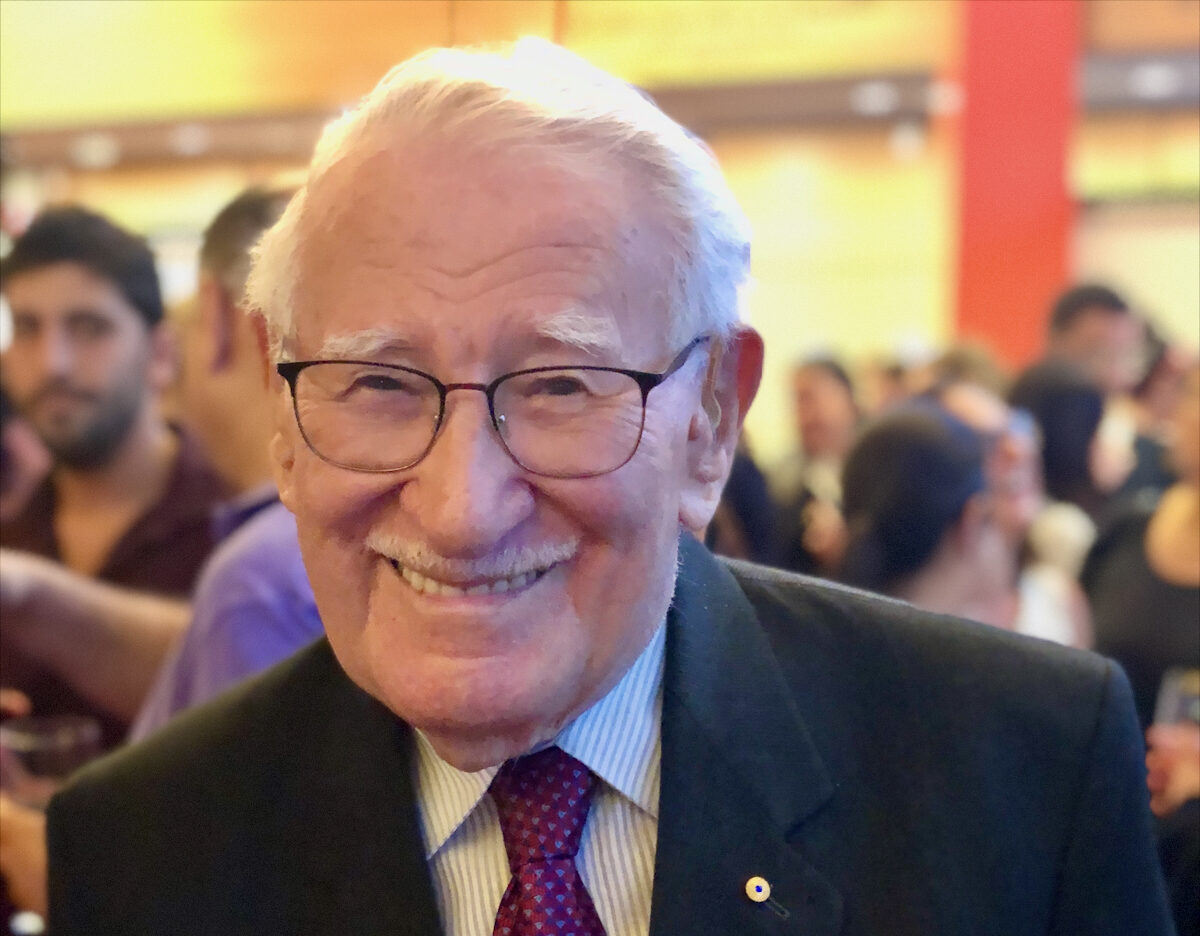
Her paternal grandfather, Eddie Jaku, survived Auschwitz and spoke for years at the Sydney Jewish Museum before becoming known worldwide as “the Happiest Man on Earth” after publishing his bestselling memoir at the age of 100. He was awarded the Medal of the Order of Australia in 2013 and honoured with a state memorial following his death in 2021 at the age of 101.
Despite growing up in what she described as an “under the radar” Jewish family, Jaku-Greenfield said Australia now feels less secure than at any other time in her life.
She said the atmosphere changed dramatically after the Hamas attacks of 7 October 2023.
“After the Hamas attack in Israel on 7 October 2023, we noticed immediate public hostility towards Israel and the Jewish people,” she wrote.
Watching the protest outside the Sydney Opera House on 9 October 2023, she said, “it felt reminiscent of what my grandparents had described about living in 1930s Germany and Europe.”
Her submission recounts how antisemitism began to intrude into everyday life. Her favourite bakery, Avner’s Bakery, closed after receiving death threats. Her daughter encountered “death to the Jews” graffiti at university, and relatives living near the Dover Heights home firebombed in January 2025 were left traumatised.
“This was not far from our own home, and it completely shook our family and the community,” she wrote.
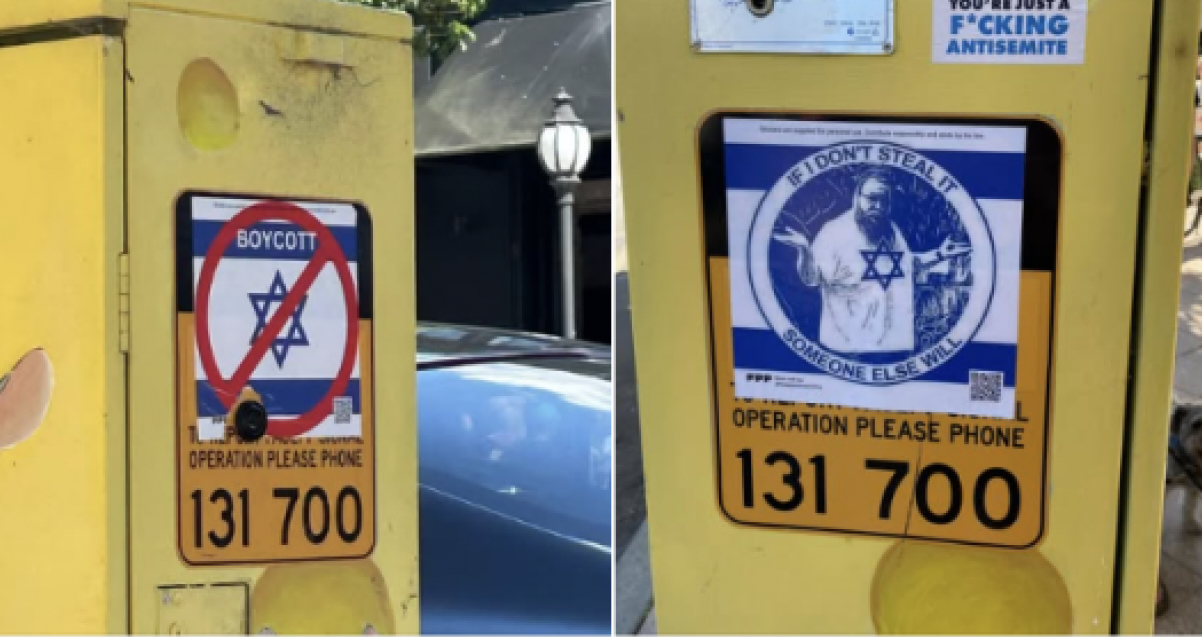
Even walking the family dogs became an exercise in confronting antisemitic graffiti.
“[It] became a ‘spot the Jew-hating graffiti and stickers’ exercise,” she wrote. “I would take a Sharpie with me to scribble on top of them.”
She included photographs of stickers she found in Rose Bay, including one depicting a stereotypical image of a religious Jew alongside the words: “If I don’t steal it, someone else will.”
Jaku-Greenfield also cited comments by NSW Greens MP Jenny Leong referring to the “Jewish lobby” and its “tentacles” as a moment when she realised antisemitism was becoming normalised.
“The world just felt like it was closing in on me… here in supposedly multicultural and ‘safe’ far-away Australia,” she wrote.
As the mother of a 12-year-old daughter at a Jewish day school, Jaku-Greenfield said the security measures that now surround Jewish education have become emotionally draining.
“Our daughter told us about lockdown drills at her school, and it saddened me greatly that this had become normal in Sydney, the place my grandparents chose for safety,” she wrote.
“I’ve resigned myself to the fact that, if I’m targeted because I’m Jewish, I will just join the victims of the Bondi attack,” she wrote.
The terrorist attack at Chanukah by the Sea at Bondi Beach on 14 December 2025 confirmed what she says many in the Jewish community had feared. After the massacre, she texted an ABC journalist who had previously interviewed her about her grandfather’s legacy.
“I told you we weren’t exaggerating.”
“The Jewish community is terrified. It was just a matter of time.”
Jaku-Greenfield and her husband raised their children in Bondi.
“They did Nippers and surfing lessons throughout their childhoods,” she wrote. “We couldn’t be a more Bondi family if we tried.”
In one of the most poignant passages in her statement, she reflected on her grandparents’ decision to flee Europe.
“I used to wonder how some of my family could remain in Europe after what their countries did to the Jews during the Holocaust. Now I’m beginning to understand how it all started for them.”
“I’d think about where we’d go if it gets really bad and we feel the need to escape or hide but, after Bondi, I think, ‘what is really bad? Is that not bad enough? What are we waiting for?'”
Her submission argues that antisemitism should be treated as a standalone issue rather than routinely linked with other forms of prejudice.
“When journalists speak about Islamophobia in the same sentence as Jew hatred and attacks on Jews, it creates an equivalence and can minimise the impact of the very real attacks on the Jewish community that are currently occurring,” she wrote.
She believes stronger leadership may have prevented the Bondi massacre.
“I believe the Bondi attack could have been avoided had antisemitism been dealt with as a standalone issue and leadership had been stronger from the beginning,” she wrote.
“We need strong leadership to prevent what I feel is an inevitable further attack.”
In her concluding remarks, Jaku-Greenfield wrote that Australia is currently failing to model successful multiculturalism and called for a national effort to rebuild common ground between communities.
Her decision not to testify publicly is a reminder that the witnesses seen in the Royal Commission hearing room represent only a fraction of the Jewish Australians whose experiences are too painful, or too risky, to recount in open hearings.
Jewish Australians who have experienced antisemitism are encouraged to share their stories with the Royal Commission into Antisemitism and Social Cohesion, which is continuing to accept submissions until June 14, 2026. This provides an opportunity for individuals to contribute confidentially or publicly to recommendations aimed at making Australia safer for Jews and strengthening social cohesion.