
The jury of the Venice Biennale has ruled that countries whose leaders face charges at the International Criminal Court will not be considered for its top prizes, a move that effectively excludes Israel from this year’s awards.
In a statement issued this week, the five-member jury said it would “refrain from the consideration of those countries whose leaders are currently charged with crimes against humanity” by the ICC. While no countries were named, the decision only applies in practice to Israel and Russia.
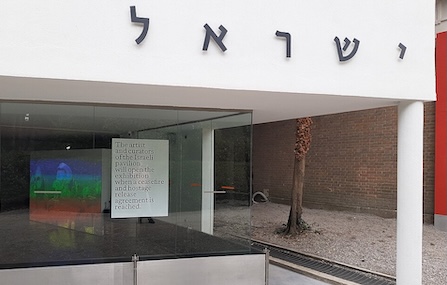
The ICC has issued arrest warrants for Israeli Prime Minister Benjamin Netanyahu over alleged war crimes and crimes against humanity linked to the Gaza conflict and for Russian President Vladimir Putin over alleged war crimes in Ukraine. Israel rejects both the allegations and the court’s jurisdiction.
Israeli officials have condemned the move, arguing it politicises a major cultural platform. In statements reported by multiple outlets, the Israeli Foreign Ministry said the decision “turns art into a political tool”, while artist Belu-Simion Fainaru described it as discriminatory and unfair to artists who do not set government policy.
Critics have pointed to the apparent hypocrisy in the jury’s approach. While the rule technically applies to both Israel and Russia, it does not extend to numerous other participating countries with well-documented poor human rights records.
Nations such as China, Iran, Saudi Arabia, Syria and others are fully eligible for the Golden Lion and Silver Lion awards, despite widespread international criticism of their human rights situations. No other current leaders of participating countries face active ICC arrest warrants for crimes against humanity, meaning the policy affects only Israel and Russia among this year’s national pavilions.
The Biennale’s Golden Lion and Silver Lion awards are among the most prestigious in contemporary art. Israel’s pavilion will still open when the exhibition begins on 9 May, but it will not be eligible for those prizes. The ruling was made by the jury rather than by the La Biennale di Venezia itself, which has allowed all recognised national pavilions to proceed.

Critics of the decision say the standard is inconsistently applied. While the jury’s threshold is tied to ICC charges, it excludes countries whose leaders face active warrants but does not address nations widely criticised for human rights abuses that are not subject to current ICC action. No other participating country’s leader is currently under ICC arrest warrants for crimes against humanity, leaving Israel and Russia as the only affected states.
The decision adds to a series of disputes in recent years over the role of politics in major cultural events. Supporters of the move argue it reflects an ethical stance grounded in international law, while opponents say it risks selective enforcement and undermines artistic independence.