
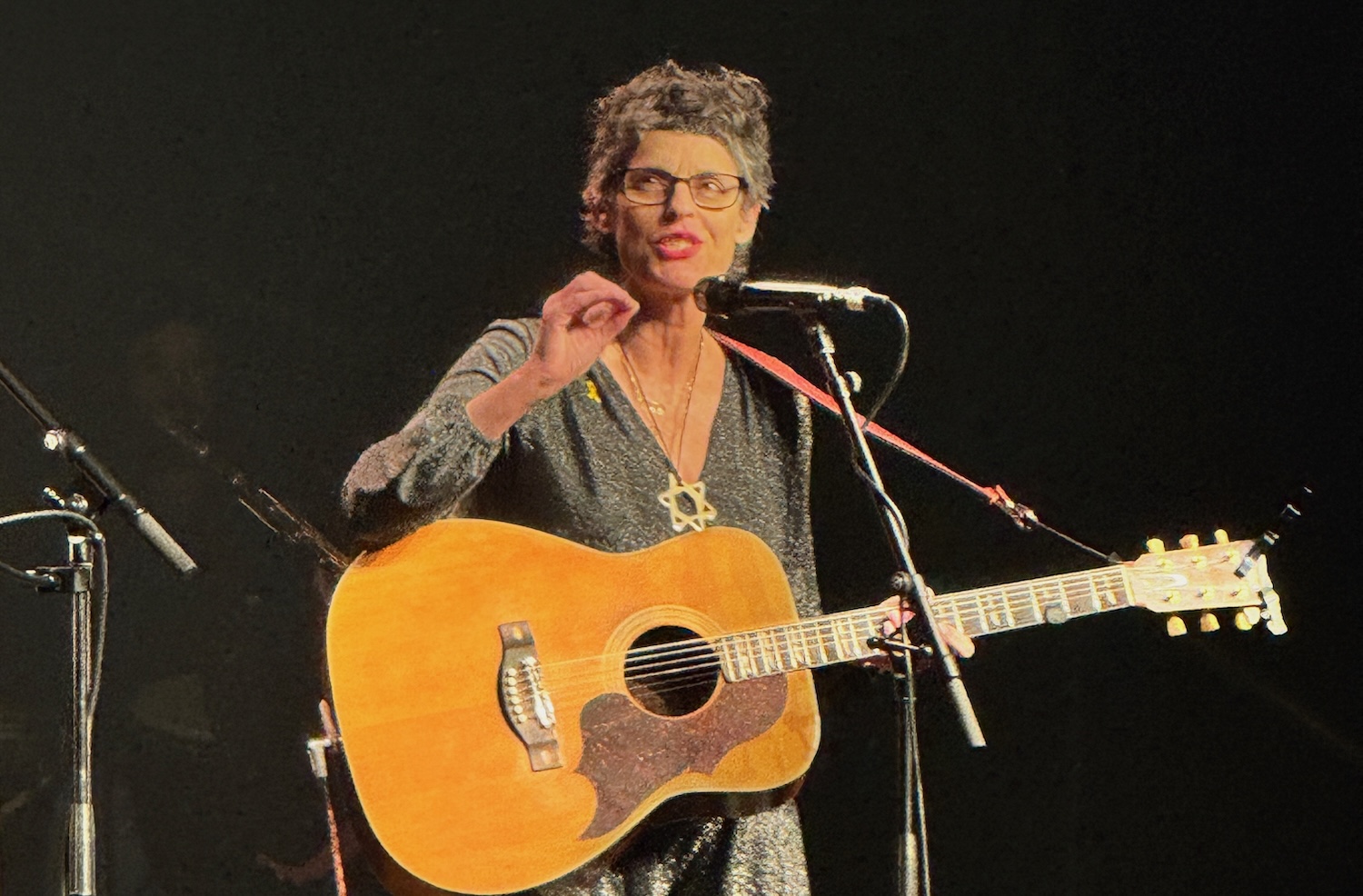
Australian performer Deborah Conway has told the Royal Commission on Antisemitism and Social Cohesion that Jewish musicians are being targeted, cancelled and professionally punished because of their Jewish identity and connection to Israel.
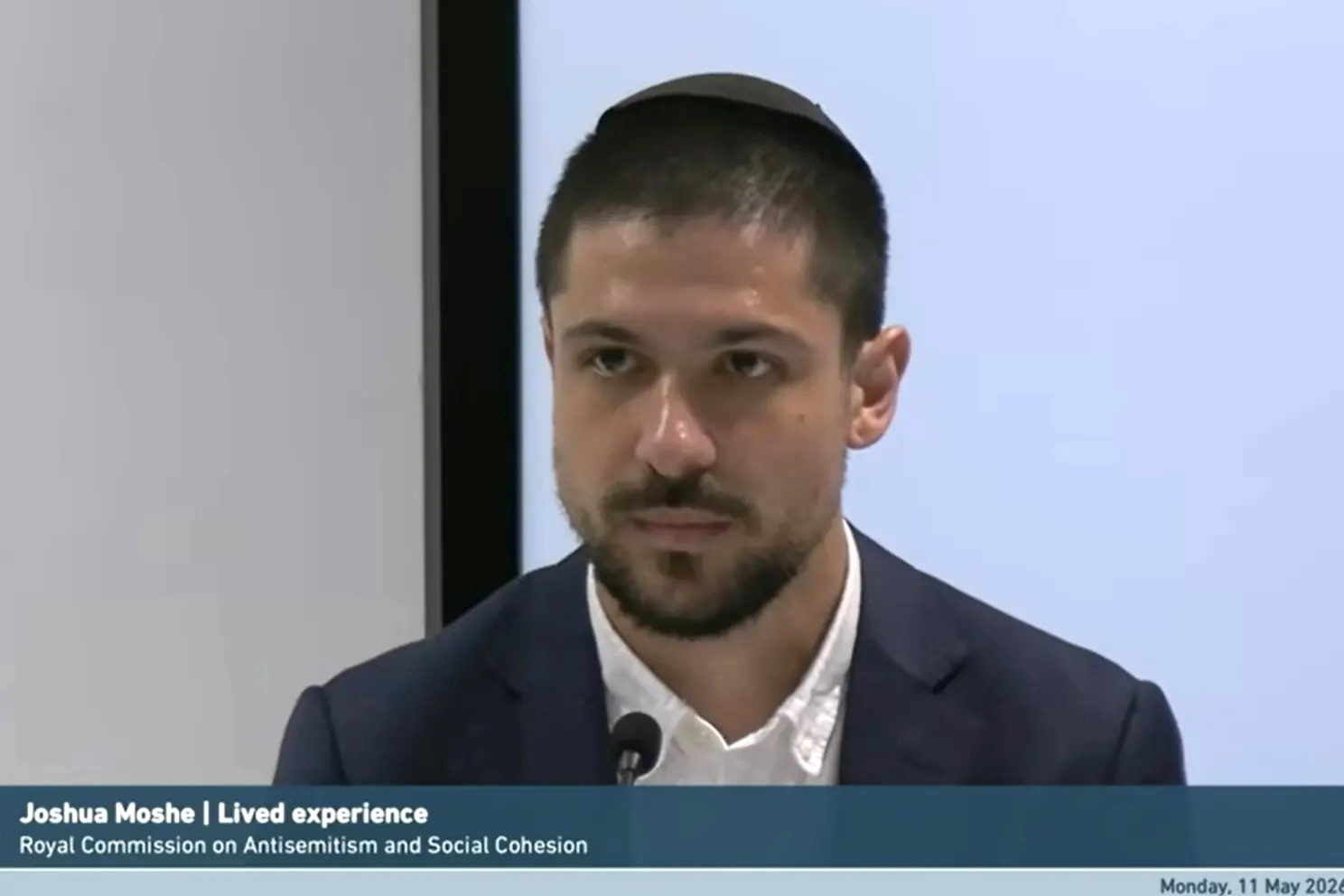
The singer-songwriter gave evidence during the commission’s Sydney hearings alongside Melbourne saxophonist and composer Joshua Moshe. The inquiry heard that Jewish artists had faced online abuse, cancelled shows, lost work, threats to venues, social media campaigns and pressure to disown Zionism.
Their testimony was not the only evidence before the commission about musicians. On an earlier hearing day, a WA-based Israeli Jewish musician, giving evidence under the pseudonym ABK, said he had been targeted because of his nationality and Jewish identity, despite performing music that was not political.
Conway told the hearing she had grown up in Melbourne in a Jewish family that was observant but not religious. Asked whether she had experienced antisemitism at school or university, she said she had not.
That changed after the Hamas attacks of 7 October 2023. Conway said she was performing a music theatre work with her husband, musician Willy Zygier, when they learnt their daughter in Israel was sheltering in a stairwell. She later described the Sydney Opera House protest after the attacks as a wake-up call and said it left her questioning whether she was living in modern Australia or 1933 Berlin.
Much of Conway’s evidence focused on the way the word ‘Zionist’ had been turned into a slur. She told the commission that Zionism, for her, was not support for every Israeli government decision but a recognition of the Jewish people’s connection with Israel. She said she supported peace and a two-state solution but believed Jewish artists were being treated as morally suspect for saying Israel had a right to exist.
The commission heard that Conway’s public targeting intensified after she and Zygier wore visible Jewish symbols at a Melbourne concert in late 2023. Conway wore a large Magen David, and Zygier wore a yarmulke. After a later radio interview, comments she made about Hamas using underage fighters were taken out of context and turned into online claims that she was a baby killer revelling in Palestinian blood.
The abuse increased after the leak of the Jewish Creatives and Academics WhatsApp group, which had been set up as a support network for Jewish people in the arts and academia. Conway told the commission she had rarely commented in the group but was falsely accused of being one of its organisers and of trying to damage other people’s careers. She said those allegations were not true.
The commission had also heard from Executive Council of Australian Jewry co-chief executive Peter Wertheim that the leaked WhatsApp group at the centre of the doxxing scandal involved about 600 Jewish artists, writers, musicians and other creative workers, who had come together after 7 October because they felt pressured to publicly renounce their Jewish identity by denouncing Israel.
The professional effects were immediate. Conway had been booked for writers’ festivals after releasing her memoir, but one festival director warned her there had been significant pushback about her inclusion. At one festival in Western Australia, extra security was present, and other writers were added to the program to balance her appearance, although her book was about her life as a musician in Australia rather than the Middle East.
At one event, protesters stood in the audience, unfurled signs and screamed at her. At another, an interviewer withdrew, the session was moved to a smaller room for security reasons, and a person hissed, “Shame on you,” as she walked through town. Conway also described graffiti near a Sydney venue accusing her of supporting genocide and calling her a Zionist stooge.
Conway said social media platforms and regulators had failed to deal with abusive material. A post using an image of Conway and Zygier with Israeli musicians labelled them “the faces of genocide”. She reported it to X but was told the platform had found no breach of its rules. She also referred to advice from eSafety that the Adult Cyber Abuse Scheme had high thresholds and that the commissioner needed better tools to deal with online abuse.
By 2025, the campaign had moved directly to her performances. Conway said about 28 shows were planned after the release of a new album, but about five were cancelled after venues were pressured. She said every venue that advertised her received a letter describing her as a self-confessed Zionist and supporter of genocide, and warning that platforming her made the venue complicit.
The most serious case involved protesters turning up at a venue before one of her shows. Conway told the commission that about 70 people wearing balaclavas entered the front bar, hit pots and pans, filmed staff and warned they would return with 300 people if the show went ahead. The venue cancelled the performance. She said police attended but treated it as free speech.
Asked about her bookings for 2026, Conway replied: “There’s not many.”
Conway said the effect had spread to her family. Her middle child, also a musician, had lost musician friends who refused to play with her. Conway said some major festivals that would once have been expected to book her daughter had not done so.
Conway told the commission she was speaking not only for herself but also for younger musicians trying to build careers in the same climate. She said she was speaking for “young artists, young musicians” who were struggling to get work and be seen as individuals rather than as symbols of a political conflict.
Moshe’s evidence showed how quickly online abuse could damage a musician’s career. He told the commission he had been a core member of a Melbourne hip hop and R&B band from 2017 to 2024, a band that had achieved recognition in Australia and overseas. He said the band had once been close, with members supporting him through lymphoma and chemotherapy in 2020.
After the WhatsApp group was leaked, Moshe’s name and image were circulated online. Posts called him a Zionist, told people to stop listening to his band and asked, “Zionist Y/N?” Moshe said the online material was devastating and made him fear for his safety.
On 30 January 2024, Moshe found out through a public social media post that he had been expelled from the band he had played with for about seven years. The statement said the band had become aware of comments made by him in a Zionist WhatsApp group and was disgusted and shocked. It went on to condemn all forms of Zionism.
Moshe told the commission that the blanket condemnation of Zionism was itself a problem because his own understanding of Zionism was that Jews deserved a home in part of their ancestral homeland. He said condemning that view while also claiming to oppose antisemitism made no sense to him.
The damage spread through his music work. Moshe said he was removed from a record label, threats were made to venues where he was performing, and those venues had to arrange extra security so shows could go ahead. He said a musician booked to perform with him pulled out because they feared losing work by association, while another artist withdrew performance rights from a song they had recorded with him.
“I lost a residency,” Moshe told the commission, adding that he had lost countless performance opportunities and was no longer celebrated as he had been before the doxxing. He later resolved litigation with his former bandmates, who published an apology on social media.
The commission had earlier heard from ABK, a Jewish Israeli musician based mainly in Western Australia. ABK told the hearing he had been living and working in Australia since about 2020 and had been granted a global talent visa in recognition of his international achievements in the music industry. He said he had collaborated with more than 100 musicians in Australia and performed in Hebrew, English, French and Italian.
ABK said his performances had no political content before October 2023 and had been warmly received. After 7 October, however, his Israeli identity became the focus of online abuse. He said Facebook advertisements for his shows drew hostile comments once people looked up his website and saw he was Israeli. Messages came through private messages, comments, shared stories and Facebook groups.
The commission heard that one private message told ABK he was not welcome and accused him of supporting murder. Another told him history would not forgive his murderous values. ABK said he had only ever tried to play music and bring joy to audiences, and that people making the comments did not know him or his work.
ABK said he had begun receiving questions about Gaza from people who had attended his shows, even though he had not posted political material. He told the commission that some musicians, artists and activists in Perth had spread rumours about him in Facebook groups and other spaces, alleging he supported genocide and murderous values.
The impact was financial and emotional. ABK said he stopped performing for a time in one Perth suburb that had previously been one of his strongest areas, affecting his income. He said ticket sales had changed and that his profession depended on being liked and drawing people to shows.
ABK’s witness statement drew the line between political debate and targeting performers. It said that criticism was part of democratic life, but targeting artists because of nationality or Jewish identity and trying to prevent them from performing crossed into discrimination and intimidation. ABK said he agreed 100 per cent.
He told the commission he was now forced to warn venues in advance that they might receive hate because he was Israeli. He said he was scared to perform and worried someone in the audience might know he was Israeli and attend with a gun.
Outside the commission, other Australian Jewish musicians have described similar problems. Ben Adler, a Sydney violinist, founder of klezmer fusion band Chutney and director of SHIR, said SHIR was revived partly because many Jewish musicians felt ostracised from artistic communities hostile to Israel. He said political partisanship and outright hostility had made parts of Sydney’s cultural life increasingly inhospitable to Jewish audiences and artists, and that SHIR was being built as a space where Jewish music, audiences and artists would be welcome rather than treated as a risk.
Adler has also said Chutney was temporarily removed from an opportunity soon after 7 October because an organiser feared Jewish music might be “offensive”. The opportunity was restored after Adler explained why that concern was antisemitic. He said music remained a way to communicate and connect with people.
Melbourne performer Amy Lester has also described being targeted in the arts and music scene after speaking about 7 October and her family in Israel. She said she made a small number of social media posts after the attacks because her mother and brother were in Israel and she was disturbed by the silence of the local arts community. Lester said she quickly became one of the people targeted by antizionist activists in the Australian arts community; had not booked work outside the Jewish community since 7 October despite previously receiving regular offers to perform; and described herself as “a bit of a liability now in the music scene”.
The Sydney Jewish Choral Society has also been caught in the fallout. A Sydney concert planned to raise funds for families affected by the Bondi terror attack was cancelled after some members of the Australian Hellenic Choir objected to performing with a Jewish choir. The Concert for Hope and Unity had been due to include a joint performance centred on “The Ballad of Mauthausen”, a work linked to Holocaust memory.
One of the common threads across all the evidence is social media. Conway described abuse that moved from online posts to venue pressure and cancelled shows. Moshe’s band expulsion began with leaked WhatsApp material and public social media denunciations. ABK said Facebook ads for his shows triggered hostile messages and claims that he supported genocide. Lester said social media posts made her a target in the arts community.
None of the musicians asked the commission to place criticism of Israel off limits. Conway, Moshe and ABK each drew distinctions between political debate and the targeting of Jewish or Israeli musicians as individuals. Their complaint was that Jewish identity, Israeli nationality or support for Israel’s existence had been treated as grounds to boycott, shame or exclude musicians from professional life.
The evidence has left the Royal Commission with a direct question for Australia’s music and arts sector: can Jewish musicians perform in public without being required to renounce Israel, hide their identity or accept that their careers will be damaged for being Jewish?