Sydney’s wake-up call: When antisemitism turns deadly

The terrorist attack on a Chanukah celebration at Sydney’s Bondi Beach has brought a long-simmering fear into brutal reality.

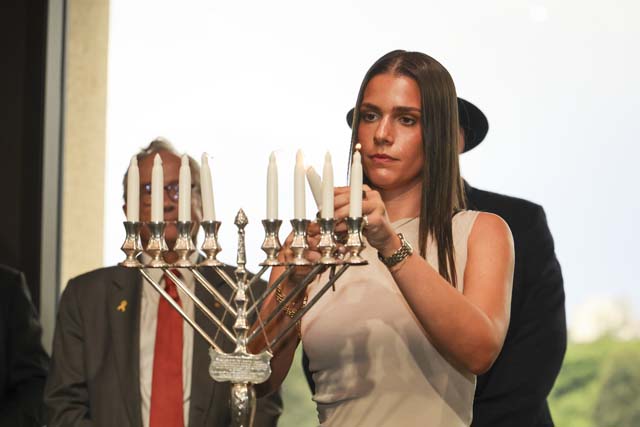
People attend a ceremony, held at the World Zionist Organization (WZO) building in downtown Jerusalem, in memory of victims of a mass shooting on Dec. 14 Photo by Chaim Goldberg/Flash90.
Jews gathering to mark the “Festival of Lights” were targeted simply for who they are. This was not random violence. It was a cruel act of antisemitic hatred—an attack on human dignity, and on the values of peace and coexistence that Australia, like all democracies, claims to cherish.
My heart is with the victims, the injured and their families, and with Jewish communities in Australia and around the world who are grieving and feeling profoundly vulnerable. What happened in Sydney should shock the conscience of the nation and demand more than just words of sympathy.
This violence did not emerge from a vacuum.
In the days immediately following the Hamas-led massacre in southern Israel on Oct. 7, 2023, in which some 1,200 people were murdered and 251 others were kidnapped in plain sight, a Jewish bakery in Sydney was defaced with an inverted red triangle, a symbol increasingly used to glorify attacks on Israelis and Jews. It was an early warning sign. What followed over the next 16 months, as the war against the terrorist organisation in Gaza ensued, was an avalanche: arson attacks on kosher restaurants and the firebombing of the Adass Israel Synagogue in Melbourne, graffiti, threats and open hate speech directed at Jewish institutions and individuals across Australia.
The scale has been so severe that the head of Australia’s primary intelligence agency publicly stated that Jew-hatred had become his top concern in terms of threat to life. That is an extraordinary and damning assessment for a country that prides itself on tolerance and social cohesion, and that is home to one of the largest number of Holocaust survivors left in the world.
Sunday’s attack at Bondi confirmed what many Australian Jews have been saying quietly, and sometimes loudly, for more than a year—that they no longer feel safe in the country they believed would protect them.
Australia’s Jewish population is small, with around 150,000 people in a nation of 27 million, but it is deeply woven into the fabric of Australian life. Roughly a third live in Sydney’s eastern suburbs, including Bondi, the very area that has become a focal point for both Jewish life and antisemitic attacks. Parents now hesitate before taking their children to daycare. Jewish schools operate behind heightened security. Community events take place under the shadow of fear.
The government has not been entirely blind to this reality. Last year, Australia appointed its first-ever special envoy to combat antisemitism. But appointments alone cannot reverse a toxic, radical trend in which incitement has been allowed to flourish. Chanting “Globalise the intifada” and “From the river to the sea, Palestine will be free” are not harmless slogans or legitimate political critique. They are calls that normalise violence, erase Jewish self-determination and dehumanise Jews. They are not expressions of free speech in any moral sense, and they can lead to bloodshed.
The numbers tell the story starkly. In the year up until Sept. 30, there were roughly 1,600 antisemitic incidents recorded—about three times higher than in any year prior to Oct. 7. These were not just offensive words. They included a childcare centre in Sydney that was firebombed and smeared with antisemitic graffiti, and the shocking case of two public hospital nurses dismissed after being filmed boasting that they would refuse treatment to Israeli patients.
Israel, for its part, expects its democratic partners to do more than express outrage after tragedy strikes. The expectation of the Australian government is clear: to act decisively against antisemitic incitement, to enforce the law without fear or favour and to restore a public culture in which Jews are not demonised or targeted.
We live in dark days, but as the message of Chanukah shows, light, hope and humanity will prevail. That message must now be matched by concrete action in Australia itself. Because protecting Jewish life is not a favor to one community. It is a test of the moral strength of the nation as a whole.
Danny Danon is Israel’s Ambassador to the United Nations