
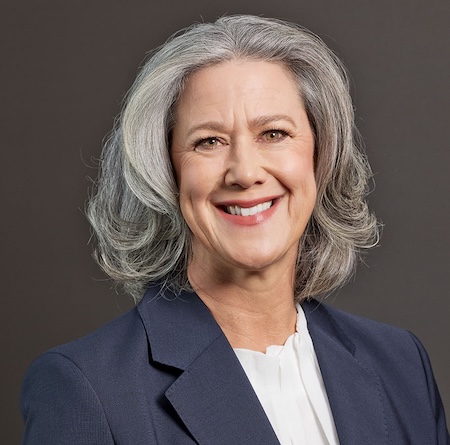
Three Sydney MPs, representing electorates where most of the city’s Jewish community lives, met with Jewish voters this week in an online forum hosted by the NSW Jewish Board of Deputies, confronting tough questions about antisemitism, Middle East policy, and national unity.
The Board’s October Plenum, moderated by Executive Council of Australian Jewry co-CEO Peter Wertheim, brought together Assistant Foreign Minister and Labor MP Matt Thistlethwaite, along with independents Allegra Spender and Nicolette Boele. Held six months after the federal election, the event followed a year of unprecedented tension for Australian Jews.
Board CEO Michele Goldman opened the evening by acknowledging the mood in the community. “We’ve had a bruising two years,” she said. “This is a chance to hear directly from our elected representatives on what they’ve done, and what still needs to be done.”
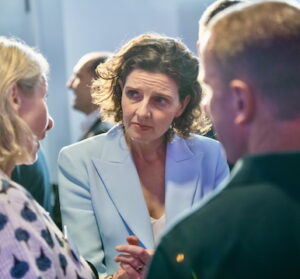
Boele, the independent for Bradfield, immediately pressed the Albanese Government to release its long-awaited response to the report by Special Envoy to Combat Antisemitism, Jillian Segal. “It’s been more than three months,” she said. “The community deserves to know what comes next.” She said she had written to the Prime Minister seeking a timetable and planned to reconvene her local Jewish leaders once the response was issued.
“We need a common definition so we can talk about antisemitism collectively,” she said. “Education about antisemitism and the Holocaust should be part of every level of schooling. Government decision-makers, especially in immigration and education, must be trained and empowered to apply those principles.”
Spender, the independent for Wentworth, said she was one of those who had pushed for the creation of the envoy role and had since pressed the Prime Minister for action. “I’ve been following up in person since the report was released,” she said. “The government was waiting for the Islamophobia envoy’s report, but now both are in. This is the moment to act.”
She listed her priorities: a national definition of antisemitism, tighter hate-speech laws, consistent enforcement of the ban on Nazi symbols, and stronger action on university campuses.
“I’m concerned that universities like ANU and UTS are backing away from adopting an antisemitism definition,” she said. “If they don’t step up soon, I’ll continue to back a judicial enquiry into antisemitism at universities.”
Thistlethwaite said the government’s response was in progress but emphasised that coordination across multiple portfolios “takes time.” “We want to get it right,” he said. The Labor MP outlined measures already in place: new laws against hate symbols and gestures, $60 million in security funding for Jewish schools and synagogues, and a national database to track antisemitic incidents.
“You have the right, like every Australian, to feel safe in your community, your workplace and your place of education,” he said. “We’re acting to protect that.”
Thistlethwaite confirmed that Labor still backed the International Holocaust Remembrance Alliance (IHRA) definition of antisemitism. “That position has not changed,” he said. “UNSW in my electorate has adopted it, and we encourage others to do the same.”
Asked whether anti-Zionism should be considered antisemitic, all three MPs agreed.
“Being a person of Jewish faith is inextricably linked with the statehood of Israel,” Boele said. “If you oppose that, it can’t help but feel anti-Jewish.”
Spender said the IHRA definition drew the right line. “Any state can be criticised,” she said. “But calling for the abolition of a Jewish state crosses into antisemitism. It denies the Jewish people’s right to a homeland.”
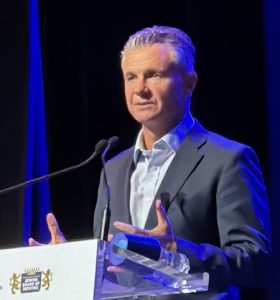
Thistlethwaite was unequivocal. “Anti-Zionism is antisemitic,” he said. “The existence of a Jewish state is part of Jewish identity, and denying that right is antisemitic.”
The conversation turned directly to the Middle East. Thistlethwaite defended the government’s cautious approach to Palestinian recognition. “Hamas is a listed terrorist organisation and cannot play any role in the governance of a Palestinian state,” he said.
“Our focus is on working with the Palestinian Authority, which has committed to reform and democratic elections. Australia supports a two-state solution with secure, internationally recognised borders. It will take time, but Hamas must be demilitarised.”
Spender said the path forward depended on cooperation between the United States and regional partners. “The best chance lies in a united front between the US and Arab states,” she said. “They’re best placed to pressure Hamas and its backers.”
Boele said she would hold the government accountable for ensuring recognition of Palestine does not in any way endanger Israel or its people.
The focus then shifted to domestic security and refugee policy. Thistlethwaite said that since October 2023, 3,500 Palestinians (with 8800 refused) and 21,000 Israelis had been granted visas (with 522 refused). “Australia has some of the most stringent screening in the world,” he said.
“Applicants are vetted by ASIO and must pass character checks. The Minister can cancel a visa if a person could promote discord, and that power has been used: for example, to deny entry to Kanye West over antisemitic statements.”
Spender said she had sought briefings from both ASIO and Home Affairs when concerns were raised. “They assured me the process has not changed,” she said. “People with extremist or antisemitic ideologies either don’t get here or they’re sent away.”
Boele said vigilance must also apply at home. She cited recent leafleting in her electorate by an extremist group and said she had referred the matter to the AFP and Employment Minister Tony Burke. “There are homegrown organisations seeking to divide our community,” she said. “We need to speak up quickly and deal with them before they spread.”
The MPs were asked about unlisted extremist groups such as neo-Nazi and Islamist organisations. Thistlethwaite said the government relied on ASIO’s advice but had broad powers to act. “The Minister can cancel visas for anyone promoting hatred,” he said. “We use that authority when necessary.”
Spender called for a nationally consistent approach to hate speech. “Right now, the law is patchy,” she said. “It doesn’t properly deal with hate preachers or incitement. That’s unfinished business.”
Boele warned that misinformation and social media had created “uncharted territory” for democracy and that “constant vigilance” was needed to preserve social cohesion.
In one of the more personal moments of the night, Boele addressed criticism of a past statement in which she appeared to equate Israeli hostages with Palestinian detainees. “There’s no parity between them,” she said. “I’m learning, and my door is open.”
Spender ended on a note of optimism. “It’s been the hardest time in most people’s lives,” she said. “But there’s also a chance to rebuild. The envoy’s report isn’t only about fighting hate: it’s about celebrating Jewish life and contribution. That’s where the healing starts.”
She said she and her staff had attended a Friday-night service at Emanuel Synagogue. “Most of my team aren’t Jewish, but they came away struck by the warmth and generosity,” she said. “That’s the best of Australia’s multicultural story.”
Thistlethwaite closed with a call for renewal. “October 7 opened a horrific chapter in world history that reverberated here,” he said. “We’re working to ensure Jewish Australians can once again feel safe, proud and free. Now there’s an opportunity to start a new chapter based on peace and friendship.”
Goldman thanked the MPs for “fronting up to a bruised and battered community” and reminded them that “action, not just empathy, will restore trust.”
The meeting ended without fanfare, offering a sense of forward momentum tempered by caution. After a difficult period of grief and frustration, this candid engagement demonstrated that shared concern could momentarily transcend political difference.
Don’t hold too much hope for the prime minister…..
If you heard his atttitude to the call for a royal commission into abuse within childcare facility’s on 4Corners this evening.
Too close to home me thinks……one other still warm in the grave.
Kol HaKavod to the organisers